
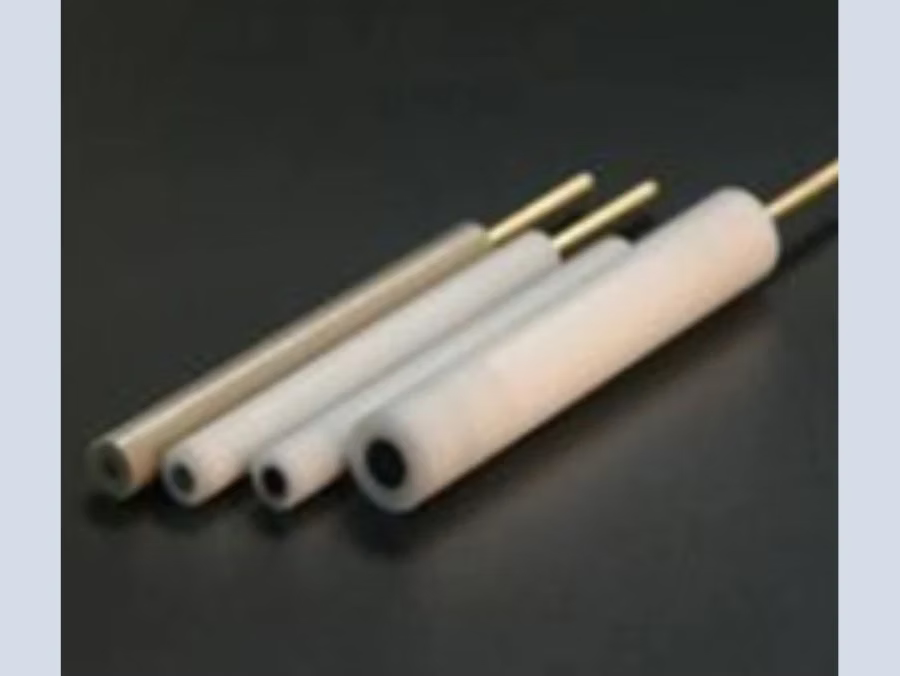
Graphite Electrodes, The Best Conductor For Electric Arc Steelmaking
Bagikan
Graphite electrode is an electrode material with good electrical conductivity, chemical stability, and high-temperature resistance. This material is suitable for electrode use in electrochemical cells.
The graphite structure has electrons that float freely between atomic layers. These electrons act as strong conductors, allowing the electrolysis process to run smoothly. In addition, graphite is economical, stable at high temperatures, and wear-resistant. Therefore, graphite electrodes are often used in electrolysis.
What are Graphite Electrodes?
Graphite electrodes are electrodes used in electric arc furnaces to melt steel, iron, and other metals.
This type of electrode is made of graphite, a carbon with high thermal conductivity, high melting point, low coefficient of thermal expansion, and is good for carrying electrical charges.
There are two main types of graphite electrodes: regular power (RP) and high power (HP).
Both types have distinctive characteristics.
RP graphite electrodes are made of high-quality petroleum coke and are widely used in steel production. In addition, RP graphite electrodes are used for the production of aluminum, silicon, and magnesium. HP graphite electrodes are made of needle coke, which is used for the production of high-quality steel with other special alloys.
Advantages of Graphite Electrodes
Graphic electrodes have advantages in various aspects compared to other electrodes.
a. Easy Processing
Graphite electrodes have the advantage of easy processing, a high removal rate from discharge machining, and low graphite loss. Therefore, some groups of spark machine customers abandon copper electrodes and choose graphite electrodes.
b. Has Twice the Processing Speed
The processing speed of graphite electrodes is faster compared to copper electrodes. The graphite grinding process is 2-3 times faster than other metals without additional processing. Unlike copper grinding which requires manual grinding.
The drying time for graphite electrodes is 67% faster than copper electrodes. While in general discharge processing, graphite electrodes have a processing time 58% faster than copper electrodes. As a result, processing time and production costs can be reduced.
c. Has Mold Cavity Accuracy
Most mold factories have spare electrodes that can be used.
Graphite electrodes have almost the same number of reserves as their machining process, reducing the amount of CAD/CAM in the machine process.
The design of graphite electrodes is different from regular copper electrodes. This is enough to improve the accuracy of the mold cavity.
Graphite electrode applications
Graphite electrodes are widely used in electric arc furnace steel manufacturing for steel welding and melting processes. The uses of graphite electrodes include the following.
Graphite material excels in thermal shock. This material is the only one whose mechanical properties improve due to temperature factors. With a low CTE value for geometric stability, it is easy to work with.
Graphite does not melt but can sublimate at 3,400ºC. It has five times lower density than copper, meaning the electrodes are lighter.
The wear rate of graphite electrodes tends to decrease with increasing discharge. This is very different from copper. Therefore, graphite is suitable for machines with high current intensity to reduce roughing time.
a. Electric Arc Steel Making Furnace
Electric furnace steel making uses graphite electrodes to conduct current into the furnace. Then it chooses a high-temperature heat source generated by the arc between the electrical part and the charge for the melting process.
b. Submerged Electric Furnace
Submerged electric furnaces are used for industrial production of silicon and yellow phosphorus. Its characteristics are that the conductive electrode's lower part is buried in the charge to form an arc in the charge layer. And the heat energy from the charge resistance is used to heat the charge, which is necessary to heat the charge that requires high-density current.
c. Resistance Furnace
Graphitization furnaces produce graphite products, melting furnaces, and electric furnaces. The materials in the furnace are heat inhibitors and workpieces. Generally, conductive graphite electrodes are embedded at the end of the resistance furnace. On the wall of the furnace head, graphite electrodes are used discontinuously.
d. Manufacturing of Special Shaped Graphite
The blank parts of graphite electrodes can be processed into crucibles, molds, heating elements, and certain graphite products.