
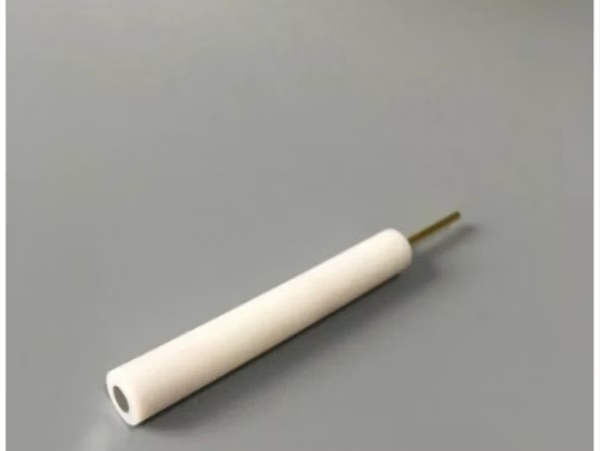
Carbon Electrodes - High Thermal Stability Materials
Bagikan
Carbon electrodes conduct electricity well. Chemically, they are also prone to degradation. Resources are abundant, making them easy to produce.
To conduct electricity, a material with good conductivity is needed. One such material is a carbon electrode.
Carbon is used as an electrode because it has a high specific surface area, is affordable, and conducts electricity well. This article will discuss carbon electrodes and their uses.
What Are Carbon Electrodes?
Carbon electrodes are semi-metals that conduct electricity well, making them good conductors under certain conditions. Chemically, they are also less susceptible to degradation from various electrochemical reactions, inert, and cheaper compared to platinum group metals or gold.
Carbon electrodes are typically used in the form of graphite. To produce a conductive material, a certain number of electrons must move within the element's structure. They are also relatively inexpensive, stable at high temperatures, and durable.
Advantages of Carbon Electrodes
This material has an advantage in conductivity because it conducts electricity very well. However, the advantages of carbon electrodes are not limited to that.
You can find other advantages of carbon electrodes as follows:
-
Abundant resources
-
Easy to produce
-
Hierarchical porous structure
-
High thermal and chemical stability
-
Good electrical conductivity
-
Wide operating temperature range
The properties of carbon can be enhanced through doping to overcome the limitations of low specific capacitance. However, a comprehensive review of carbon electrode materials is needed for doping methods.
Applications of Carbon Electrodes
Generally, carbon electrodes are used in electrolysis due to their conductivity and ability to transfer free electrons.
In addition to being efficient conductors, carbon also has a high melting point of 3500 degrees Celsius.
Thus, carbon electrodes can be used to facilitate various different reactions, as follows:
1. Electrochemical Cells
Carbon electrodes are used as electrodes in electrochemical cells, such as battery cells and fuel cells. Their function is to transfer electrons in redox (reduction-oxidation) reactions.
To generate electric current from electronics, materials with high electrical conductivity are needed. Carbon electrodes are chosen because they can facilitate redox reactions for electric current conduction.
2. Batteries
Carbon electrodes are used as electrodes in batteries, such as lithium-ion batteries and nickel-metal hydride batteries. Their relatively low cost makes carbon electrodes suitable for battery manufacturing.
In electrochemistry, there are graphite materials with a crystalline structure. Graphite itself is a natural form of carbon with high electrical conductivity. The advantage of this material is its high specific surface area.
3. Capacitors
Carbon electrodes are used as electrodes in capacitors, such as supercapacitors and electrolytic capacitors. A capacitor is a device for storing electric energy charges.
Supercapacitors have very high capacitance. Carbon electrodes are used as positive and negative electrodes in supercapacitors.
Film capacitors have higher capacitance than electrolytic capacitors. And although their capacity is low, electrolytic capacitors are most commonly used in industry.
4. Sensors
A sensor is a device for detecting and measuring phenomena occurring in the environment, such as energy change symptoms. Carbon electrodes are used in sensors, such as gas sensors and ion sensors.
Gas sensors use carbon electrodes to detect specific gases. By coating them with a material that can react with the gas, a chemical reaction occurs upon contact, generating an electric current.
As the name suggests, ion sensors are used to detect ions. When ions come into contact with the carbon electrode, an electric current is generated. This is then measured to determine the ion concentration.
5. Electrolysis
Electrolysis is the decomposition of certain compounds when an electric current is passed through an electrolyte solution or liquid. One way is by using carbon electrodes.
Its use can be found in metal production and metal refining processes. The presence of carbon electrodes is utilized to generate electric current to carry out the electrolysis process.
When two electrodes are in an electrolysis solution, the reaction at each electrode will differ. When the compound to be electrolyzed is in a solution with an electric current passing through it, the constituent elements of the compound become ionized.
Positively charged ions will be attracted to the negative electrode, where they will receive electrons. Negatively charged ions will be attracted to the positive electrode to release electrons.
Laboratory Equipment Using Carbon Electrodes
1. Mixing and Stirring
a. Magnetic Stirrer
A magnetic stirrer is a device for stirring and mixing solutions. It works by having a stir bar rotate inside the solution container. The process of mixing solutions using a magnetic stirrer requires low viscosity for the solution to become homogeneous.
b. Vortex Mixer
A vortex mixer is a device for mixing solutions in test tubes. This device is used for homogenization, where homogenization is the process of mixing liquids to ensure they are evenly mixed by a vertically mounted electric motor.
2. Measuring Equipment
a. Voltameter
A voltameter is a device used to measure the flow of electricity based on the effect of the decomposition of water or chemical compounds that act as electrolytes. This device is used to weigh the elements deposited on the cathode over a certain period.
b. Spectroscopy
Spectroscopy (such as FTIR and UV-Vis) is a device for recording spectra used in physical chemistry and analysis to identify substances through absorbed spectra. Each type of atom will absorb, reflect, or emit electromagnetic radiation to identify the sample's composition.
c. Electron Microscope
An electron microscope is a device that uses an electron beam to observe the surface structure of solids. With this tool, you can observe powder, bulk materials, and even structures on a nanometer scale.
3. Equipment
a. Press Machine
A press machine is a machine used to produce metal sheets and bend metal sheets at specific angles. A press machine has three main parts: the frame, the ram, and the bed.
b. Laboratory Oven
A laboratory oven is used for sterilization, heating, and drying workpieces. This tool is widely used in pharmaceutical, physics, and chemistry laboratories.
c. X-ray Diffractometer
This tool can be used to determine the position of atoms in molecules and solids. When X-rays hit a material, they are scattered in all directions by electron clouds, and this scattering provides additional information about the bonds within the molecule.