
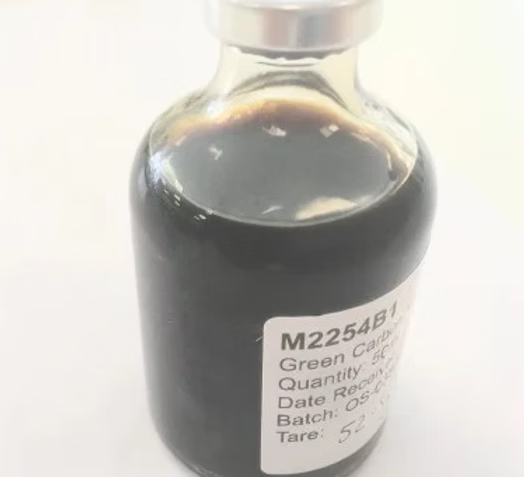
Carbon Nanodots - Environmentally Friendly Mesoscopic Solar Cell Sensitizer
Bagikan
Carbon nanodots (CNDs) or carbon quantum dots are nanoparticles smaller than 10 nanometers, known for their fluorescence. These materials can be tuned across the entire visible light spectrum.
Fluorescence is an emission radiated by molecules in an excited singlet state that returns to a ground state, absorbing light or electromagnetic radiation.
This discussion will cover carbon nanodots, their synthesis methods, and their applications. Read more below.
What are Carbon Nanodots?
Carbon nanodots are a group of non-toxic carbon nanomaterials that possess fluorescent properties. The average size of CNDs is less than 10 nm.
CNDs have many functional groups such as hydroxyl, epoxy, carbonyl, and carboxylate. Additionally, they are a group of non-toxic carbon nanomaterials with good fluorescent properties.
Structure of Carbon Nanodots
Carbon nanodots are quasi-spherical carbon nanoparticles with sp2 and sp3 carbon atomic structures. Their surfaces also have many polymer chains attached to them.
CNDs do not have a clear crystal lattice and mostly consist of amorphous carbon or sp2/sp3, along with embedded sp2 hybridized nanocrystalline regions.
Methods of Synthesizing Carbon Nanodots
According to research from the Bandung State Polytechnic, there are two methods for synthesizing carbon nanodots: top-down and bottom-up.
The top-down method uses a physical approach. The process starts with the material being deformed into powder, which is then reprocessed into nanomaterial.
The bottom-up method uses both physical and chemical approaches. The process starts from atoms being converted into clusters, and then into nanomaterials.
Physical and Chemical Properties of Carbon Nanodots
Carbon nanodots are nanomaterials with the following characteristics.
a. Chemical Properties
CNDs have strong chemical inertness, low toxicity, and good biocompatibility. Additionally, they exhibit good electron conductivity, photobleaching and photoflashing properties, and fluorescence.
b. Physical Properties
The physical characteristics of carbon nanodots are typically quasi-spherical or spherical, with diameters ranging from 4 nm to 8 nm.
Advantages of Carbon Nanodots
Carbon nanodots are biocompatible, environmentally friendly, easy to synthesize, and less toxic with excellent chemical inertness. This makes them an excellent nanocarrier system for effectively delivering multi-functional drugs.
Applications of Carbon Nanodots
a. Biosensors
Carbon nanodots can help detect biological and chemical compounds. This process is part of biosensors.
A biosensor is a sensor consisting of a combination of biological and electronic components acting as a transducer. This combination can convert signals from biological components into measurable outputs.
b. Antibacterial Agents
Carbon nanodots act as signaling particles in response to pathogens.
Oxidative stress develops when the production of reactive oxygen species exceeds the antioxidant defenses in bacteria, inducing oxidative damage to biomolecules such as nucleotides, lipids, and proteins, leading to cell wall damage and bacterial death.
c. Cancer Diagnosis
Higher sensitivity, including spatial and temporal resolution of fluorescence imaging, makes carbon dots highly advantageous in cell sensing, targeting, and imaging.
d. Solar Cells
Carbon nanodots can be used as sensitizers in mesoscopic solar cells because they are cheaper and environmentally friendly. Additionally, carbon nanodots are easier to produce from natural resources, making them abundantly available.
Carbon nanodots have the highest solar power conversion efficiency of about 0.36%. L-arginine carbon dots are used for sensitizer material purposes. This figure is much better than lobster shells under hydrothermal carbonization, which yields a solar power conversion of 0.22%.