
Determine the Current-Voltage Relationship of a PV Device with a Solar Simulator
Bagikan
Are you looking to perform spectral distribution with light-like results as a medium for evaluating PV devices? If so, you need a device called a solar simulator.
This tool is useful for providing information on current-voltage relationships. So, how does a solar simulator work and what are its benefits? Let's look at the following discussion to the end.
What is a Solar Simulator?
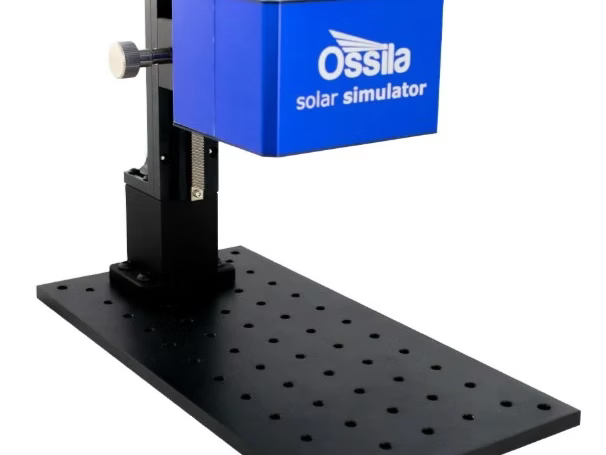
Based on IEC 60904-9, a solar simulator is equipment that uses a light source with a spectral distribution similar to real sunlight to evaluate the characteristics of PV devices. Simply put, a solar simulator is a device that offers intensity levels and spectral composition close to natural sunlight.
This type of solar simulator is used to determine the current-voltage relationship in PV devices. This system functions as a single lamp on photovoltaic devices placed in the test area or as a multi-lamp system based on the superposition of light cones.
Physics/Working Principle of Solar Simulators
Solar simulators are generally used to determine the current-voltage characteristic values of PV devices. One example can be found in a single lamp system with photovoltaic devices.
Solar simulator lamps operate in a dark room with a distance of several meters between the light source and the photovoltaic device. The attenuation of internal reflections from the walls can be damped using baffles.
In an enclosed room, the solar simulator operates within a distance of less than one meter. Diffusers and reflectors are available to achieve spatial radiation in a certain range. This condition also applies to solar simulators with single lamps, multiple lamps, and LEDs.
Features and Advantages of Solar Simulators
The advantage of a solar simulator is its ability to simulate solar radiation and spectrum. There are three main components, namely:
-
Light source and power supply
-
Optics and filters required to modify the output beam to meet the classification
-
Control system to operate the simulator
Applications of Solar Simulators
The application of solar simulators can be applied in various fields ranging from renewable energy, biotechnology, to engineering.
1. Manufacturing
Solar cell manufacturers use solar simulators to test solar cell efficiency at different light intensities and temperatures. This helps ensure that the solar cells have the required standard quality and function properly before being marketed to consumers.
2. Research
Researchers use solar simulators to develop solar panel technology and materials. Such as using a solar simulator as a tool to test the performance of new solar cell designs to test the effectiveness of anti-reflective coatings.
Solar simulators can be used to test the efficiency of solar water heaters under various conditions. You can test with variations in elevation angle and water temperature.
3. Education
Higher education institutions can teach solar energy courses to students by utilizing solar simulators. You can use it as a testing tool, for practical work, or to support academic research.
Given that sunlight is a solution for renewable energy, the need for solar simulators becomes important as a tool to test solar panel performance.
How to Use a Solar Simulator
To use a solar simulator, follow these steps as a guide.
First, place the solar simulator on a flat surface. After that, connect it to an outlet.
Next is to place the test sample in the center of the beam. Then, adjust the lighting intensity. Adjust it with the available control system.
The next step is to turn on the solar simulator and measure the desired parameters. Often, measurements are taken to determine current-voltage characteristics, power output, and efficiency. After use, turn off the solar simulator immediately.
1. Determining the Quality of Spectral Radiation Measurement
Based on IEC 60904-98 instructions, there are features that can determine the quality of spectral radiation measurement. The following are indicators that support this.
a. Wavelength Resolution
The wavelength resolution of the spectroradiometer must be a constant 5 nm, or greater in the visible range (300 nm to 900 nm). And 10 nm in the near-infrared range (900 nm to 1200 nm).
b. Non-Linear Sensor Elements:
Generally, spectroradiometers are calibrated with a tungsten calibration lamp at low radiation levels. However, the spectral intensity of the solar simulator may differ significantly from the calibration conditions. Stray light or second-order wavelength effects.
Input Optical Angle Response
This parameter has a large impact with the presence of scattered light.
Many measurement techniques are available. However, the CCD spectroradiometer technique is the most common due to its compact size and excellent spectral performance.
Spectral radiation measurements with CCD spectroradiometers generally require the use of two instruments to cover the relevant wavelength range (e.g., with Si and InGaAs detectors). Si CCD typically covers 300-1100nm, and InGaAs CCD can cover 900-1700nm. The combination of these two instruments, and appropriate cosine correction optics, allows the spectral distribution of the solar simulator to be accurately measured.
Get Quality Solar Simulators at AMI Scientific!
A solar simulator is equipment that uses a light source with a spectral distribution similar to real sunlight to evaluate the characteristics of PV devices. Its function is to identify current-voltage relationships.