
Why Should We Switch to Renewable Energy?
Bagikan
Renewable energy is often used as a way to show love for the earth. Of course, oil and minerals are becoming more limited year by year.
Unfortunately, to this day, the use of oil and coal still dominates in terms of energy needs. Even though you know that these energy sources are not renewable.
Before an energy emergency occurs, new and renewable energy power plants are needed. As well as how much energy potential is generated from these renewable energy sources. See the following discussion.
What is Renewable Energy?
Renewable energy is energy that comes from nature and is renewable. The management of renewable energy produces a small carbon footprint.
These energy sources are safe for humans and the environment because they are environmentally friendly. In addition to industrial needs, you can use them for personal or academic purposes.
For some universities, renewable energy is already a focus in lectures. One form of this is in final assignments.
Condition of Renewable Energy in Indonesia
Based on data from the Ministry of Energy and Mineral Resources (ESDM), the potential for renewable energy in Indonesia reaches 443 GW, consisting of:
-
Geothermal: 23.7 GW (Gigawatts)
-
Biomass: 50 GW
-
Hydro: 12.3 GW
-
Solar: 213 GW
-
Wind: 74 GW
-
Nuclear: 3 GW
The Indonesian government has set a target for renewable energy contribution to the national energy mix of 23% by 2025 and 31% by 2050.
To support this, the government has issued regulations related to the development of renewable energy to support infrastructure development in the renewable energy sector.
Urgency of Renewable Energy
Renewable energy is a necessity considering that the supply of oil and coal energy sources will run out in time. In addition, renewable energy does not produce greenhouse gas emissions.
According to a report from the International Energy Agency (IEA), the use of renewable energy can reduce greenhouse gas emissions by up to 70% by 2050. An increase in greenhouse gas emissions can raise the Earth's temperature by 1.5-4.5 degrees Celsius, which is predicted to occur by 2030.
Renewable energy is a decentralized energy source, which means there is no need to depend on importing other materials from abroad. Although Indonesia is rich in mines, at least relying on renewable energy can maintain energy security.
In addition, the energy industry is experiencing rapid growth. One of its impacts is in preparing job opportunities. Based on a report from the World Economic Forum, the renewable energy sector created 28 million new jobs by 2030.
Examples of Renewable Energy and its Potential
The principle of renewable energy is to use natural resources that can be renewed. Its use is easy and can be done anywhere.
The following are examples of renewable energy and its potential:
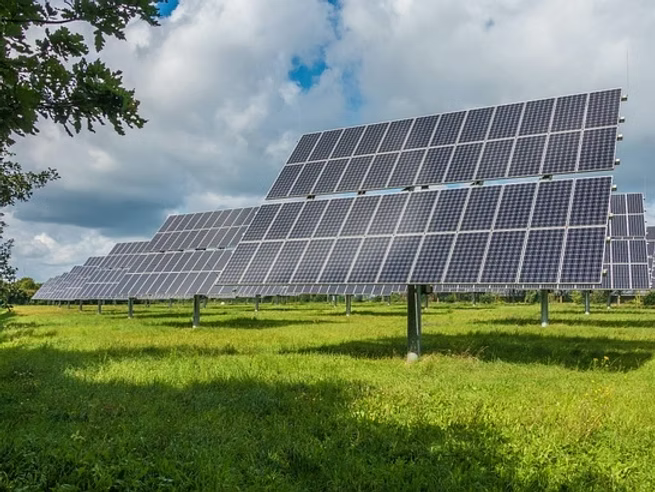
a. Solar Power
Solar power comes from sunlight. Solar energy is used to generate electricity, heat, and hot water. Its potential is very large in Indonesia with an average sunlight intensity of 5.2 kWh/m^2/day.
Based on a report from the Ministry of Energy and Mineral Resources (ESDM), the potential for solar energy in Indonesia reaches 207GW. This figure is 1400 times greater than the installed capacity of Solar Power Plants (PLTS) in Indonesia in 2022.
b. Wind Power
Wind energy can generate electricity. Its potential is also quite large in Indonesia; in coastal areas, wind speeds reach 6-8 m/s.
The potential for wind energy in Indonesia reaches 60GW. This figure is equivalent to 10 times greater than the installed capacity of wind power plants in 2022.
c. Hydropower
Hydropower electricity utilizes turbine movement to generate electricity. The installed capacity of hydropower plants in Indonesia reaches 6,000 MW.
Water energy sources are often done by utilizing river water flow. Given this, its potential can generate energy of 19,385 MW with a capacity of up to 6121 MW.
A little more in-depth discussion about Solar Power
Solar power is called renewable energy because it uses an unlimited energy source that can be renewed by nature. The average radiation of the earth's rays is 1.73 x 10^5 terawatts, while the average global electricity demand is 2.7 terawatts. This figure is more than enough.
In just a few hours, sunlight can meet the world's energy needs for a full year if done efficiently. Solar power plants use solar panels made of conductive materials to convert solar energy into electrical energy.
The heat energy from solar power is stored and then used to generate electricity at night or on cloudy days. Thus, PLTS can continue to produce electricity even without sunlight.
The size of solar panels has an efficiency of 15 to 20 percent, and the highest solar panel efficiency reaches 23 percent.
Let's Transition to Renewable Energy Gradually!
Looking at the potential and future energy problems, action is needed to gradually switch to renewable energy. By implementing the construction of renewable energy power plants, there will be a significant impact on the continuity of energy security in the future.