
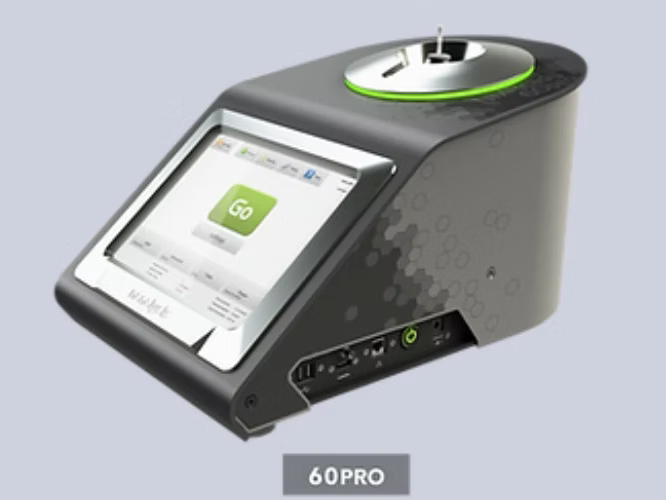
Nuclear Magnetic Resonance, Non-Destructive Test Device with Nuclear Power
Bagikan
Have you ever imagined how nuclear energy is used for material testing? Perhaps this is rarely discussed in college, but in industry, there are measurement tools that utilize electronic radiation and nuclear energy.
This testing is called Nuclear Magnetic Resonance (NMR). This test is considered sample-friendly because it is non-destructive, so you can use the same test object in subsequent research.
What is Nuclear Magnetic Resonance (NMR)?
NMR is a nuclear core-specific spectroscopy that uses large magnets to investigate the intrinsic spin properties of atomic nuclei. NMR uses electromagnetic radiation components to drive transitions between nuclear energy levels.
Brief History of Nuclear Magnetic Resonance (NMR)
NMR was discovered by Purcell, Pound, and Torrey from Harvard University and Bloch, Hansen, and Packard from Stanford University. This discovery first occurred when it was found that magnetic nuclei could absorb radiofrequency energy when placed in a magnetic field with a specific strength at the atomic nucleus.
After the absorption process, the nuclei begin to resonate, and different atoms within the molecule resonate at different frequencies. This observation allows for detailed analysis of molecular structure.
How Nuclear Magnetic Resonance (NMR) Works
When molecules are in a strong magnetic field, atomic nuclei behave like small magnets. If a broad spectrum of radiofrequency waves is applied to the sample, the atomic nuclei will resonate at certain frequencies.
This is similar to a tuning fork, where a guitar string only resonates if it responds with the correct frequency.
The resonance frequency of the nuclei is then measured and converted into an NMR spectrum that displays the frequencies on a graph. Each peak height represents the number of nuclei resonating at each frequency or the signal intensity.
The signal intensity will be higher if there are more resonating nuclei.
The value of each frequency will provide information about the atomic environment concerned. When atoms are adjacent to each other, they will cause each other to resonate.
Advantages of Nuclear Magnetic Resonance (NMR)
NMR has the advantage of not damaging the workpiece sample during testing. You do not need to perform tensile or compression tests.
NMR instruments can analyze the workpiece and keep it intact. Thus, you can use it for subsequent testing.
Applications of Nuclear Magnetic Resonance (NMR)
In the medical field, MRI is used to study the function and structure of the human body. It provides detailed images of every part of the body. Unlike CT, which does not use ionizing radiation and is therefore safe to use.
Chemists use NMR to determine chemical and biological structures. In the NMR spectrum, different peaks provide information about different atoms, based on their chemical environment.
The most common isotopes used to detect NMR signals are 1H and 13C, but many other isotopes, such as 2H, 3He, 15N, 19F, and others, are also used.
In addition, NMR can also be used for non-destructive testing, which can save costs for purchasing samples. And it can be reused for further research.
Oil industries like Pertamina use NMR to measure the porosity of different rocks and the permeability of fluids underground.