
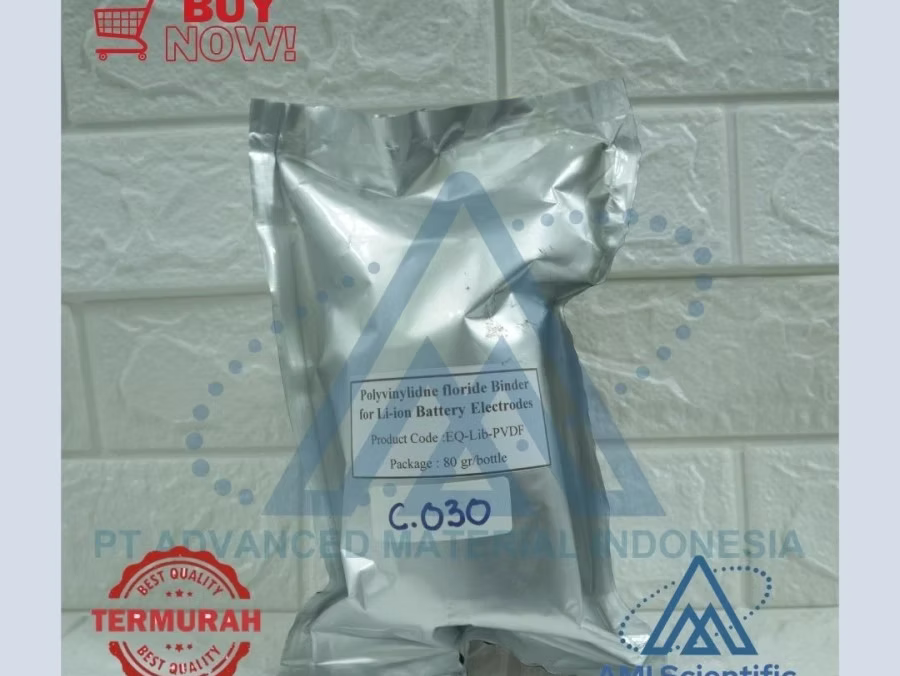
PVDF - A High Purity Material Like a Bottled Water Brand!
Bagikan
PVDF is highly sought after because of its excellent mechanical and thermal resistance. This synthetic material is very popular due to its high purity level. In addition, PVDF is classified as a thermoplastic polymer.
This discussion will explore the definition of PVDF, its production methods, and its characteristics.
What is PVDF?
PVDF stands for Polyvinylidene Fluoride, a high-purity synthetic material widely used globally. This material is chosen for its resistance profile, mechanical and thermal capabilities, magnetoelectric properties, and its ability to be used in solid and liquid coating forms.
PVDF is classified as a thermoplastic polymer. By definition, a polymer is a long chain of molecular units connected through human-derived synthetic reactions.
Definition of PVDF
PVDF is defined as a semi-crystalline fluoropolymer because it contains fluorine (F) in its initial molecular base to create PVDF. The presence of fluorine in PVDF and its 50:50 amorphous and crystalline structure contribute to the service life and tolerance range of this plastic.
The presence of PVDF enhances its resistance to many chemical, biological, and mechanical stresses often encountered by similar structural materials.
Is PVDF = Teflon?
Both types are fluorocarbon polymers, but they have different chemical structures. PVDF is polyvinylidene fluoride, while Teflon is polytetrafluoroethylene.
For a complete explanation, here are the differences between PVDF and Teflon.
a. Heat Resistance
PVDF has lower heat resistance than Teflon. PVDF can withstand temperatures between 150-175 degrees Celsius. In contrast, Teflon can withstand temperatures up to 300 degrees Celsius.
b. Chemical Resistance
PVDF has lower chemical resistance than Teflon. PVDF is resistant to acids and bases, but not to certain types of solvents. This differs from Teflon, which can withstand various types of solutions, acids, and bases.
c. Mechanical Strength
PVDF has higher mechanical strength than Teflon. This is evident in how PVDF can withstand impacts better than Teflon.
d. Transparency
PVDF is known to be more transparent than Teflon. PVDF can be used to make transparent films and coatings. However, Teflon cannot.
How is PVDF Produced?
Initially, PVDF is produced as a raw resin through a chemical synthesis reaction known as polymerization. Polymerization is used to produce various plastic materials such as polyethylene, PVC, and polypropylene.
The polymerization of PVDF plastic products differs in the production parameters required, but the most important is the initial base molecule or monomer. In PVDF, vinylidene fluoride (VDF) monomers are polymerized. This means single VDF units are joined end-to-end to form long chain molecules.
In PVDF, VDF material is a reactive product of further chemical processing of by-products from the refining of natural oil and flammable gas.
PVDF Manufacturing Process
To create PVDF, VDF first undergoes free-radical polymerization when heated to 300°F (150°C) and under pressure up to 300 atm (30,400 kPA; 4400 psi).
Polymerized PVDF is a type of resin that can be manipulated with other plastic resins. Liquid PVDF can be machined, then extracted or molded using injection, rotational, or compression methods to form PVDF into sheets, films, pipes, or other component shapes.
PVDF Properties/Characteristics
PVDF has identifiable characteristics, as follows:
-
High abrasion resistance
-
Good thermal stability
-
Resistant to UV rays and high-energy radiation
-
High resistance to creep under pressure
-
High resistance to fatigue and cyclic loading
-
High dielectric strength
-
Resistant to chemicals and solvents
-
Low absorbency, less than 5% at room temperature
-
Mechanically stronger than PTFE
-
Meets standards for food processing applications
Mechanical Properties
-
Tensile strength (at 23°C) = 9 – 120 MPa
-
Compressive strength (at 23°C) = 13.8 - 172 MPa
-
Elongation at yield (at 23°C) = 3.5 – 40%
-
Yield strength (at 23°C) = 4.8 - 120 MPa
-
Modulus of elasticity (at 23°C) = 0.03 - 17.1 GPa
-
Flexural modulus (at 23°C) = 0.07 - 20.9 GPa
-
Density (at 23°C) = 0.7 – 1.89 grams/cm³
-
Water absorption (at 23°C) = 0.01 - 0.5%
Electrical Properties
-
Dielectric strength (at 23°C) = 1.4 – 110 kV/mm
-
Surface resistivity (at 23°C) = 10^10 - 10^14 Ohm/sq
-
Dielectric constant (at 23°C) = 6 - 8
-
Volume resistivity (at 23°C) = 10^6 - 3.2*10^6 Ohm.cm
Thermal Properties
-
Melting point = 92 - 342 °C
-
Specific heat capacity (at 23°C) = 665 - 1500 J/kg.K
-
Thermal conductivity (at 23°C) = 0.13 – 0.19 W/m.K
-
Coefficient of thermal expansion (at 23°C) = 2*10^-5 – 2.6*10^-4 /K
-
Glass transition temperature = -43.3 – -38.3 °C
PVDF Applications
PVDF has various applications commonly used in industry, including:
-
Filament for additive manufacturing
-
High-purity semiconductors
-
Cable and wire insulation
-
Biomedical artificial membranes
-
Nuclear waste processing
-
Piping and pumping applications
-
General chemical processing
-
Water processing membranes
-
Food and pharmaceutical processing
-
Batteries and sensors
-
Architectural coatings