TCI B6608 tert-Butyl (5-Aminobicyclo[3.1.1]heptan-1-yl)carbamate is a non-heterocyclic organic building block. It is built on a rigid bicyclo[3.1.1]heptane framework that carries a nitrogen group at each of its two bridgehead positions, and the two groups are treated differently. One is a free primary amine. The other is protected with a tert-butoxycarbonyl (Boc) group. In synthesis laboratories, compounds like this serve as starting materials for assembling more complex molecules. Medicinal chemists typically use them to build libraries of drug candidates or new ligands with controlled three-dimensional geometry.
Its main appeal is the saturated bicyclic scaffold, which holds its bonds in fixed directions and gives the molecule a well-defined shape. The medicinal chemistry literature often discusses the bicyclo[3.1.1]heptane framework as a non-aromatic replacement (bioisostere) for meta-substituted benzene rings, a strategy used to add three-dimensional character to a molecule. The two amine groups are also differentiated. The free amine can react straight away, while the Boc-protected amine stays masked until the protecting group is removed under acidic conditions. This lets chemists functionalise each end of the molecule in a planned sequence.
In Indonesia, building blocks of this kind are mainly used in university organic and medicinal chemistry laboratories, government and institutional research centres, and pharmaceutical research and development groups. Researchers working on scaffold design, structure–activity relationship studies or the synthesis of new bioactive compounds can use it as a ready-made, protected intermediate. This saves the extra steps needed to build and selectively protect the bicyclic diamine core themselves, which helps both thesis-level projects and industrial discovery programmes.
TCI brochures (PDF)
- Bicycloalkane Building Blocks ― Benzene Bioisosteres ― 2025-04-01 · p. 1
Related TCI products
- TCI B6610 1050890-47-5 tert-Butyl (4-Aminobicyclo[2.1.1]hexan-1-yl)carbamate
- TCI B6523 1638767-25-5 tert-Butyl (3-Aminobicyclo[1.1.1]pentan-1-yl)carbamate
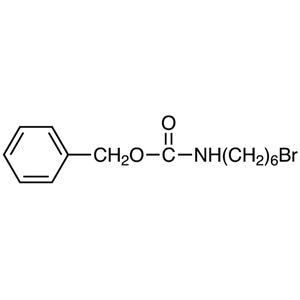
- TCI B5355 116784-97-5 Benzyl (6-Bromohexyl)carbamate
- TCI B1799 79722-21-7 tert-Butyl N-(Benzyloxy)carbamate
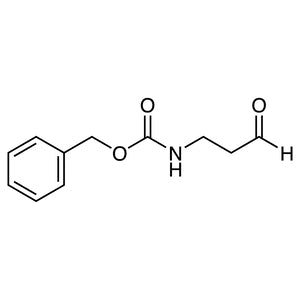
- TCI P3040 65564-05-8 Benzyl (3-Oxopropyl)carbamate
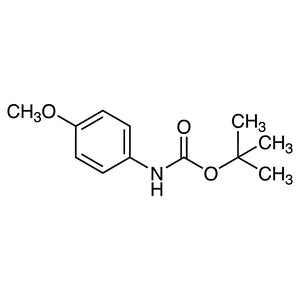
- TCI M3777 18437-68-8 tert-Butyl (4-Methoxyphenyl)carbamate
- Medicinal chemistry library synthesis: the rigid bicyclic diamine core lets researchers prepare series of drug-candidate analogues with controlled three-dimensional geometry and fixed bond directions.
- Bioisosteric replacement studies: the bicyclo[3.1.1]heptane scaffold is discussed in the literature as a non-aromatic substitute for meta-substituted benzene rings, so it suits programmes that aim to increase a molecule's three-dimensional character.
- Sequential amine functionalisation: the free amine can be acylated, alkylated or coupled first, and the Boc-protected amine is released later under acidic conditions for a second, independent modification.
- Ligand design and development: its well-defined spatial shape makes it a useful core when building new ligands where the relative orientation of two attachment points matters.
- Linker and scaffold construction: the two differentiated nitrogen ends allow the compound to connect two molecular fragments in a controlled order during multistep synthesis.
| Brand | TCI (product code B6608) |
|---|---|
| CAS number | 1049607-15-9 |
| Molecular formula | — |
| Purity | — |
| Category | Chemistry > Building Blocks > Non-Heterocyclic Building Blocks |
| Pack sizes | please refer to the available options on the product listing |
| Physical form | — |
| Storage | follow the conditions on the product label and the TCI Safety Data Sheet |
Store this compound in its original, tightly closed container, following the conditions stated on the product label and in the manufacturer's Safety Data Sheet. Keep it in a cool, dry and well-ventilated chemical storage area, away from direct sunlight and moisture. Because the Boc group can be removed by acids, keep the material away from acidic substances to avoid unintended deprotection. Handle it in a fume hood or a well-ventilated area, and wear standard personal protective equipment, including gloves, safety glasses and a laboratory coat. Avoid inhaling dust or vapours and avoid contact with skin and eyes. Label any secondary containers clearly, and dispose of waste according to institutional and local chemical waste regulations.
References cited in the TCI brochure
- Pavel K. Mykhailiuk. Saturated bioisosteres of benzene: where to go next? Organic & Biomolecular Chemistry, 2019. doi:10.1039/c8ob02812e
- Toranosuke Iida. Practical and Facile Access to Bicyclo[3.1.1]heptanes: Potent Bioisosteres of meta-Substituted Benzenes Journal of the American Chemical Society, 2022. doi:10.1021/jacs.2c09733
Product Categories
- Building BlocksNon-Heterocyclic Building BlocksNitrogen Compounds [Non-Heterocyclic Building Blocks]
- Building BlocksSpecialized Building Blocks for Drug DiscoveryBicyclo[3.1.1]heptane Building Blocks
- Pharmaceutical Development and Drug Discovery Research ReagentsSpecialized Building Blocks for Drug DiscoveryBicyclo[3.1.1]heptane Building Blocks
Produk Terkait
-
tert-Butyl(4-Aminobicyclo[2.1.1]hexan-1-yl)carbamate TCI B6610
Regular price Rp 16.084.950,00Regular priceRp 11.263.350,00Sale price Rp 16.084.950,00 -
tert-Butyl(3-Aminobicyclo[1.1.1]pentan-1-yl)carbamate TCI B6523
Regular price From Rp 1.908.900,00Regular priceRp 1.350.300,00Sale price From Rp 1.908.900,00 -
Benzyl(6-Bromohexyl)carbamate TCI B5355
Regular price From Rp 1.378.650,00Regular priceRp 979.650,00Sale price From Rp 1.378.650,00 -
tert-ButylN-(Benzyloxy)carbamate TCI B1799
Regular price From Rp 2.041.200,00Regular priceRp 1.442.700,00Sale price From Rp 2.041.200,00 -
Benzyl(3-Oxopropyl)carbamate TCI P3040
Regular price Rp 3.340.050,00Regular priceRp 2.350.950,00Sale price Rp 3.340.050,00 -
tert-Butyl(4-Methoxyphenyl)carbamate TCI M3777
Regular price From Rp 3.285.450,00Regular priceRp 2.313.150,00Sale price From Rp 3.285.450,00 -
tert-Butyl(4-Hydroxyphenyl)carbamate TCI H1954
Regular price Rp 2.411.850,00Regular priceRp 1.702.050,00Sale price Rp 2.411.850,00 -
Ethyl(3-Hydroxyphenyl)carbamate TCI E1227
Regular price From Rp 2.969.400,00Regular priceRp 2.091.600,00Sale price From Rp 2.969.400,00