TCI C2124 N-Carbobenzoxy-D-tyrosine, commonly written as Z-D-Tyr-OH or Cbz-D-Tyr-OH, is a D-configured tyrosine amino acid whose amino group is masked by a carbobenzoxy protecting group. Supplied by TCI, the material belongs to the peptide chemistry category and serves as a building block in peptide synthesis, in both solid-phase and solution-phase routes. The presence of the protecting group ensures that only the carboxylic acid function participates during peptide bond formation, so the chain grows in a directed manner and remains free of side reactions such as self-polymerisation or unwanted double coupling.
The characteristic that makes this reagent valuable is the combination of the D configuration with the Cbz protecting group. D-configured amino acids are poorly recognised by natural proteases, so peptides containing them tend to be more resistant to enzymatic degradation — a property that is highly sought after in the design of peptidomimetics and therapeutic candidates. The Cbz group itself is orthogonal to both acid-labile and base-labile protecting schemes, and it can be removed cleanly by catalytic hydrogenolysis under neutral conditions. The phenolic group of tyrosine additionally provides a further conjugation point, for example for labelling work.
In Indonesian laboratories, this building block is typically used by university research groups, peptide and medicinal chemistry laboratories, and biotechnology or pharmaceutical R&D units working on synthetic peptide sequences. It suits benchtop solution-phase coupling as well as resin-based solid-phase protocols, and is generally handled as a single, well-defined building block introduced at a specified position in the sequence. Because the deprotection chemistry is mild and selective, the material fits readily into established multi-step synthetic workflows.
- Solid-phase peptide synthesis — the Cbz-protected amino function leaves only the carboxylate available for coupling, allowing the resin-bound chain to be extended residue by residue without side reactions.
- Solution-phase peptide synthesis — the material serves as a discrete building block for fragment coupling in flask-based routes, where the protecting group prevents self-polymerisation during activation of the carboxylic acid.
- Peptidomimetic design — the D configuration is poorly recognised by natural proteases, so incorporating this residue gives synthetic sequences greater resistance to enzymatic degradation than their all-L counterparts.
- Therapeutic peptide candidate development — improved stability against proteolysis makes D-tyrosine incorporation a common strategy when researchers are optimising the metabolic durability of a lead peptide sequence.
- Peptide labelling and conjugation studies — the free phenolic group of the tyrosine side chain provides an additional attachment point for conjugation or labelling chemistry after or during chain assembly.
| Brand | TCI |
|---|---|
| CAS number | 64205-12-5 |
| Molecular formula | — |
| Purity | — |
| Category | Chemistry > Chemical Biology > Peptide Chemistry |
| Pack sizes | please refer to the manufacturer's catalogue listing for available pack sizes |
| Physical form | — |
| Storage | store in a cool, dry place in a tightly closed container |
- Chemical name: N-Carbobenzoxy-D-tyrosine (Z-D-Tyr-OH / Cbz-D-Tyr-OH)
Store the container tightly closed in a cool, dry, well-ventilated area, away from direct sunlight, moisture and incompatible reagents. The original manufacturer's container is the most suitable storage vessel; if the material must be transferred, use a clean, dry, chemically resistant container that can be sealed and clearly labelled with the chemical name and CAS number. Handle the solid in a fume hood or a well-ventilated workspace, and wear standard laboratory personal protective equipment including a laboratory coat, safety glasses and suitable gloves. Avoid generating dust, avoid contact with skin and eyes, and use clean, dry spatulas when weighing to prevent moisture uptake and cross-contamination. Always consult the manufacturer's safety data sheet before use and dispose of residues according to applicable laboratory waste procedures.
—
Produk Terkait
-
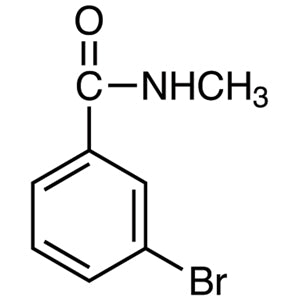
3-Bromo-N-methylbenzamide TCI B5644
Regular price From Rp 1.431.150,00Regular price -
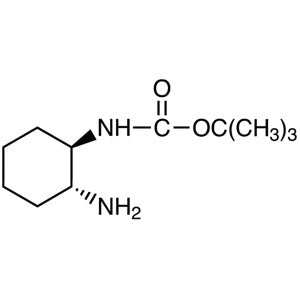
(1R,2R)-N1-(tert-Butoxycarbonyl)-1,2-cyclohexanediamine TCI B5647
Regular price Rp 3.367.350,00Regular price -
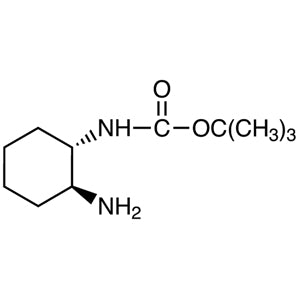
(1S,2S)-N1-(tert-Butoxycarbonyl)-1,2-cyclohexanediamine TCI B5648
Regular price From Rp 2.809.800,00Regular price -
N-Benzyl-2,2,2-trifluoroacetamide TCI B5705
Regular price From Rp 1.326.150,00Regular price -
SB-366791 TCI B5762
Regular price From Rp 5.485.200,00Regular price -
N-Carbobenzoxypropargylamine TCI B5958
Regular price Rp 4.849.950,00Regular price -
tert-Butyl(3-Oxo-3-phenylpropyl)carbamate TCI B5981
Regular price Rp 4.584.300,00Regular price -
SB297006 TCI B6053
Regular price From Rp 3.710.700,00Regular price