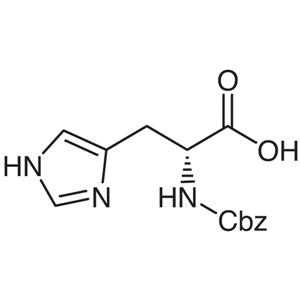
TCI C2133 Nalpha-Carbobenzoxy-D-histidine is a histidine amino acid derivative in the D configuration whose alpha-amino group has been protected with a carbobenzoxy group (Cbz, also written as Z). The material belongs to the family of peptide chemistry reagents, which are substances used to assemble individual amino acids into peptide chains in a controlled manner. Protection of the alpha-amino group prevents unwanted cross-reactions during peptide bond formation, allowing researchers to control the order in which residues are coupled, one at a time, according to the structure of the peptide being synthesised in the laboratory.
The property that makes this reagent a widely preferred choice is the stability of the Cbz protecting group under a broad range of reaction conditions, combined with the ease with which it can be removed again through hydrogenolysis. This orthogonal character makes multi-level protection strategies possible when a peptide contains several sensitive functional groups. The D configuration of this compound is also of particular value, because D-histidine residues are frequently inserted to increase the resistance of a peptide to proteolytic enzymes and to study how stereochemistry influences biological activity. The imidazole ring of histidine itself plays an important part in the behaviour of the resulting peptide.
In Indonesian laboratories, this reagent is typically used in university chemistry and pharmacy departments, government research institutes, and peptide-focused research groups working on synthetic peptide preparation. It is handled in synthesis work where residues are coupled in a defined sequence, and in studies that compare D- and L-configured analogues of the same sequence. Because it falls under chemical biology and peptide chemistry, it is generally ordered alongside other protected amino acid building blocks and coupling reagents used in the same workflow.
- Solution-phase peptide synthesis — the protected alpha-amino group prevents cross-reaction during coupling, so residues can be joined in a controlled, predetermined sequence.
- Solid-phase peptide synthesis building block — supplies a ready-protected D-histidine residue for stepwise chain assembly on resin without additional in-house protection steps.
- Preparation of protease-resistant peptides — incorporating a D-histidine residue increases resistance to proteolytic enzymes compared with the corresponding L-configured sequence.
- Stereochemistry–activity studies — allows researchers to prepare D-configured analogues and compare their biological activity against the equivalent L-histidine peptide.
- Orthogonal protection strategies — the Cbz group is stable to many reaction conditions yet removable by hydrogenolysis, enabling multi-level protection of sensitive functional groups.
| Brand | TCI |
|---|---|
| CAS number | 67424-93-5 |
| Molecular formula | — |
| Purity | — |
| Category | Chemistry > Chemical Biology > Peptide Chemistry |
| Pack sizes | — |
| Physical form | — |
| Storage | store according to the manufacturer's instructions on the product label and safety data sheet |
- Chemical Name: Nalpha-Carbobenzoxy-D-histidine
- Product Code: C2133
Store this reagent in its original tightly closed container, in a cool, dry, and well-ventilated place away from direct sunlight, moisture, and incompatible chemicals, following the storage conditions stated by the manufacturer on the product label and safety data sheet. Weigh and transfer the material in a fume hood using clean, dry spatulas and glassware to avoid contamination and moisture uptake. Wear a laboratory coat, safety goggles, and suitable gloves during handling. Close the container immediately after use, label any secondary containers clearly, and review the safety data sheet before first use and before disposal.
—
Produk Terkait
-
1-Butyl-3-methylimidazoliumTrifluoroacetate TCI B5526
Regular price From Rp 2.038.050,00Regular price -
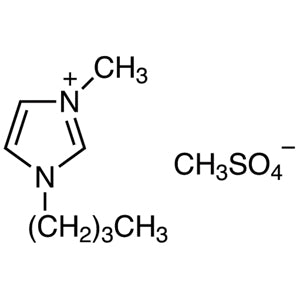
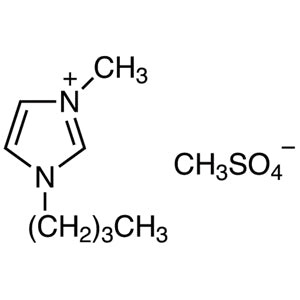
1-Butyl-3-methylimidazoliumMethylSulfate TCI B5527
Regular price From Rp 1.653.750,00Regular price -
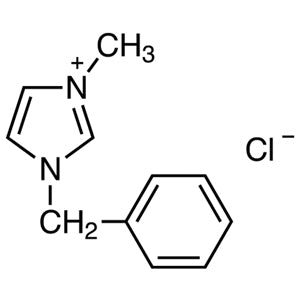
1-Benzyl-3-methylimidazoliumChloride TCI B5543
Regular price Rp 916.650,00Regular price -
1-Butyl-3-methylimidazoliumHydrogenSulfate TCI B5569
Regular price From Rp 916.650,00Regular price -
1-Butyl-3-methylimidazoliumAcetate TCI B5582
Regular price From Rp 975.450,00Regular price -
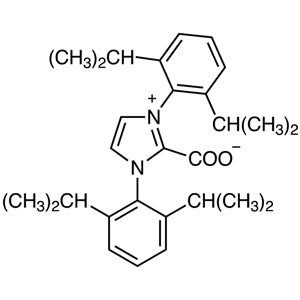
1,3-Bis(2,6-diisopropylphenyl)imidazolium-2-carboxylate TCI B5603
Regular price Rp 2.923.200,00Regular price -
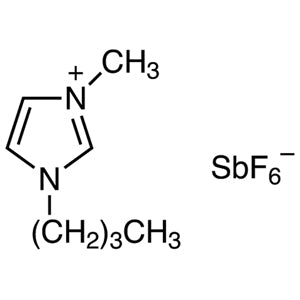
1-Butyl-3-methylimidazoliumHexafluoroantimonate TCI B5724
Regular price From Rp 1.949.850,00Regular price -
1-Benzyl-3-methylimidazoliumTetrafluoroborate TCI B5725
Regular price Rp 798.000,00Regular price