TCI C2135 N-Carbobenzoxy-D-leucine Dicyclohexylammonium Salt is the dicyclohexylammonium salt form of D-leucine whose amino group has been protected with a carbobenzoxy (Cbz) group. The material belongs to the family of peptide chemistry reagents, and its role in the laboratory is to supply a protected leucine residue to researchers who assemble peptide chains step by step. Forming a salt with dicyclohexylamine is common practice in peptide chemistry because it helps deliver the material as a solid that is easier to handle, weigh, and store than the corresponding free acid, which is frequently sticky or difficult to crystallise under ordinary laboratory conditions.
The advantages that make this material a preferred choice lie in the combination of straightforward physical handling and unambiguous stereochemistry. Dicyclohexylammonium salts generally give solids with good handling characteristics, while the Cbz protecting group remains stable across many reaction conditions and can be removed by hydrogenolysis when a deprotection step is required. The isobutyl side chain of leucine is hydrophobic, so this residue often governs the folding, aggregation, and membrane interaction behaviour of a peptide. The D configuration adds further value for researchers who need a defined, non-natural stereocentre rather than the standard L form.
In Indonesian laboratories, this reagent is typically found where peptide synthesis and chemical biology work is carried out: university chemistry and pharmacy departments, government and institutional research centres, and laboratories developing peptide-based compounds. It is normally purchased in the pack size that matches the planned scale of synthesis, kept alongside other protected amino acid building blocks, and drawn on as required during stepwise coupling work. Because it arrives as a stable, weighable solid, it fits well into routine bench practice.
- Stepwise peptide synthesis: supplies a protected D-leucine building block that can be coupled in sequence, with the Cbz group preventing unwanted reaction at the amino terminus during chain assembly.
- Preparation of D-amino acid containing peptides: provides a defined D stereocentre for researchers building analogues in which the non-natural configuration is deliberately introduced rather than incidental.
- Studies of peptide folding and aggregation: the hydrophobic isobutyl side chain of leucine strongly influences how a peptide folds and how readily it aggregates in solution.
- Investigation of peptide–membrane interactions: leucine residues frequently determine how a peptide associates with membranes, making this protected form useful for building such sequences.
- Chemical biology reagent stock: serves as a conveniently handled solid building block held in the reagent inventory for peptide chemistry projects requiring protected leucine residues.
| Brand | TCI |
|---|---|
| CAS number | 7662-58-0 |
| Molecular formula | — |
| Purity | — |
| Category | Chemistry > Chemical Biology > Peptide Chemistry |
| Pack sizes | available in the standard catalogue pack sizes offered by TCI for this item |
| Physical form | solid (dicyclohexylammonium salt) |
| Storage | keep in the closed original container under the conditions stated on the manufacturer's label |
Store the material in its original tightly closed container, kept dry and protected from moisture, and follow the storage conditions printed on the manufacturer's label and safety data sheet. Suitable containers are the supplied glass or plastic reagent bottles with secure caps; transfer portions using clean, dry spatulas to avoid introducing moisture or cross-contamination into the bulk. Weigh and handle the solid in a well-ventilated area or fume hood, wearing a laboratory coat, safety glasses, and gloves. Avoid generating dust, close the container promptly after use, and label any secondary containers clearly. Review the safety data sheet before first use and dispose of residues in accordance with institutional chemical waste procedures.
—
Produk Terkait
-
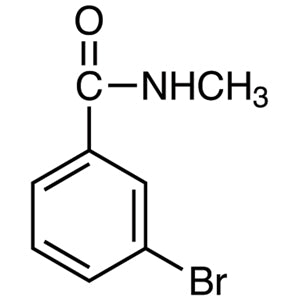
3-Bromo-N-methylbenzamide TCI B5644
Regular price From Rp 1.431.150,00Regular price -
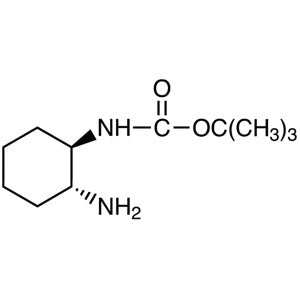
(1R,2R)-N1-(tert-Butoxycarbonyl)-1,2-cyclohexanediamine TCI B5647
Regular price Rp 3.367.350,00Regular price -
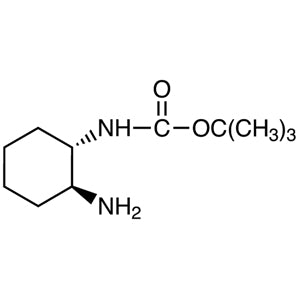
(1S,2S)-N1-(tert-Butoxycarbonyl)-1,2-cyclohexanediamine TCI B5648
Regular price From Rp 2.809.800,00Regular price -
N-Benzyl-2,2,2-trifluoroacetamide TCI B5705
Regular price From Rp 1.326.150,00Regular price -
SB-366791 TCI B5762
Regular price From Rp 5.485.200,00Regular price -
N-Carbobenzoxypropargylamine TCI B5958
Regular price Rp 4.849.950,00Regular price -
tert-Butyl(3-Oxo-3-phenylpropyl)carbamate TCI B5981
Regular price Rp 4.584.300,00Regular price -
SB297006 TCI B6053
Regular price From Rp 3.710.700,00Regular price