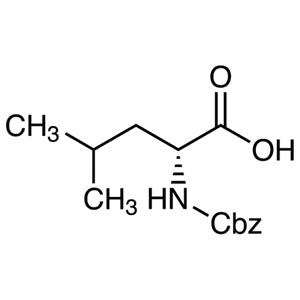
N-Carbobenzoxy-D-leucine is a chemical compound widely used in chemical and biochemical experiments, particularly in the field of peptide chemistry. This compound serves as a derivative of leucine and plays a crucial role in studying protein interactions and peptide modifications. Its application in laboratories spans from peptide synthesis to protein structure analysis, making it an essential tool for researchers. Due to its stability and controlled reactivity, it is often preferred in biochemical and pharmacological research.
The compound's unique chemical structure, featuring a protected carboxyl group via the benzoate moiety, allows for selective chemical reactions. This property makes it ideal for reactions requiring specific functional group protection. Additionally, its good solubility in organic solvents facilitates separation and utilization in various chemical processes. These characteristics contribute to its versatility and reliability in laboratory settings.
In Indonesian laboratories, N-Carbobenzoxy-D-leucine is extensively used by researchers in pharmaceutical, molecular biology, and organic chemistry fields. It is a key component in experiments related to peptide synthesis and structural studies. Many research institutions and universities rely on this compound for its consistent performance and scientific value in experimental work.
- Peptide Synthesis: This compound is ideal for synthesizing peptides due to its protected carboxyl group, which prevents premature reactions during synthesis.
- Protein Structure Analysis: It is used in studies that require the modification of amino acid residues to understand protein structure and function.
- Biochemical Research: Its stability and controlled reactivity make it suitable for experiments involving enzyme activity and substrate interactions.
- Molecular Biology Studies: It supports research on protein-protein interactions and the functional roles of amino acids in biological systems.
- Organic Chemistry Reactions: Its solubility in organic solvents makes it a valuable reagent in various synthetic pathways and reaction mechanisms.
| Brand | TCI |
|---|---|
| CAS number | 28862-79-5 |
| Molecular formula | — |
| Purity | — |
| Category | Chemistry > Chemical Biology > Peptide Chemistry |
| Pack sizes | Available in various quantities as per supplier specifications |
| Physical form | Solid powder |
| Storage | Store in a cool, dry place away from moisture and light |
N-Carbobenzoxy-D-leucine should be stored in a cool, dry place, away from moisture and direct light to maintain its chemical integrity. It is recommended to use airtight containers to prevent exposure to air and humidity. Due to its chemical nature, it should be handled with care, using appropriate personal protective equipment such as gloves and safety goggles. Avoid contact with skin and eyes, and ensure proper ventilation in the workspace. It is important to keep the compound in a secure location, away from incompatible materials to prevent any potential chemical reactions. Proper storage ensures the compound remains effective and safe for use in laboratory applications.
—
Produk Terkait
-
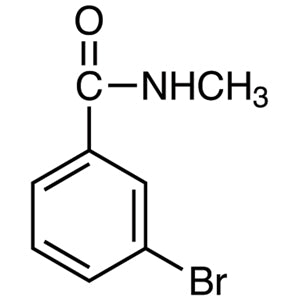
3-Bromo-N-methylbenzamide TCI B5644
Regular price From Rp 1.431.150,00Regular price -
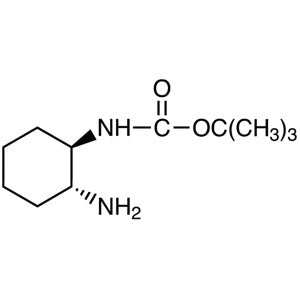
(1R,2R)-N1-(tert-Butoxycarbonyl)-1,2-cyclohexanediamine TCI B5647
Regular price Rp 3.367.350,00Regular price -
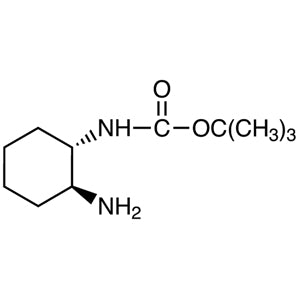
(1S,2S)-N1-(tert-Butoxycarbonyl)-1,2-cyclohexanediamine TCI B5648
Regular price From Rp 2.809.800,00Regular price -
N-Benzyl-2,2,2-trifluoroacetamide TCI B5705
Regular price From Rp 1.326.150,00Regular price -
SB-366791 TCI B5762
Regular price From Rp 5.485.200,00Regular price -
N-Carbobenzoxypropargylamine TCI B5958
Regular price Rp 4.849.950,00Regular price -
tert-Butyl(3-Oxo-3-phenylpropyl)carbamate TCI B5981
Regular price Rp 4.584.300,00Regular price -
SB297006 TCI B6053
Regular price From Rp 3.710.700,00Regular price