TCI D4257 DAPT (CAS 208255-80-5) is a well-known γ-secretase inhibitor compound used widely in cell biology and organoid culture. By inhibiting the γ-secretase enzyme complex, DAPT prevents the cleavage of the Notch receptor, so that the Notch signalling pathway is not activated. Because the Notch pathway governs cell fate decisions and the balance between stem cell maintenance and differentiation, this compound has become an essential tool for researchers who want to steer the development of cell cultures and organoids in a particular direction in a controlled manner that can be reproduced from one experiment to the next.
The properties that make DAPT a preferred choice are its good selectivity toward γ-secretase, its ability to cross the cell membrane, and the transient nature of its effect, which means the inhibition can be halted simply by exchanging the culture medium. The compound is active at micromolar concentrations and is generally dissolved in dimethyl sulfoxide to prepare a stock solution that is subsequently diluted into the medium. Its limited solubility in water makes the use of an organic solvent the standard approach, with a solvent control always included in the experimental design. Its small molecular size makes penetration into organoid structures straightforward.
In Indonesian laboratories, DAPT is typically used in cell biology and organoid research groups that work on differentiation and cell fate questions. It is handled as a small-molecule inhibitor: a DMSO stock solution is prepared, then diluted into culture medium to reach working micromolar concentrations, alongside a matched solvent control. Because its effect is reversible on medium exchange, it fits well into staged differentiation protocols where the timing of Notch inhibition must be defined and repeatable across runs.
- Organoid differentiation studies — DAPT inhibits γ-secretase so Notch signalling is switched off, allowing researchers to push organoid cultures toward differentiated cell types in a controlled, repeatable way.
- Notch signalling pathway research — because the compound blocks cleavage of the Notch receptor, it serves as a direct pharmacological tool for testing whether an observed phenotype depends on Notch pathway activation.
- Stem cell maintenance versus differentiation experiments — the Notch pathway governs this balance, so DAPT lets investigators shift cultures away from stem cell maintenance and toward defined differentiation outcomes.
- Cell fate decision assays — its good selectivity toward γ-secretase and its cell membrane permeability make it suitable for treating intact cultures and reading out changes in cell fate.
- Reversible, timed inhibition protocols — the transient nature of its effect means inhibition can be stopped by exchanging the culture medium, supporting staged experiments with defined treatment windows.
| Brand | TCI |
|---|---|
| CAS number | 208255-80-5 |
| Molecular formula | — |
| Purity | — |
| Category | Life Science > Cell Culture > Organoid Culture |
| Pack sizes | available in the catalogue pack sizes offered by TCI for this item |
| Physical form | — |
| Storage | store as directed by the manufacturer's product documentation; stock solutions in DMSO should be kept protected from moisture |
- Solubility handling: limited solubility in water; dimethyl sulfoxide is the standard solvent for stock solutions
Store the container according to the conditions stated in the manufacturer's product documentation and keep it tightly closed to protect the material from moisture, since dimethyl sulfoxide stock solutions readily absorb water. Prepare stock solutions in DMSO in clean, solvent-compatible vials with sealed caps, label them with the concentration and preparation date, and dilute into culture medium only at the point of use. Handle the compound in a laboratory setting with appropriate personal protective equipment, including gloves, a laboratory coat, and eye protection, and weigh out powder with the usual precautions for fine solids. Because the working solutions are used in cell culture, all dilutions and medium additions should be performed under aseptic conditions, and a matched solvent control should be included in every experiment.
—
Produk Terkait
-
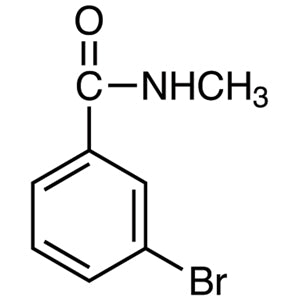
3-Bromo-N-methylbenzamide TCI B5644
Regular price From Rp 1.431.150,00Regular price -
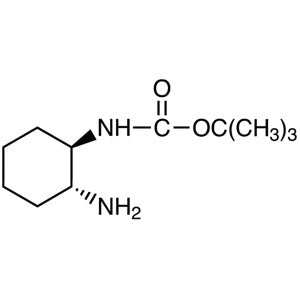
(1R,2R)-N1-(tert-Butoxycarbonyl)-1,2-cyclohexanediamine TCI B5647
Regular price Rp 3.367.350,00Regular price -
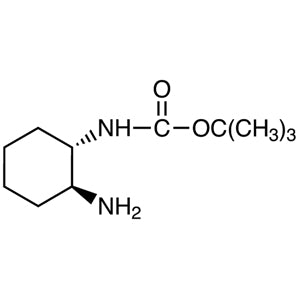
(1S,2S)-N1-(tert-Butoxycarbonyl)-1,2-cyclohexanediamine TCI B5648
Regular price From Rp 2.809.800,00Regular price -
N-Benzyl-2,2,2-trifluoroacetamide TCI B5705
Regular price From Rp 1.326.150,00Regular price -
SB-366791 TCI B5762
Regular price From Rp 5.485.200,00Regular price -
N-Carbobenzoxypropargylamine TCI B5958
Regular price Rp 4.849.950,00Regular price -
tert-Butyl(3-Oxo-3-phenylpropyl)carbamate TCI B5981
Regular price Rp 4.584.300,00Regular price -
SB297006 TCI B6053
Regular price From Rp 3.710.700,00Regular price