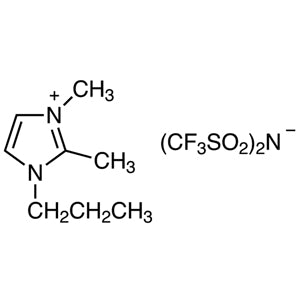
TCI D4289 is 2,3-Dimethyl-1-propylimidazolium Bis(trifluoromethanesulfonyl)imide, an ionic liquid built from a substituted imidazolium cation paired with a bistriflimide anion. Ionic liquids are organic salts that remain liquid across ordinary laboratory working temperatures, which allows a single material to act simultaneously as solvent, electrolyte, and reaction medium without requiring an additional molecular solvent. Supplied under the specialty synthesis group, this product is widely used in electrochemistry research, catalysis, and separation work that demands a medium with extremely low vapour pressure.
The characteristic that makes this grade a preferred choice is the combination of an imidazolium cation whose C2 position has already been methylated with a highly delocalised bis(trifluoromethanesulfonyl)imide anion. Methylation at C2 removes the most acidic proton on the imidazolium ring, so the medium is more tolerant of basic conditions and does not readily form carbenes — an important advantage in long-running experiments. The bistriflimide anion contributes hydrophobic character, a viscosity that is relatively low for an ionic liquid, good ionic conductivity, and a wide electrochemical stability window.
In Indonesian laboratories, this material is typically handled in university research groups, government research institutes, and industrial R&D units working on electrochemistry, catalysis, and separation science. It is normally drawn in small quantities for method development and comparative studies against conventional molecular solvents, where its negligible vapour pressure is valued in warm, humid working environments. Users generally dispense it inside a fume hood or glove box and return the remainder to controlled storage between experiments.
- Electrochemical media and electrolyte studies: the wide electrochemical stability window and good ionic conductivity allow voltammetry and related measurements without an added supporting molecular solvent.
- Catalysis research: the C2-methylated imidazolium cation resists carbene formation under basic conditions, giving a more predictable medium for reactions that run over extended periods.
- Liquid–liquid separation and extraction: the hydrophobic bistriflimide anion supports phase behaviour that separates cleanly from aqueous systems in partitioning and recovery experiments.
- Reaction media for specialty synthesis: the salt functions as both solvent and reaction medium, simplifying systems where an additional molecular solvent would complicate work-up or analysis.
- Low vapour pressure solvent replacement studies: extremely low volatility makes it suitable for experiments comparing conventional volatile solvents against non-volatile ionic liquid alternatives.
| Brand | TCI |
|---|---|
| CAS number | 169051-76-7 |
| Molecular formula | — |
| Purity | — |
| Category | Chemistry > Specialty Synthesis > Ionic Liquids [Specialty Synthesis] |
| Pack sizes | available in standard TCI research-scale pack sizes; please confirm the currently listed option when ordering |
| Physical form | ionic liquid (liquid at ordinary laboratory working temperatures) |
| Storage | keep in a closed original container under controlled laboratory conditions |
- Chemical name: 2,3-Dimethyl-1-propylimidazolium Bis(trifluoromethanesulfonyl)imide
Store the container tightly closed in a cool, dry, well-ventilated area away from direct sunlight and sources of heat or ignition. Because the bistriflimide anion gives the material hydrophobic character, keep the container sealed to limit contact with atmospheric moisture, and use dry glassware or the original supplier packaging when dispensing. Handle inside a fume hood or, for moisture-sensitive work, a glove box. Wear safety glasses, chemical-resistant gloves, and a laboratory coat. Avoid contact with skin and eyes, keep the product separate from incompatible chemicals, and consult the manufacturer's safety data sheet before use and for disposal guidance.
—
Produk Terkait
-
1-Butyl-3-methylimidazoliumTrifluoroacetate TCI B5526
Regular price From Rp 1.829.100,00Regular price -
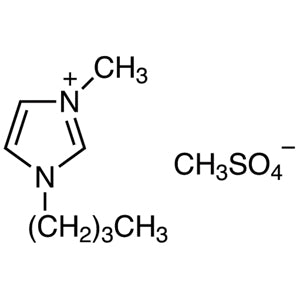
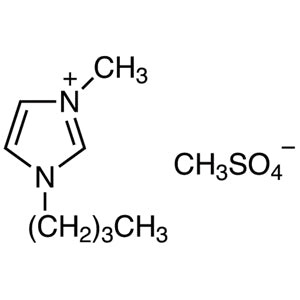
1-Butyl-3-methylimidazoliumMethylSulfate TCI B5527
Regular price From Rp 1.485.750,00Regular price -
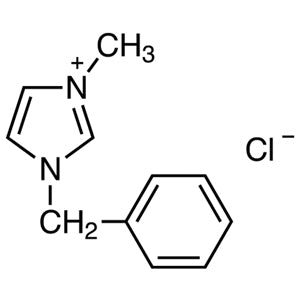
1-Benzyl-3-methylimidazoliumChloride TCI B5543
Regular price Rp 823.200,00Regular price -
1-Butyl-3-methylimidazoliumHydrogenSulfate TCI B5569
Regular price From Rp 823.200,00Regular price -
1-Butyl-3-methylimidazoliumAcetate TCI B5582
Regular price From Rp 875.700,00Regular price -
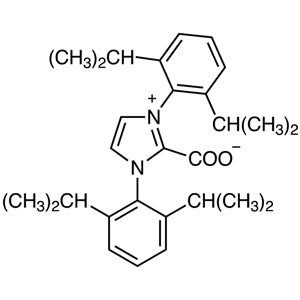
1,3-Bis(2,6-diisopropylphenyl)imidazolium-2-carboxylate TCI B5603
Regular price Rp 2.625.000,00Regular price -
1-Butyl-3-methylimidazoliumHexafluoroantimonate TCI B5724
Regular price From Rp 1.749.300,00Regular price -
1-Benzyl-3-methylimidazoliumTetrafluoroborate TCI B5725
Regular price Rp 717.150,00Regular price