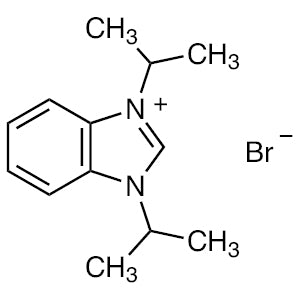
TCI D5778 1,3-Diisopropylbenzimidazolium Bromide is a benzimidazolium salt carrying two isopropyl groups on the nitrogen atoms at positions 1 and 3, paired with a bromide counter-ion. Its role in the laboratory is that of an N-heterocyclic carbene (NHC) ligand precursor: when treated with a suitable base, the proton at the C2 position is removed and a benzimidazolylidene carbene is generated, a species that binds very strongly to transition metal centres. In catalysis laboratories, salts of this type are a staple starting material for preparing metal–NHC complex catalysts, either isolated separately beforehand or generated in situ directly in the reaction flask.
The property that makes this compound a preferred choice is the combination of the high sigma-donor strength of the benzimidazolylidene core and the moderate steric hindrance of the two isopropyl groups. The strong sigma donation reinforces the metal–ligand bond, so the resulting catalyst is more resistant to heat and air than many phosphine-based systems. At the same time, the isopropyl substituents are not excessively bulky, which keeps the coordination sphere sufficiently open for substrates to approach the metal centre. As a solid salt, the material is also far easier to weigh, store and handle than the corresponding free carbene, which is not stable in open air.
In Indonesian laboratories, this reagent is typically found in university and institutional research groups working on homogeneous catalysis, organometallic synthesis and methodology development, as well as in industrial R&D units that screen catalyst systems for coupling and related transformations. It is generally used on a small scale, weighed out on an analytical balance and taken into a Schlenk line or glovebox workflow together with a base and the chosen metal precursor, then stored back in its original container between experiments.
TCI brochures (PDF)
- N-Heterocyclic Carbene (NHC) Ligands and Metal Complexes 2026-02-10 · p. 1
Related TCI products
- TCI M2791 889617-36-1 3,3'-Methylenebis[1-(2,6-diisopropylphenyl)-3-imidazolium Bromide]
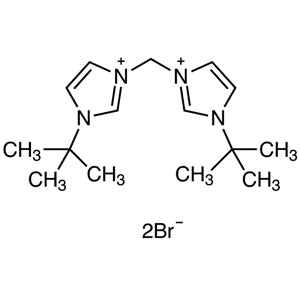
- TCI M2790 247902-48-3 3,3'-Methylenebis(1-tert-butyl-3-imidazolium Bromide)
- TCI B3158 173035-10-4 1,3-Bis(2,4,6-trimethylphenyl)imidazolinium Chloride
- TCI B3157 258278-25-0 1,3-Bis(2,6-diisopropylphenyl)imidazolinium Chloride
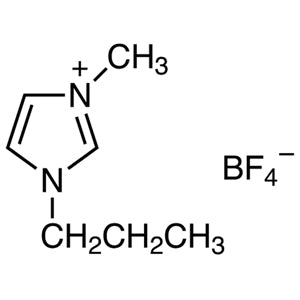
- TCI M3036 244193-48-4 1-Methyl-3-propylimidazolium Tetrafluoroborate
- TCI D5930 2459632-56-3 3-Neopentyl-5,6,7,8-tetrahydro-4H-cyclohepta[d]thiazol-3-ium Perchlorate
- Preparation of metal–NHC complexes: deprotonation at C2 delivers a strongly coordinating benzimidazolylidene that binds transition metal centres cleanly, giving well-defined and isolable organometallic complexes.
- In situ catalyst generation: the salt can be combined with a base and a metal precursor directly in the reaction flask, avoiding the separate isolation and handling of an air-sensitive free carbene.
- Homogeneous catalysis studies: the strong sigma-donor character of the benzimidazolylidene core produces catalysts with greater thermal and air resistance than many comparable phosphine-based systems.
- Ligand steric and electronic screening: the moderate bulk of the two isopropyl groups keeps the coordination sphere open, making this salt useful in comparative series against bulkier NHC precursors.
- Organometallic methodology and teaching research: as a stable crystalline solid it is convenient for training students in carbene chemistry, base selection and standard inert-atmosphere manipulation techniques.
| Brand | TCI |
|---|---|
| CAS number | 684283-51-0 |
| Molecular formula | — |
| Purity | — |
| Category | Chemistry > Catalysis and Inorganic Chemistry > Carbon-Donor Ligands [Catalysis] |
| Pack sizes | available in the standard TCI catalogue packaging options listed for this item |
| Physical form | solid salt (benzimidazolium bromide) |
| Storage | keep in a tightly closed container, protected from moisture |
Store the container tightly closed in a cool, dry and well-ventilated place, away from direct sunlight and sources of heat or ignition. As with other organic halide salts, protect the material from moisture and humid air; the original supplier container is the most suitable packaging, and a desiccator or dry cabinet is recommended for opened bottles. Handle in a fume hood using safety glasses, gloves and a laboratory coat, and weigh the solid carefully to avoid generating dust. Because the compound is used to generate a reactive carbene on treatment with base, prepare solutions under an inert atmosphere and keep the material away from strong bases and incompatible reagents until required. Always consult the manufacturer's Safety Data Sheet before use and dispose of residues according to your institution's chemical waste procedures.
—
Product Categories
- Catalysis and Inorganic ChemistryCarbon-Donor Ligands [Catalysis]Imidazolinium Salts, Cyclic Alkyl Amino Carbene (CAAC) Pecursors [Carbon-Donor Ligands]
- Catalysis and Inorganic ChemistryNitrogen-Donor Ligands [Catalysis]Pyrazole Ligands, Imidazole Ligands, Triazole Ligands
- Catalysis and Inorganic ChemistryCross-coupling Reaction using Transition Metal Catalysts [C-C Bond Formation]N-Heterocyclic Carbene (NHC) Ligands [Cross-coupling Reaction using Transition Metal Catalysts]
- Synthetic ReagentsC-C Bond Formation [Synthetic Reagents]Cross-coupling Reaction using Transition Metal Catalysts [C-C Bond Formation]
Produk Terkait
-
3,3'-Methylenebis[1-(2,6-diisopropylphenyl)-3-imidazoliumBromide] TCI M2791
Regular price From Rp 4.584.300,00Regular priceRp 3.221.400,00Sale price From Rp 4.584.300,00 -
3,3'-Methylenebis(1-tert-butyl-3-imidazoliumBromide) TCI M2790
Regular price From Rp 2.093.700,00Regular priceRp 1.479.450,00Sale price From Rp 2.093.700,00 -
1,3-Bis(2,4,6-trimethylphenyl)imidazoliniumChloride TCI B3158
Regular price From Rp 2.147.250,00Regular priceRp 1.517.250,00Sale price From Rp 2.147.250,00 -
1,3-Bis(2,6-diisopropylphenyl)imidazoliniumChloride TCI B3157
Regular price From Rp 1.246.350,00Regular priceRp 887.250,00Sale price From Rp 1.246.350,00 -
1-Methyl-3-propylimidazoliumTetrafluoroborate TCI M3036
Regular price From Rp 1.167.600,00Regular priceRp 831.600,00Sale price From Rp 1.167.600,00 -
3-Neopentyl-5,6,7,8-tetrahydro-4H-cyclohepta[d]thiazol-3-iumPerchlorate TCI D5930
Regular price From Rp 2.969.400,00Regular priceRp 2.091.600,00Sale price From Rp 2.969.400,00 -
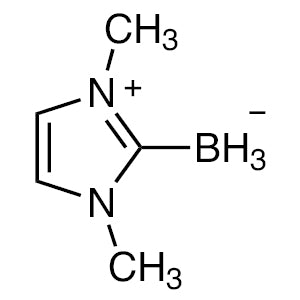
(1,3-Dimethyl-1H-imidazol-3-ium-2-yl)trihydroborate TCI D5679
Regular price Rp 3.735.900,00Regular priceRp 2.628.150,00Sale price Rp 3.735.900,00 -
1-(2,6-Diethylphenyl)-2,2,4-trimethyl-4-phenyl-3,4-dihydro-2H-pyrrol-1-iumTetrafluoroborate TCI D5655
Regular price From Rp 5.617.500,00Regular priceRp 3.943.800,00Sale price From Rp 5.617.500,00
![TCI M2791 889617-36-1 3,3'-Methylenebis[1-(2,6-diisopropylphenyl)-3-imidazolium Bromide]](http://amiscientific.com/cdn/shop/files/TCI2510M2791_2cbe188a-24b9-4584-afee-4e2701774adf.jpg?v=1792649182&width=533)
![889617-36-1 3,3'-Methylenebis[1-(2,6-diisopropylphenyl)-3-imidazolium Bromide] - AMI Scientific](http://amiscientific.com/cdn/shop/files/TCI2510M2791.jpg?v=1767127228&width=533)



![TCI D5930 2459632-56-3 3-Neopentyl-5,6,7,8-tetrahydro-4H-cyclohepta[d]thiazol-3-ium Perchlorate](http://amiscientific.com/cdn/shop/files/TCI2510D5930_5fb27f49-8b33-444c-ac68-30fb8d35c544.jpg?v=1792640232&width=533)
![3-Neopentyl-5,6,7,8-tetrahydro-4H-cyclohepta[d]thiazol-3-ium Perchlorate (CAS 2459632-56-3) - TCI D5930 - AMI Scientific](http://amiscientific.com/cdn/shop/files/TCI2510D5930.jpg?v=1767109451&width=533)