TCI E0748 7-Ethyl-10-hydroxycamptothecin is a camptothecin derivative widely known among researchers as SN-38, the active metabolite of irinotecan. The compound belongs to the pentacyclic alkaloid class and carries the characteristic lactone ring of this family. It acts as a topoisomerase I inhibitor, targeting the enzyme responsible for relieving DNA strand tension during replication. In research laboratories, this compound has become one of the most frequently studied cytotoxic payloads in antibody-drug conjugate development, a strategy that directs a potent drug selectively toward target cells by means of an antibody carrier.
The reason this compound is selected lies in its very high cytotoxic potency at low concentrations, combined with the presence of a phenolic hydroxyl group at position 10 and a tertiary hydroxyl on the lactone ring, both of which provide attachment points for chemical linkers. This combination matters because an ADC payload must be potent enough to kill the target cell while still being capable of stable tethering and release at the appropriate moment. The pH-dependent equilibrium between the lactone and carboxylate forms is another aspect frequently investigated, because it influences the biological activity of the molecule. Its solubility in water is limited.
In Indonesian laboratories, this reagent is typically used in academic research groups, university pharmacy and chemistry departments, and institutional drug discovery units working on targeted therapy concepts. It is generally handled at small scale within synthesis and conjugation studies, where researchers prepare linker-payload constructs and evaluate their behaviour. Because it is supplied as a research reagent, it is intended for laboratory investigation rather than clinical or production use, and is normally managed alongside other high-potency compounds under controlled handling procedures.
TCI brochures (PDF)
- Pharmacologically Active Metabolites 2025-07-22 · p. 1
- Alkaloids 2025-10-10 · p. 5
- Antimicrobials and Antitumor Agents for Research and Experimental Use 2025-04-24 · p. 15
- Pharmaceutical Ingredients for Research and Experimental Use 2026-03-09 · p. 16
- Reagents for Biological Research 2025-03-11 · p. 35
- Antibody-drug conjugate payload research: the compound serves as a well-characterised cytotoxic payload, allowing research groups to build and compare conjugate constructs using a molecule whose behaviour is already extensively documented.
- Linker chemistry development: the phenolic hydroxyl at position 10 and the tertiary hydroxyl on the lactone ring give chemists two distinct attachment points for designing and testing new linker architectures.
- Topoisomerase I inhibition studies: as an inhibitor of the enzyme that relieves DNA strand tension during replication, it is used to investigate mechanisms of action in cell-based and enzymatic assay systems.
- Lactone-carboxylate equilibrium investigation: the pH-dependent balance between the two forms makes this compound a useful subject for studies on how chemical speciation affects biological activity.
- Camptothecin derivative structure-activity work: as the active metabolite of irinotecan, it functions as a reference point for comparing newly prepared camptothecin analogues within medicinal chemistry programmes.
From the TCI brochure
- A Topoisomerase-I Inhibitor
| Brand | TCI |
|---|---|
| CAS number | 86639-52-3 |
| Molecular formula | — |
| Purity | — |
| Category | Chemistry > Pharmaceutical Development and Drug Discovery Research Reagents > Antibody-Drug Conjugates (ADC) Preparation Research Reagents |
| Pack sizes | available in the pack sizes listed on this product page |
| Physical form | — |
| Storage | refer to the storage conditions stated by the manufacturer on the product label |
- Product code: E0748
Store the container in the condition specified by the manufacturer on the product label, keeping it tightly closed and protected from moisture and direct light. Use the original supplier container or a suitable tightly sealed alternative, and allow the container to reach room temperature before opening to reduce condensation. Because this is a high-potency cytotoxic research compound, handle it only in a designated area with appropriate engineering controls such as a fume hood or safety cabinet, and wear gloves, a laboratory coat, and eye protection. Weighing and solution preparation should be carried out carefully to avoid generating dust or aerosols. Dispose of residues and contaminated consumables in accordance with the institution's chemical waste procedures, and consult the manufacturer's safety data sheet before use.
—
Product Categories
- Biochemicals and ReagentsAlkaloidsQuinoline Alkaloids
- Biochemicals and ReagentsAntibody-Drug Conjugates (ADC) Preparation Research ReagentsPayload (Drug) Candidates [ADC Preparation Research Reagents]
- Biochemicals and ReagentsEnzymes, Enzyme Inhibitors, Enzyme SubstratesEnzyme Inhibitors [Biochemicals and Reagents]
- Biochemicals and ReagentsPharmaceutical Research Reagents (for Experimental Use)Antitumor Research Reagents (for Experimental Use)
- Biochemicals and ReagentsBioactive CompoundsPharmacologically Active Metabolites
- Cell BiologyApoptosisApoptosis Inducers
- Cell BiologyCancer ResearchAntitumor Agents for Research
- Pharmaceutical Development and Drug Discovery ResearchAntibody-Drug Conjugates (ADC) Preparation Research ReagentsPayload (Drug) Candidates [ADC Preparation Research Reagents]
- Pharmaceutical Development and Drug Discovery ResearchPharmaceutical Research Reagents (for Experimental Use)Antitumor Research Reagents (for Experimental Use)
Produk Terkait
-
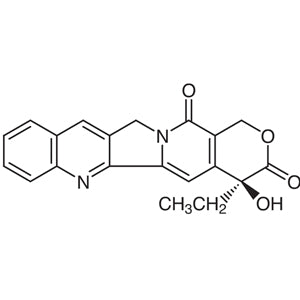
(S)-(+)-Camptothecin TCI C1495
Regular price From Rp 769.650,00Regular priceRp 553.350,00Sale price From Rp 769.650,00 -
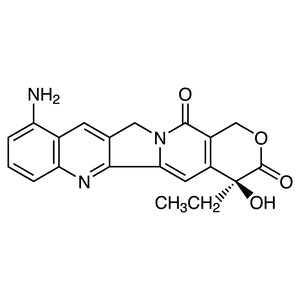
9-Aminocamptothecin TCI A2063
Regular price Rp 8.135.400,00Regular priceRp 5.704.650,00Sale price Rp 8.135.400,00 -
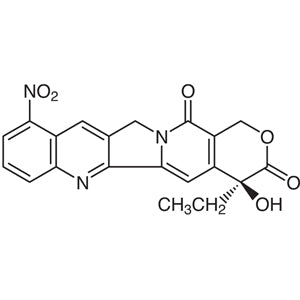
9-Nitrocamptothecin TCI N0822
Regular price Rp 7.817.250,00Regular priceRp 5.482.050,00Sale price Rp 7.817.250,00 -
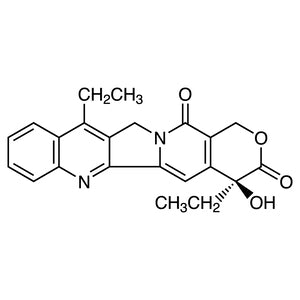
7-Ethylcamptothecin TCI E0781
Regular price From Rp 1.378.650,00Regular priceRp 979.650,00Sale price From Rp 1.378.650,00 -
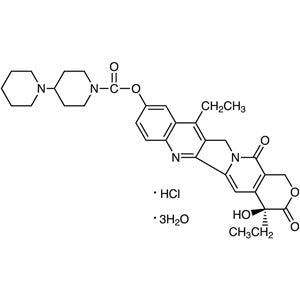
IrinotecanHydrochlorideTrihydrate TCI I0714
Regular price Rp 6.863.850,00Regular priceRp 4.815.300,00Sale price Rp 6.863.850,00 -
10-Hydroxycamptothecin TCI H1463
Regular price Rp 6.916.350,00Regular priceRp 4.852.050,00Sale price Rp 6.916.350,00 -
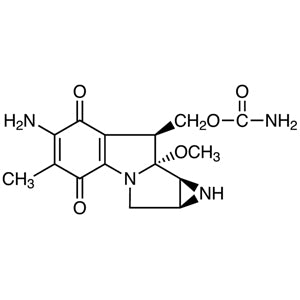
Ametycin TCI M2320
Regular price From Rp 2.914.800,00Regular priceRp 2.053.800,00Sale price From Rp 2.914.800,00 -
Etoposide TCI E0675
Regular price From Rp 1.087.800,00Regular priceRp 775.950,00Sale price From Rp 1.087.800,00