TCI E1441, CAS number 157057-20-0, is 1-(1-Ethoxyethoxy)-4-vinylbenzene stabilized with TBC. This compound is a substituted styrene monomer in which the hydroxyl group is protected as a 1-ethoxyethyl acetal. In other words, the molecule is 4-vinylphenol whose phenolic group has been temporarily "capped" so that it does not interfere with the polymerization process. Its role in the materials science laboratory is to serve as an intermediate monomer that enables the preparation of poly(4-hydroxystyrene) and its copolymers through controlled polymerization — something difficult to achieve if the phenol group were left free, because the phenolic proton would quench the active polymerizing species.
The property that makes this monomer a preferred choice lies in the acetal protecting group, which is readily removed again under mild acidic conditions, so that the synthesized polymer can be converted into its phenolic form without damaging the main chain. The vinyl bond on the aromatic ring makes it reactive toward radical and anionic polymerization as well as controlled techniques such as RAFT and ATRP, allowing researchers to design molecular weight and chain architecture in a directed manner. The presence of the TBC stabilizer, 4-tert-butylcatechol, prevents premature self-polymerization during storage and handling, so the material remains usable as supplied.
In Indonesian laboratories, this monomer is typically encountered in university and institutional materials science groups working on polymer synthesis, where poly(4-hydroxystyrene) and its derivatives are of interest. It is normally ordered in the modest quantities appropriate to bench-scale synthesis and controlled polymerization experiments, handled together with the initiators, chain transfer agents and solvents used in the same workflow, and kept under the cold storage conditions its stabilized formulation implies.
TCI brochures (PDF)
- Biomaterials Research Reagents 2025-02-19 · p. 13
- Monomers 2025-05-28 · p. 15
Related TCI products
- TCI V0059 1075-49-6 4-Vinylbenzoic Acid (stabilized with BHT)
- TCI E1556 612-15-7 1-Methoxy-2-vinylbenzene (stabilized with HQ)
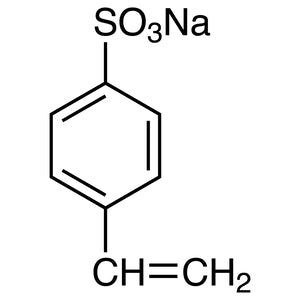
- TCI O0609 2695-37-6 Sodium 4-Vinylbenzenesulfonate
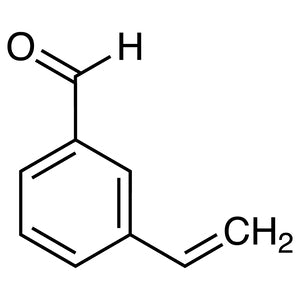
- TCI E1574 19955-99-8 3-Vinylbenzaldehyde (stabilized with TBC)
- TCI D0958 1321-74-0 Divinylbenzene (m- and p- mixture) (contains Ethylvinylbenzene, Diethylbenzene) (stabilized with TBC)
- TCI E0652 7328-17-8 2-(2-Ethoxyethoxy)ethyl Acrylate (stabilized with MEHQ)
- Synthesis of poly(4-hydroxystyrene): the protected acetal form polymerizes cleanly, then deprotects under mild acid to give the phenolic polymer without chain degradation.
- Controlled radical polymerization by RAFT or ATRP: the masked phenol prevents the phenolic proton from quenching active species, so molecular weight and dispersity remain controllable.
- Anionic polymerization studies: protection of the hydroxyl group keeps the acidic proton away from the carbanionic chain end, making living anionic conditions feasible for this monomer.
- Copolymer design with other vinyl monomers: the styrenic vinyl bond copolymerizes readily, letting researchers place latent phenolic units at defined positions along a chain.
- Preparation of functional polymer architectures: because chain length and structure can be targeted deliberately, block and gradient structures bearing deprotectable phenol groups can be built.
| Brand | TCI |
|---|---|
| CAS number | 157057-20-0 |
| Molecular formula | — |
| Purity | — |
| Category | Materials Science > Polymer/Macromolecule Reagents > Monomers |
| Pack sizes | — |
| Physical form | — |
| Storage | cold storage recommended for a stabilized vinyl monomer; refer to the manufacturer's label and documentation for the exact condition and available pack sizes |
- Chemical name: 1-(1-Ethoxyethoxy)-4-vinylbenzene (stabilized with TBC)
- Stabilizer: TBC (4-tert-butylcatechol)
Store this monomer cold and away from light and heat sources, since vinyl monomers can self-polymerize when warmed. Keep the material in its original tightly closed container from the manufacturer, which is formulated with the TBC stabilizer already present; do not transfer it to containers that cannot be sealed properly, and avoid removing the stabilizer unless the experimental protocol requires it immediately before use. Handle in a fume hood with gloves, safety glasses and a laboratory coat, keep the container away from acids that could prematurely cleave the acetal protecting group, and consult the manufacturer's safety data sheet before opening. Return the container to cold storage promptly after each use.
—
Product Categories
Produk Terkait
-
4-VinylbenzoicAcid(stabilizedwithBHT) TCI V0059
Regular price From Rp 822.150,00Regular priceRp 590.100,00Sale price From Rp 822.150,00 -
1-Methoxy-2-vinylbenzene(stabilizedwithHQ) TCI E1556
Regular price From Rp 3.817.800,00Regular priceRp 2.669.100,00Sale price From Rp 3.817.800,00 -
Sodium4-Vinylbenzenesulfonate TCI O0609
Regular price From Rp 980.700,00Regular priceRp 685.650,00Sale price From Rp 980.700,00 -
3-Vinylbenzaldehyde(stabilizedwithTBC) TCI E1574
Regular price From Rp 2.227.050,00Regular priceRp 1.557.150,00Sale price From Rp 2.227.050,00 -
Divinylbenzene(m-andp-mixture)(containsEthylvinylbenzene,Diethylbenzene)(stabilizedwithTBC) TCI D0958
Regular price From Rp 584.850,00Regular priceRp 408.450,00Sale price From Rp 584.850,00 -
2-(2-Ethoxyethoxy)ethylAcrylate(stabilizedwithMEHQ) TCI E0652
Regular price From Rp 477.750,00Regular priceRp 333.900,00Sale price From Rp 477.750,00 -
2-VinylbenzoicAcid TCI V0188
Regular price From Rp 2.199.750,00Regular priceRp 1.554.000,00Sale price From Rp 2.199.750,00 -
3-VinylbenzoicAcid TCI E1569
Regular price Rp 3.419.850,00Regular priceRp 2.406.600,00Sale price Rp 3.419.850,00