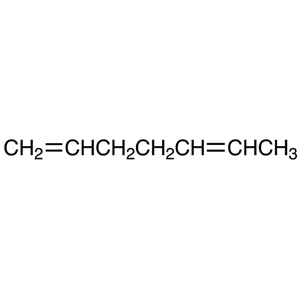
TCI H0551 1,5-Heptadiene (cis- and trans- mixture) is an unsaturated seven-carbon hydrocarbon carrying two carbon-carbon double bonds: one at the terminal position 1 of the chain and a second at position 5, which is supplied as a mixture of the two geometric isomers. As a non-heterocyclic building block, this compound offers a simple diene framework that can be functionalized in stages in the organic synthesis laboratory. The presence of two double bonds sitting in chemically distinct environments makes it an interesting starting material both for studying reaction selectivity and for assembling longer, branched carbon chains.
The principal characteristic that leads chemists to select this compound is the difference in reactivity between the terminal double bond and the internal double bond. The terminal olefin is generally more accessible to transition metal catalysts and addition reagents because it presents little steric hindrance, so transformations such as hydroboration, hydrosilylation, hydroformylation, or metathesis can be directed selectively toward that end of the molecule. The internal double bond, present as a mixture of cis and trans forms, is in turn useful for probing how alkene geometry influences the outcome of a reaction. The material is supplied as a liquid.
In Indonesian laboratories, this type of building block is typically encountered in university research groups and institutional synthesis laboratories working on methodology development, catalyst evaluation, and the preparation of intermediates on a small scale. It is handled in fume hoods with standard glassware for air-sensitive and volatile organic liquids, and is normally purchased in modest quantities appropriate to exploratory reaction work rather than routine production, since each experiment consumes only small volumes of the diene.
Related TCI products
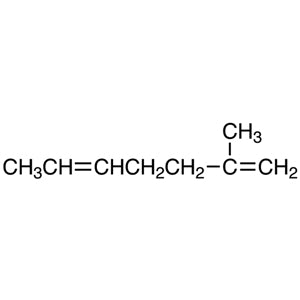
- TCI M0316 6766-54-7 2-Methyl-1,5-heptadiene (cis- and trans- mixture)
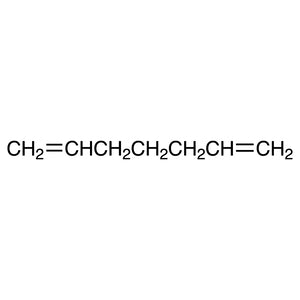
- TCI H0564 3070-53-9 1,6-Heptadiene
- TCI P1841 504-60-9 1,3-Pentadiene (cis- and trans- mixture) (stabilized with TBC)
- TCI P0495 637-50-3 beta-Methylstyrene (cis- and trans- mixture) (stabilized with TBC)
- TCI P0064 109-68-2 2-Pentene (cis- and trans- mixture)
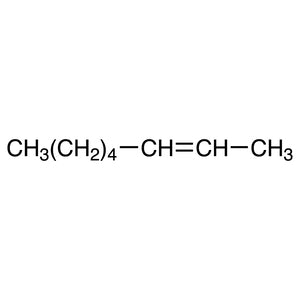
- TCI O0042 111-67-1 2-Octene (cis- and trans- mixture)
- Selective hydroboration studies, where the low steric hindrance of the terminal alkene lets researchers add boron reagents preferentially at one end of the seven-carbon chain.
- Olefin metathesis method development, in which the accessible terminal double bond serves as a reliable handle for cross or ring-closing reactions catalyzed by transition metal complexes.
- Hydrosilylation and hydroformylation catalyst screening, taking advantage of the clear reactivity contrast between the terminal and internal alkenes to measure how well a catalyst discriminates.
- Investigations of alkene geometry effects, since the internal double bond arrives as a defined cis and trans mixture that can reveal geometry-dependent differences in product distribution.
- Carbon chain elaboration in multistep synthesis, where stepwise functionalization of the two double bonds builds longer or branched skeletons from an inexpensive and structurally simple diene.
| Brand | TCI |
|---|---|
| CAS number | 1541-23-7 |
| Molecular formula | — |
| Purity | — |
| Category | Chemistry > Building Blocks > Non-Heterocyclic Building Blocks |
| Pack sizes | — |
| Physical form | liquid |
| Storage | keep tightly closed in a cool, well-ventilated place away from heat and ignition sources |
- Catalogue code: H0551
Store the container tightly closed in a cool, dry, well-ventilated area, away from heat, open flames, sparks, and other ignition sources, as well as from strong oxidizing agents. Keep the material in its original supplier bottle or in a compatible tightly sealed glass container with a chemically resistant closure, and protect it from prolonged exposure to air and light. Handle all transfers inside a functioning fume hood, wearing safety glasses, chemically resistant gloves, and a laboratory coat. Use only non-sparking equipment and grounded apparatus where appropriate, avoid breathing vapours, and keep working quantities to the minimum required for the experiment. Consult the manufacturer's safety data sheet before first use and dispose of residues through an approved chemical waste route.
—
Produk Terkait
-
2-Methyl-1,5-heptadiene(cis-andtrans-mixture) TCI M0316
Regular price Rp 2.254.350,00Regular priceRp 1.576.050,00Sale price Rp 2.254.350,00 -
1,6-Heptadiene TCI H0564
Regular price From Rp 2.571.450,00Regular priceRp 1.797.600,00Sale price From Rp 2.571.450,00 -
1,3-Pentadiene(cis-andtrans-mixture)(stabilizedwithTBC) TCI P1841
Regular price Rp 10.229.100,00Regular priceRp 7.152.600,00Sale price Rp 10.229.100,00 -
beta-Methylstyrene(cis-andtrans-mixture)(stabilizedwithTBC) TCI P0495
Regular price Rp 4.771.200,00Regular priceRp 3.335.850,00Sale price Rp 4.771.200,00 -
2-Pentene(cis-andtrans-mixture) TCI P0064
Regular price From Rp 1.035.300,00Regular priceRp 723.450,00Sale price From Rp 1.035.300,00 -
2-Octene(cis-andtrans-mixture) TCI O0042
Regular price From Rp 1.220.100,00Regular priceRp 852.600,00Sale price From Rp 1.220.100,00 -
3-Methyl-3-heptene(cis-andtrans-mixture) TCI M0991
Regular price From Rp 3.763.200,00Regular priceRp 2.631.300,00Sale price From Rp 3.763.200,00 -
4-Methyl-2-pentene(cis-andtrans-mixture) TCI M0395
Regular price From Rp 1.988.700,00Regular priceRp 1.390.200,00Sale price From Rp 1.988.700,00