TCI H0852 7-Hydroxyflavone is a flavone isomer bearing a hydroxyl group attached at position 7 of the A ring of the 2-phenyl-4H-chromen-4-one skeleton. This particular hydroxylation pattern carries considerable meaning in flavonoid chemistry, because a great many naturally occurring flavonoids — including the glycoside derivatives distributed widely throughout the plant kingdom — carry a functional group at precisely the same point. For that reason the compound occupies an important place both as a heterocyclic building block and as a model molecule in research laboratories working in organic chemistry, natural product chemistry, and pharmaceutical science, where investigators wish to trace how the location of a hydroxyl group governs molecular behaviour.
The property that makes 7-Hydroxyflavone such a frequent choice is the readily directed reactivity of its phenolic group. The hydroxyl at position 7 commonly serves as the attachment point for ether chains, protecting groups, or sugar units during glycoside synthesis, allowing chemists to build libraries of derivative compounds in a stepwise and controlled fashion. The rigid, fully conjugated chromone core gives the framework stability along with distinctive spectroscopic characteristics, in ultraviolet measurement as well as in fluorescence observation. Its adequate solubility in DMSO, methanol, and ethyl acetate makes handling straightforward during routine preparation.
In Indonesian laboratories the material is typically encountered in university research groups and institutional laboratories pursuing natural product and medicinal chemistry programmes, where flavonoid scaffolds are a long-standing area of interest. It is used as a starting material for derivatisation work, as a reference structure when comparing hydroxylation patterns, and as a model compound in spectroscopic method development. Its supply in research-scale packaging suits the working pattern of academic and institutional laboratories running exploratory synthesis and characterisation studies.
TCI brochures (PDF)
- Polyphenols 2024-12-05 · p. 1
- Phytochemicals 2025-12-17 · p. 10
- Glycoside synthesis studies: the free phenolic hydroxyl at position 7 provides a defined attachment point for sugar units, letting researchers prepare flavonoid glycoside analogues under controlled, stepwise conditions.
- Structure-activity relationship investigations: because the hydroxyl position is fixed and unambiguous, the compound serves as a reference structure for tracing how hydroxylation location influences molecular behaviour within flavonoid series.
- Derivative library construction: the directed reactivity of the phenol allows ether chains and protecting groups to be installed selectively, supporting the stepwise assembly of related compound collections.
- Spectroscopic method development: the rigid, fully conjugated chromone core yields distinctive ultraviolet absorption and fluorescence characteristics that make the compound useful for calibrating and validating optical measurement procedures.
- Natural product chemistry teaching and reference work: as a model flavone bearing a widely occurring substitution pattern, it supports comparative studies of plant-derived flavonoids in academic and institutional research settings.
| Brand | TCI |
|---|---|
| CAS number | 6665-86-7 |
| Molecular formula | — |
| Purity | — |
| Category | Chemistry > Building Blocks > Heterocyclic Building Blocks |
| Pack sizes | available in research-scale packaging; please refer to the pack options listed on this product page |
| Physical form | — |
| Storage | store in a cool, dry place away from light; follow the storage statement on the manufacturer label |
- Solubility: soluble in DMSO, methanol, and ethyl acetate
Keep 7-Hydroxyflavone in its original tightly closed container, stored in a cool, dry location protected from direct light and away from sources of heat or ignition. Amber glass bottles or the supplier's own packaging are appropriate, since the conjugated chromone system is best protected from prolonged light exposure. Handle the solid in a fume hood using gloves, safety glasses, and a laboratory coat, and avoid generating dust during weighing and transfer. Prepare DMSO, methanol, or ethyl acetate solutions immediately before use where possible, label all working solutions clearly, and consult the manufacturer's safety data sheet before first use and for disposal guidance.
—
Product Categories
Produk Terkait
-
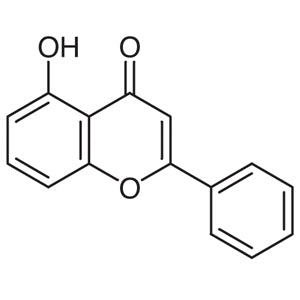
5-Hydroxyflavone TCI H1238
Regular price Rp 5.141.850,00Regular priceRp 3.610.950,00Sale price Rp 5.141.850,00 -
6-Hydroxyflavone TCI H0851
Regular price From Rp 557.550,00Regular priceRp 405.300,00Sale price From Rp 557.550,00 -
3-Hydroxyflavone TCI H0379
Regular price From Rp 1.192.800,00Regular priceRp 849.450,00Sale price From Rp 1.192.800,00 -
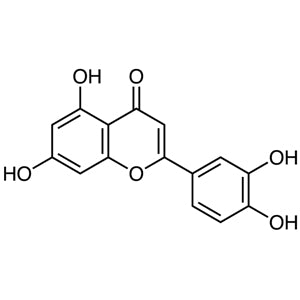
3',4',5,7-Tetrahydroxyflavone TCI T2682
Regular price From Rp 1.618.050,00Regular priceRp 1.146.600,00Sale price From Rp 1.618.050,00 -
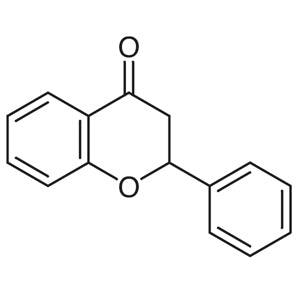
Flavanone TCI F0255
Regular price From Rp 1.087.800,00Regular priceRp 775.950,00Sale price From Rp 1.087.800,00 -
6-Hydroxyflavanone TCI H1027
Regular price From Rp 1.351.350,00Regular priceRp 960.750,00Sale price From Rp 1.351.350,00 -
7-Hydroxyflavanone TCI H1006
Regular price Rp 1.829.100,00Regular priceRp 1.294.650,00Sale price Rp 1.829.100,00 -
7,8-Dihydroxyflavone TCI D1916
Regular price From Rp 1.696.800,00Regular priceRp 1.202.250,00Sale price From Rp 1.696.800,00