TCI H0863 (1S,2S,5S)-(-)-2-Hydroxy-3-pinanone is the enantiomeric partner of the 2-hydroxy-3-pinanone derivatives, carrying the opposite configuration at every one of its stereogenic centres. As a chiral building block built on a pinane skeleton, this compound supplies a mirror-image spatial environment, allowing researchers to direct product formation toward the stereochemical outcome opposite to the one obtained with the (+)-form. The ability to select either of the two enantiomeric auxiliaries is highly valuable in asymmetric synthesis laboratories, because a single synthetic route can then be steered to deliver a pair of chiral products that are the reverse of one another.
The characteristic that makes this compound a preferred choice is the rigidity of its bridged bicyclic framework, which guarantees a consistent steric shield in every reaction cycle. The ketone group at position three is ready to form imines or Schiff bases with amines and amino acid esters, while the adjacent tertiary hydroxyl group helps stabilise the intermediate through intramolecular interaction and provides a further point for modification. Because it originates from terpenoid feedstock, the compound possesses a framework that is stable under many ordinary organic reaction conditions, and the auxiliary can be released again once the stereochemistry has been set.
In Indonesian laboratories, the material is typically used in university and institutional research groups working on asymmetric synthesis, where access to both enantiomeric forms of a single auxiliary lets one methodology be validated in both stereochemical directions. It is handled on the bench scale in organic synthesis work, in method development for chiral amino acid and amine derivatives, and as a reference framework for comparative studies on stereochemical control.
- Asymmetric synthesis of amino acid derivatives: the ketone forms Schiff bases with amino acid esters, so the rigid pinane shield directs alkylation toward the stereochemistry opposite to the (+)-form.
- Chiral auxiliary attachment and removal studies: the auxiliary binds through imine formation and can be released again after the stereocentre is set, supporting full auxiliary-recovery workflows.
- Enantiodivergent route development: selecting this enantiomer instead of the (+)-form lets a single established synthetic sequence deliver the mirror-image chiral product without redesigning the route.
- Imine and Schiff base chemistry with amines: the position-three ketone reacts readily with amines, while the neighbouring tertiary hydroxyl stabilises the intermediate through intramolecular interaction.
- Stereochemical control reference work: the bridged bicyclic framework provides a consistent steric environment across reaction cycles, making it useful for comparative studies of asymmetric induction.
| Brand | TCI |
|---|---|
| CAS number | 1845-25-6 |
| Molecular formula | — |
| Purity | — |
| Category | Chemistry > Asymmetric Synthesis > Chiral Building Blocks |
| Pack sizes | available in standard TCI catalogue pack sizes; please confirm the required size when ordering |
| Physical form | — |
| Storage | keep in a tightly closed original container in a cool, dry place away from light |
- Chemical name: (1S,2S,5S)-(-)-2-Hydroxy-3-pinanone
Store the container tightly closed in a cool, dry, well-ventilated area, protected from direct sunlight and away from sources of heat or ignition. The original manufacturer packaging is the most suitable container; where transfer is necessary, use clean, dry, chemically compatible glassware and label it clearly. Handle the compound in a fume hood using safety glasses, gloves, and a laboratory coat, and avoid contact with skin, eyes, and clothing. Because the ketone group is reactive toward amines, keep the material separated from incompatible reagents. Close the container promptly after use to limit moisture uptake, and dispose of residues and contaminated materials in accordance with institutional chemical waste procedures.
—
Produk Terkait
-
TCI B5774 5,10-Bis(4,4,5,5-tetramethyl-1,3,2-dioxaborolan-2-yl)naphtho[1,2-c:5,6-c']bis([1,2,5]oxadiazole)
Regular price Rp 10.255.350,00Regular price -
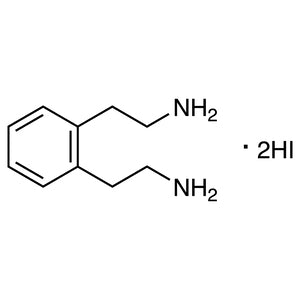
Dihydroiodide TCI B6569
Regular price From Rp 1.936.200,00Regular price -
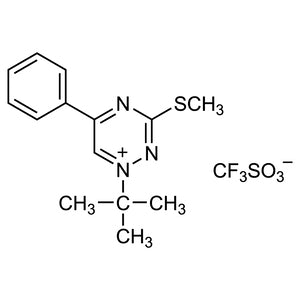
Trifluoromethanesulfonate TCI B7003
Regular price From Rp 1.936.200,00Regular price
![5,10-Bis(4,4,5,5-tetramethyl-1,3,2-dioxaborolan-2-yl)naphtho[1,2-c:5,6-c']bis([1,2,5]oxadiazole) - TCI B5774 - AMI Scientific](http://amiscientific.com/cdn/shop/files/TCI2510B5774.jpg?v=1769180228&width=533)