TCI H0908 Helicin is a naturally occurring glycoside built from salicylaldehyde linked to a glucose sugar through a beta glycosidic bond. The compound belongs to the phenolic glycoside class, historically recognised from plants of the genus Salix, and it now occupies an important position as a reference compound in the field of glycoscience. In the laboratory, Helicin serves as an enzyme substrate, an analytical standard, and a model molecule for studying the behaviour of glycosidic bonds and the release of an easily detected aldehyde aglycone group.
The property that makes Helicin so useful is the presence of an aromatic aldehyde group on its aglycone portion. When the glycosidic bond is cleaved, either enzymatically by beta-glucosidase or chemically under acidic conditions, the liberated salicylaldehyde can be quantified without difficulty through absorbance measurement, through fluorescence after derivatisation, or by chromatography. This practical detectability is precisely what makes Helicin a favoured substrate for measuring enzyme activity. Beyond that, the aldehyde group itself can be reacted to form imines, oximes, or hydrazones, so the compound is also used as a building block for functionalised glycoside conjugates.
In Indonesian laboratories, Helicin is typically found in university research groups working on carbohydrate chemistry and enzymology, in biochemistry teaching laboratories that demonstrate glycosidase action, and in natural product research units that study plant-derived phenolic glycosides. It is generally used at analytical scale in assay development, method validation, and small-scale synthetic work, where a well-characterised reference glycoside with a readily measurable cleavage product is required.
- Beta-glucosidase activity assays, where enzymatic cleavage of the beta glycosidic bond releases salicylaldehyde that can be quantified directly by absorbance measurement.
- Analytical standard preparation for chromatographic work, providing a well-defined phenolic glycoside reference against which sample peaks and retention behaviour can be compared.
- Glycosidic bond stability studies, in which chemical hydrolysis under acidic conditions is monitored to characterise the cleavage kinetics of phenolic glycosides.
- Synthesis of functionalised glycoside conjugates, since the aromatic aldehyde group can be converted into imines, oximes, or hydrazones for further coupling chemistry.
- Biochemistry teaching and method development, where the compound acts as a model molecule demonstrating enzyme specificity and aglycone release in a clearly observable way.
| Brand | TCI |
|---|---|
| CAS number | 618-65-5 |
| Molecular formula | — |
| Purity | — |
| Category | Chemistry > Chemical Biology > Glycoscience |
| Pack sizes | available in standard TCI research pack sizes; please confirm the packaging option required when ordering. |
| Physical form | — |
| Storage | store according to the conditions stated on the manufacturer label and product documentation. |
- Product Code: H0908
Store the product in its original tightly closed container, kept in a cool, dry, and well-ventilated area away from direct sunlight, moisture, and strong acids, since acidic conditions can hydrolyse the glycosidic bond. Amber glass or the supplier's original packaging is suitable for protecting the material during storage. Handle in a fume hood or a well-ventilated workspace while wearing a laboratory coat, safety glasses, and chemical-resistant gloves. Avoid generating dust, avoid inhalation and skin contact, and use clean dry spatulas to prevent contamination. Always consult the manufacturer's Safety Data Sheet before use, and dispose of waste according to applicable laboratory waste procedures.
—
Produk Terkait
-
TCI B5774 5,10-Bis(4,4,5,5-tetramethyl-1,3,2-dioxaborolan-2-yl)naphtho[1,2-c:5,6-c']bis([1,2,5]oxadiazole)
Regular price Rp 10.255.350,00Regular price -
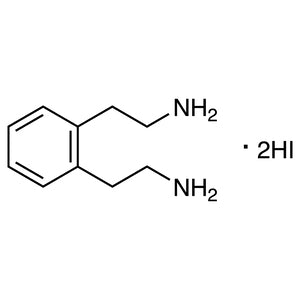
Dihydroiodide TCI B6569
Regular price From Rp 1.936.200,00Regular price -
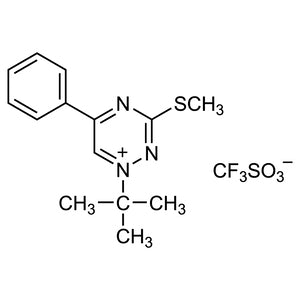
Trifluoromethanesulfonate TCI B7003
Regular price From Rp 1.936.200,00Regular price
![5,10-Bis(4,4,5,5-tetramethyl-1,3,2-dioxaborolan-2-yl)naphtho[1,2-c:5,6-c']bis([1,2,5]oxadiazole) - TCI B5774 - AMI Scientific](http://amiscientific.com/cdn/shop/files/TCI2510B5774.jpg?v=1769180228&width=533)