(S)-(+)-2-Hydroxy-4-phthalimidobutyric Acid is a chiral building block that carries a defined stereogenic centre at the carbon bearing the hydroxyl group, together with a terminal amino group already masked as a phthalimide. The structure combines three elements that asymmetric synthesis chemists need at once: stereochemical purity established from the outset, a carboxylic acid function ready for coupling, and an amine group kept safely hidden until the moment it is to be revealed. Its primary role in the laboratory is to deliver a chiral side chain into a target molecule without the chemist having to perform the asymmetric induction step independently.
The property that most often drives its selection is the reliability of the phthalimide protection. This group is robust towards a wide range of reaction conditions, including acidic media, so the amine does not interfere during activation and coupling of the carboxylic acid, yet it can be removed cleanly at a late stage using hydrazine or an equivalent method. The S configuration at the hydroxyl-bearing carbon survives ordinary transformations because that centre is not prone to epimerisation. The compound is a crystalline solid and dissolves in polar organic solvents such as dimethylformamide, which suits it to standard solution-phase coupling chemistry.
In Indonesian laboratories this material is typically found in university and institutional research groups working on asymmetric synthesis, medicinal chemistry, and peptide-related chemistry, as well as in pharmaceutical development laboratories building chiral intermediates. It is usually handled in small quantities on the milligram to gram scale within multi-step synthetic sequences, where a stereochemically defined starting material shortens the route and removes the need to develop and validate an in-house asymmetric induction step.
TCI brochures (PDF)
- Chiral Building Blocks 2025-04-14 · p. 4
- Amino Acids and Peptide Synthesis Reagents 2025-08-14 · p. 24
Related TCI products
- TCI T2902 97538-67-5 (2R,5S)-2-Trichloromethyl-3-oxa-1-azabicyclo[3.3.0]octan-4-one
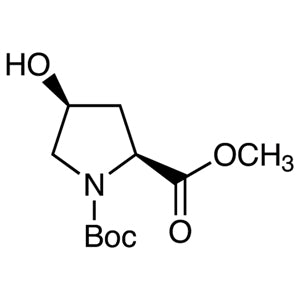
- TCI B3987 102195-79-9 N-(tert-Butoxycarbonyl)-cis-4-hydroxy-L-proline Methyl Ester
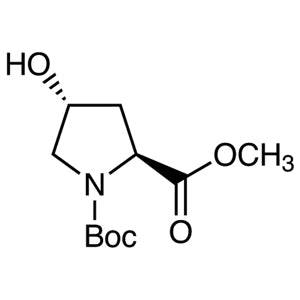
- TCI B3843 74844-91-0 N-(tert-Butoxycarbonyl)-trans-4-hydroxy-L-proline Methyl Ester
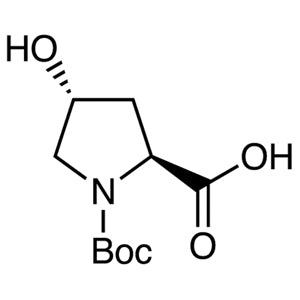
- TCI B1635 13726-69-7 trans-N-(tert-Butoxycarbonyl)-4-hydroxy-L-proline
- TCI C2773 26787-75-7 N-Carbobenzoxy-4-hydroxy-D-2-phenylglycine
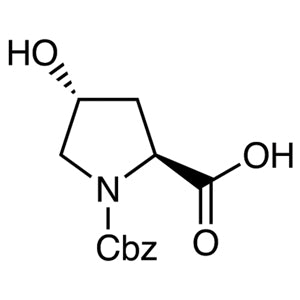
- TCI C2506 13504-85-3 trans-N-Carbobenzoxy-4-hydroxy-L-proline
- Chiral side-chain introduction: the defined S centre is installed directly into the target molecule, sparing the chemist from designing, optimising, and validating a separate asymmetric induction step in the route.
- Peptide and peptidomimetic assembly: the free carboxylic acid is ready for standard activation and coupling while the phthalimide keeps the terminal amine from competing during amide bond formation.
- Multi-step medicinal chemistry sequences: the phthalimide withstands acidic and many other reaction conditions, allowing several synthetic operations to be carried out before the amine is finally unmasked.
- Orthogonal protecting-group strategies: the amine is liberated cleanly with hydrazine or an equivalent method at a late stage, giving a deprotection step that is independent of acid-labile protecting groups.
- Stereochemically demanding intermediate preparation: the hydroxyl-bearing centre resists epimerisation through routine transformations, so enantiomeric integrity is carried through the sequence to the final product.
| Brand | TCI |
|---|---|
| CAS number | 48172-10-7 |
| Molecular formula | — |
| Purity | — |
| Category | Chemistry > Asymmetric Synthesis > Chiral Building Blocks |
| Pack sizes | available in the manufacturer's standard research-scale pack sizes; please confirm the size required when ordering |
| Physical form | crystalline solid, soluble in polar organic solvents such as dimethylformamide |
| Storage | keep in a tightly closed container in a cool, dry place as directed on the manufacturer's label |
Store the material in its original tightly closed container in a cool, dry place, protected from moisture and away from incompatible reagents, following the storage conditions stated on the manufacturer's label and safety data sheet. Amber glass or the supplier's original packaging is suitable; ensure the container is resealed promptly after each use to limit moisture uptake by the crystalline solid. Weigh and transfer the compound in a fume hood using clean, dry spatulas, and wear a laboratory coat, safety glasses, and chemical-resistant gloves. Avoid generating dust during handling, keep solutions labelled and dated, and dispose of residues and contaminated consumables through the laboratory's established chemical waste procedures.
—
Product Categories
- Asymmetric SynthesisChiral Building BlocksChiral Heterocyclic Building Blocks
- Building BlocksChiral Building BlocksChiral Heterocyclic Building Blocks
- Chemical BiologyPeptide ChemistryUnnatural Amino Acid Derivatives
- Pharmaceutical Development and Drug Discovery Research ReagentsPeptide ChemistryUnnatural Amino Acid Derivatives
Produk Terkait
-
(2R,5S)-2-Trichloromethyl-3-oxa-1-azabicyclo[3.3.0]octan-4-one TCI T2902
Regular price Rp 1.696.800,00Regular priceRp 1.202.250,00Sale price Rp 1.696.800,00 -
N-(tert-Butoxycarbonyl)-cis-4-hydroxy-L-prolineMethylEster TCI B3987
Regular price From Rp 742.350,00Regular priceRp 534.450,00Sale price From Rp 742.350,00 -
N-(tert-Butoxycarbonyl)-trans-4-hydroxy-L-prolineMethylEster TCI B3843
Regular price From Rp 822.150,00Regular priceRp 590.100,00Sale price From Rp 822.150,00 -
trans-N-(tert-Butoxycarbonyl)-4-hydroxy-L-proline TCI B1635
Regular price Rp 1.829.100,00Regular priceRp 1.294.650,00Sale price Rp 1.829.100,00 -
N-Carbobenzoxy-4-hydroxy-D-2-phenylglycine TCI C2773
Regular price From Rp 1.934.100,00Regular priceRp 1.368.150,00Sale price From Rp 1.934.100,00 -
trans-N-Carbobenzoxy-4-hydroxy-L-proline TCI C2506
Regular price From Rp 822.150,00Regular priceRp 590.100,00Sale price From Rp 822.150,00 -
cis-N-(tert-Butoxycarbonyl)-4-hydroxy-L-proline TCI B5887
Regular price From Rp 1.220.100,00Regular priceRp 868.350,00Sale price From Rp 1.220.100,00 -
N-(tert-Butoxycarbonyl)-cis-4-hydroxy-D-prolineMethylEster TCI B5857
Regular price From Rp 769.650,00Regular priceRp 553.350,00Sale price From Rp 769.650,00
![TCI T2902 97538-67-5 (2R,5S)-2-Trichloromethyl-3-oxa-1-azabicyclo[3.3.0]octan-4-one](http://amiscientific.com/cdn/shop/files/TCI2510T2902_8130cd2d-2fd3-49e5-8f94-14388b2a0abc.jpg?v=1792663769&width=533)
![97538-67-5 (2R,5S)-2-Trichloromethyl-3-oxa-1-azabicyclo[3.3.0]octan-4-one - AMI Scientific](http://amiscientific.com/cdn/shop/files/TCI2510T2902.jpg?v=1767143504&width=533)