1-Hexyl-2,3-dimethylimidazolium Iodide is an ionic liquid salt built from a substituted imidazolium cation paired with an iodide anion. What sets it apart from ordinary imidazolium ionic liquids is the methyl group at the C2 position, the carbon that sits between the two ring nitrogen atoms. That substitution caps the most acidic proton on the imidazolium ring. In the laboratory, the compound is used as a non-conventional solvent, as an electrolyte component, and as a reaction medium for specialty synthesis work that calls for a solvent with extremely low vapour pressure.
The characteristics that lead researchers to select this material come down to two things. First, C2 methylation removes the acidic proton, so the cation becomes far more tolerant of strong bases and does not readily form N-heterocyclic carbenes that can interfere with sensitive reactions; its electrochemical stability window is generally wider as well. Second, the iodide anion supplies the iodide/triiodide redox couple that lies at the heart of how dye-sensitised solar cells operate. Combined with a hexyl chain that contributes lipophilicity and lowers the melting point, the compound becomes an attractive candidate for both electrolyte formulation and reaction media.
In Indonesia, ionic liquids of this type are typically handled in university and institutional research laboratories rather than in routine testing work. They appear in groups studying dye-sensitised solar cell electrolytes, green-solvent chemistry, and electrochemistry, where the very low vapour pressure of the medium is the reason it was chosen in the first place. Quantities are usually modest and matched to a specific experimental programme.
- Dye-sensitised solar cell electrolytes — the iodide anion directly provides the iodide/triiodide redox couple that carries charge between the photoanode and counter electrode in these cells.
- Non-conventional solvent systems — its extremely low vapour pressure allows reactions to be run without the evaporative losses and vapour exposure associated with conventional volatile organic solvents.
- Reaction media for specialty synthesis — chemistry that demands a solvent which will not boil off or contribute acidic protons to the reacting system benefits from this ionic liquid.
- Strongly basic reaction conditions — because C2 methylation caps the acidic ring proton, the cation resists deprotonation and does not readily generate interfering N-heterocyclic carbene species.
- Electrochemical studies — the generally wider electrochemical stability window of the C2-methylated cation makes it suitable as a supporting medium for voltammetry and related measurements.
| Brand | TCI (Tokyo Chemical Industry), catalogue number H1286 |
|---|---|
| CAS number | 288627-94-1 |
| Molecular formula | — |
| Purity | — |
| Category | Chemistry > Specialty Synthesis > Ionic Liquids [Specialty Synthesis] |
| Pack sizes | available in the research-scale packaging offered by the manufacturer for this catalogue item; please confirm the current pack size when ordering |
| Physical form | — |
| Storage | store in the closed original container under the conditions indicated on the manufacturer's label |
- Chemical name: 1-Hexyl-2,3-dimethylimidazolium Iodide
Keep the container tightly closed and store it in a cool, dry place away from direct sunlight and from sources of heat or ignition. Ionic liquid iodides are generally hygroscopic and can discolour on prolonged exposure to light and air, so limit the time the container stays open and reseal it promptly after dispensing. The original manufacturer container is the most suitable storage vessel; where transfer is necessary, use a clean, dry, tightly sealing glass container with a chemically compatible closure and label it clearly. Handle the material in a fume hood, wear nitrile gloves, safety glasses, and a laboratory coat, and use dry glassware and spatulas to avoid introducing moisture. Consult the manufacturer's safety data sheet before first use, and dispose of residues and contaminated consumables through the laboratory's chemical waste stream.
—
Produk Terkait
-
TCI B5774 5,10-Bis(4,4,5,5-tetramethyl-1,3,2-dioxaborolan-2-yl)naphtho[1,2-c:5,6-c']bis([1,2,5]oxadiazole)
Regular price Rp 10.255.350,00Regular price -
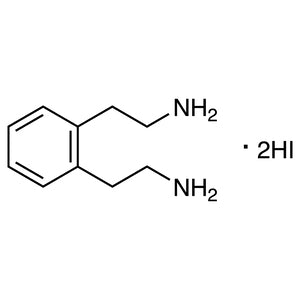
Dihydroiodide TCI B6569
Regular price From Rp 1.936.200,00Regular price -
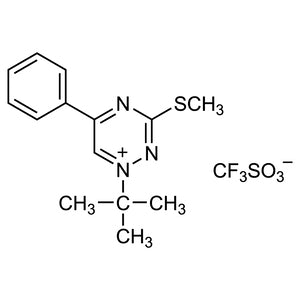
Trifluoromethanesulfonate TCI B7003
Regular price From Rp 1.936.200,00Regular price
![5,10-Bis(4,4,5,5-tetramethyl-1,3,2-dioxaborolan-2-yl)naphtho[1,2-c:5,6-c']bis([1,2,5]oxadiazole) - TCI B5774 - AMI Scientific](http://amiscientific.com/cdn/shop/files/TCI2510B5774.jpg?v=1769180228&width=533)