TCI H1304 N-Hydroxysulfosuccinimide Sodium Salt, commonly abbreviated as Sulfo-NHS, is a carboxyl-activating reagent of central importance in bioconjugation chemistry. It is used together with a water-soluble carbodiimide such as EDC to convert carboxylate groups into a far more stable active ester intermediate, so that the subsequent reaction with primary amine groups on proteins, peptides, or material surfaces proceeds with higher and more reproducible yields. Its role in the laboratory is that of a supporting reagent that transforms an otherwise inefficient aqueous amidation reaction into a reliable routine procedure.
The property that makes this reagent the preferred choice is the sulfonate group in its structure, which confers excellent solubility in water and in buffer solutions. Because of this, activation can be carried out directly in aqueous systems without the addition of organic solvents such as dimethylformamide, which can potentially damage protein structure or reduce biological activity. The negative charge of the sulfonate group also prevents the reagent and its active ester from crossing cell membranes, making it well suited to the selective labelling of cell-surface proteins. The Sulfo-NHS active ester also remains sufficiently long-lived at near-neutral pH for practical handling.
In Indonesian laboratories, this reagent is typically used in university research groups, biotechnology laboratories, and diagnostic development units that prepare protein conjugates in-house. It is commonly ordered alongside EDC as a working pair for coupling antibodies, enzymes, or peptides to carriers, particles, or plate surfaces. Because the entire procedure can be performed in aqueous buffer, it fits laboratories that work with biological samples and prefer to avoid organic solvent handling at the bench.
TCI brochures (PDF)
- Condensing Agents 2025-11-18 · p. 4
- Bioconjugation Reagents 2026-07-07 · p. 12
Related TCI products
- TCI H0623 6066-82-6 N-Hydroxysuccinimide
- TCI B0249 6066-82-6 N-Hydroxysuccinimide [Coupling Reagent for Peptide]
- TCI D1662 74124-79-1 Di(N-succinimidyl) Carbonate
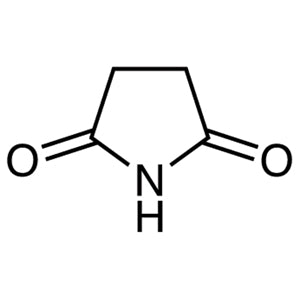
- TCI S0108 123-56-8 Succinimide
- TCI P2191 10478-33-8 N-(2-Propynyl)succinimide
- TCI D6289 293311-03-2 4-(4,6-Dimethoxy-1,3,5-triazin-2-yl)-4-methylmorpholin-4-ium Tetrafluoroborate
- Protein and peptide conjugation, where the stabilised active ester allows amide bond formation with primary amines in aqueous buffer at higher and more reproducible yields.
- Antibody labelling and immunoassay development, since the reagent supports controlled coupling of antibodies to enzymes, reporters, or carrier proteins without organic solvent exposure.
- Cell-surface protein labelling, because the negatively charged sulfonate group prevents membrane penetration so only proteins exposed on the outer surface are modified.
- Surface functionalisation of particles and materials, where carboxyl-bearing surfaces are activated in water and then coupled to amine-containing ligands or biomolecules.
- Immobilisation of biomolecules onto plates, resins, or sensor supports, providing a stable activated intermediate that makes routine aqueous amidation procedures more predictable.
| Brand | TCI |
|---|---|
| CAS number | 106627-54-7 |
| Molecular formula | — |
| Purity | — |
| Category | Chemistry > Chemical Biology > Bioconjugation |
| Pack sizes | available in standard research pack sizes; please confirm the current options when ordering. |
| Physical form | — |
| Storage | store according to the manufacturer's recommendation stated on the product label. |
- Product code: H1304
Store this reagent in its original tightly closed container, kept dry and protected from moisture, since activating reagents of this type are sensitive to water uptake during storage. Keep the container in a cool place away from heat, direct sunlight, and incompatible chemicals, and allow it to reach room temperature before opening to reduce condensation inside the bottle. Handle in a well-ventilated area or fume hood, wearing a laboratory coat, safety goggles, and suitable gloves. Prepare working solutions fresh immediately before use, and follow the manufacturer's safety data sheet and your institutional chemical waste procedures for disposal.
—
Product Categories
- Biochemicals and ReagentsBioconjugationFunctionality Creating Reagents
- Biochemicals and ReagentsBioconjugationZero-length Crosslinkers
- Pharmaceutical Development and Drug Discovery ResearchBioconjugationFunctionality Creating Reagents
- Pharmaceutical Development and Drug Discovery ResearchBioconjugationZero-length Crosslinkers
Produk Terkait
-
N-Hydroxysuccinimide TCI H0623
Regular price From Rp 1.220.100,00Regular priceRp 868.350,00Sale price From Rp 1.220.100,00 -
N-Hydroxysuccinimide[CouplingReagentforPeptide] TCI B0249
Regular price From Rp 1.988.700,00Regular priceRp 1.405.950,00Sale price From Rp 1.988.700,00 -
Di(N-succinimidyl)Carbonate TCI D1662
Regular price From Rp 1.934.100,00Regular priceRp 1.368.150,00Sale price From Rp 1.934.100,00 -
Succinimide TCI S0108
Regular price From Rp 557.550,00Regular priceRp 405.300,00Sale price From Rp 557.550,00 -
N-(2-Propynyl)succinimide TCI P2191
Regular price From Rp 2.994.600,00Regular priceRp 2.109.450,00Sale price From Rp 2.994.600,00 -
4-(4,6-Dimethoxy-1,3,5-triazin-2-yl)-4-methylmorpholin-4-iumTetrafluoroborate TCI D6289
Regular price Rp 2.677.500,00Regular priceRp 1.887.900,00Sale price Rp 2.677.500,00 -
1-(3-Dimethylaminopropyl)-3-ethylcarbodiimide TCI D4029
Regular price From Rp 1.431.150,00Regular priceRp 1.016.400,00Sale price From Rp 1.431.150,00 -
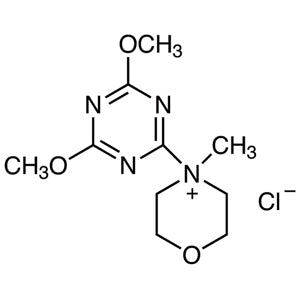
4-(4,6-Dimethoxy-1,3,5-triazin-2-yl)-4-methylmorpholiniumChloride TCI D2919
Regular price From Rp 1.643.250,00Regular priceRp 1.164.450,00Sale price From Rp 1.643.250,00


![TCI B0249 6066-82-6 N-Hydroxysuccinimide [Coupling Reagent for Peptide]](http://amiscientific.com/cdn/shop/files/TCI2510B0249_940975f1-9bc1-48ca-a2d2-e366b37c2480.jpg?v=1792658848&width=533)
![6066-82-6 N-Hydroxysuccinimide [Coupling Reagent for Peptide] - AMI Scientific](http://amiscientific.com/cdn/shop/files/TCI2510B0249.jpg?v=1767085300&width=533)