4-(4-Hydroxy-3-methoxyphenyl)-2-butanone is better known among researchers as raspberry ketone, an aromatic compound that occurs naturally in berries and carries the methoxylated phenolic skeleton characteristic of guaiacol derivatives. In a laboratory setting, this compound is classified as a crude medicine ingredient for research and experimental use, meaning a reference material employed in the study of plant metabolites. Researchers use it as an analytical standard, as a test substance in biological activity assays, and as a substrate in biotransformation studies and investigations into the biosynthetic pathways of phenolic compounds.
The characteristic that makes this compound a frequent choice is the combination of a phenol group, a methoxy group, and an aliphatic ketone group within a single, relatively simple molecule. This combination gives the compound distinctive spectroscopic behaviour, so that it is readily identified by ultraviolet detectors as well as by mass spectrometry, while at the same time providing reactive sites for derivatisation where that is required. Its structural resemblance to other naturally occurring phenolic compounds also makes it useful as a comparison material in structure-activity relationship studies.
The compound is supplied in 25 g and 100 g pack sizes to suit research needs at different scales. In Indonesian laboratories, it is widely used in natural product and plant metabolite research, where a well-characterised reference compound is needed to support the identification of phenolic constituents. University research groups and institutional laboratories draw on materials of this type for method development work, for teaching purposes in analytical chemistry, and for comparative studies of biologically active plant-derived compounds.
- Analytical reference standard — the distinctive ultraviolet absorption and mass spectrometric behaviour of this phenolic ketone allow reliable peak identification and calibration in chromatographic methods for plant extracts.
- Biological activity screening — as a well-defined test substance with a simple, single-component structure, it provides clear and interpretable results in assays examining the effects of naturally occurring phenolic compounds.
- Biotransformation studies — the phenol, methoxy, and ketone functional groups within one molecule give enzymes and microbial systems several distinct reactive sites to act upon in conversion experiments.
- Biosynthetic pathway research — its role as a naturally occurring berry constituent with a guaiacol-derived skeleton makes it a suitable substrate and marker for tracing phenolic compound formation routes.
- Structure-activity relationship comparison — the close structural resemblance to other natural phenolic compounds allows researchers to use it as a systematic comparison point when correlating molecular features with observed activity.
| Brand | TCI |
|---|---|
| CAS number | 122-48-5 |
| Molecular formula | — |
| Purity | — |
| Category | Life Science > Biochemicals and Reagents > Crude Medicine Ingredients for Research and Experimental Use |
| Pack sizes | 25 g and 100 g |
| Physical form | — |
| Storage | store according to the conditions stated on the manufacturer's product label and safety data sheet |
- Catalogue number: H1314
Store the container in a cool, dry place away from direct sunlight and from sources of heat or ignition, following the storage conditions specified on the manufacturer's label and safety data sheet. Keep the material in its original tightly closed container, or in a well-sealed glass container, to limit exposure to moisture and air. Handle the compound in a well-ventilated area or within a fume hood, and wear appropriate personal protective equipment including a laboratory coat, safety glasses, and chemically resistant gloves. Avoid inhalation of dust and direct contact with skin and eyes. As with all research chemicals, this material is intended for research and experimental use only and should be handled by trained laboratory personnel who have reviewed the accompanying safety documentation.
—
Produk Terkait
-
TCI B5774 5,10-Bis(4,4,5,5-tetramethyl-1,3,2-dioxaborolan-2-yl)naphtho[1,2-c:5,6-c']bis([1,2,5]oxadiazole)
Regular price Rp 10.255.350,00Regular price -
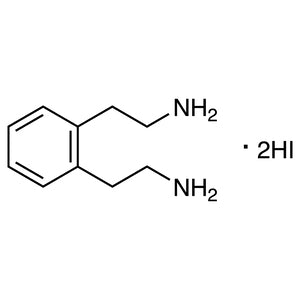
Dihydroiodide TCI B6569
Regular price From Rp 1.936.200,00Regular price -
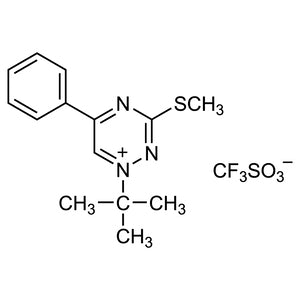
Trifluoromethanesulfonate TCI B7003
Regular price From Rp 1.936.200,00Regular price
![5,10-Bis(4,4,5,5-tetramethyl-1,3,2-dioxaborolan-2-yl)naphtho[1,2-c:5,6-c']bis([1,2,5]oxadiazole) - TCI B5774 - AMI Scientific](http://amiscientific.com/cdn/shop/files/TCI2510B5774.jpg?v=1769180228&width=533)