![23491-45-4 Bisbenzimide H 33258 [for Biochemical Research] - AMI Scientific](http://amiscientific.com/cdn/shop/files/TCI2510H1343.jpg?v=1767117845&width=1946)
![23491-45-4 Bisbenzimide H 33258 [for Biochemical Research] - AMI Scientific](http://amiscientific.com/cdn/shop/files/TCI2510H1343.jpg?v=1767117845&width=1445)
Bisbenzimide H 33258, referred to in much of the literature as Hoechst 33258 stain, is a bisbenzimidazole-based fluorescent dye developed for biochemical and cell biology research. Its role in the laboratory is to label cell nuclei by binding to double-stranded DNA, so that nuclei which are essentially invisible under an ordinary light microscope become clearly readable under a fluorescence microscope. Because the dye is able to cross the cell membrane, it can be applied to living cells as well as to fixed cells, making it one of the most commonly encountered nuclear stains in cell culture protocols.
The principal characteristics behind its selection are its affinity for the minor groove of DNA, particularly in regions rich in adenine and thymine, together with the sharp increase in fluorescence intensity that follows binding to DNA. This behaviour produces good contrast between the nucleus and the background, so microscope images are easier to interpret and to count. Its emission falls in the blue range when excited with an ultraviolet source, which makes it straightforward to combine with other green or red markers in double-staining experiments.
In Indonesian laboratories, the material is typically used in cell culture facilities, biochemistry and molecular biology teaching laboratories, and university or institutional research units that operate a fluorescence microscope. It is handled in the same workflow as other cell staining reagents: prepared as a working solution, applied to cultured or fixed cells, then examined under ultraviolet excitation. Supplied by AMI Scientific as part of the TCI range for biochemical research, it fits routine nuclear staining work without requiring specialised instrumentation beyond a fluorescence setup.
- Routine nuclear counterstaining in cell culture — the dye penetrates the membrane and binds double-stranded DNA, so nuclei of both living and fixed cells become clearly visible under fluorescence.
- Cell counting and nuclear morphology assessment — the sharp rise in fluorescence intensity after DNA binding gives strong nucleus-to-background contrast, making counting and image interpretation more reliable.
- Multicolour double-staining experiments — blue emission under ultraviolet excitation separates cleanly from green and red markers, allowing the nuclear channel to be combined with other labels.
- Live-cell nuclear labelling studies — because the stain crosses the cell membrane, cells do not need to be fixed first, which suits work that must observe intact, viable cultures.
- Biochemical research on DNA binding — affinity for the minor groove, particularly adenine- and thymine-rich regions, makes the dye a useful probe in studies of double-stranded DNA interaction.
| Brand | TCI (product code H1343) |
|---|---|
| CAS number | 23491-45-4 |
| Molecular formula | — |
| Purity | — |
| Category | Life Science > Cell Culture > Cell Staining |
| Pack sizes | available in the pack sizes listed for this catalogue item |
| Physical form | — |
| Storage | store according to the conditions stated on the manufacturer's label |
- Grade / intended use: for biochemical research
Store the container in the conditions indicated on the manufacturer's label, keeping it tightly closed and protected from light, since fluorescent dyes are generally sensitive to prolonged light exposure. Use clean, well-sealed containers of a material compatible with the reagent and its solvent, and label any working solutions clearly with their contents and preparation date. Handle the material in a properly ventilated area using standard personal protective equipment — laboratory coat, gloves, and eye protection — and avoid direct contact with skin and eyes. As with all DNA-binding stains used in research, handle the substance with care, avoid generating dust or aerosols, and dispose of residues and contaminated consumables through the laboratory's established chemical waste procedure. Consult the manufacturer's safety data sheet before first use.
—
Produk Terkait
-
TCI B5774 5,10-Bis(4,4,5,5-tetramethyl-1,3,2-dioxaborolan-2-yl)naphtho[1,2-c:5,6-c']bis([1,2,5]oxadiazole)
Regular price Rp 10.255.350,00Regular price -
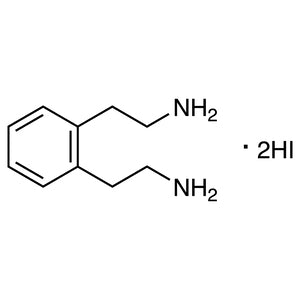
Dihydroiodide TCI B6569
Regular price From Rp 1.936.200,00Regular price -
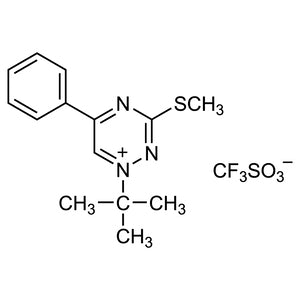
Trifluoromethanesulfonate TCI B7003
Regular price From Rp 1.936.200,00Regular price
![5,10-Bis(4,4,5,5-tetramethyl-1,3,2-dioxaborolan-2-yl)naphtho[1,2-c:5,6-c']bis([1,2,5]oxadiazole) - TCI B5774 - AMI Scientific](http://amiscientific.com/cdn/shop/files/TCI2510B5774.jpg?v=1769180228&width=533)