TCI I0055 1-Iodobutane (stabilized with Copper chip) is a straight-chain, four-carbon haloalkane reagent that occupies an important position as a butylating agent in organic synthesis laboratories. The compound belongs to the non-heterocyclic building block class, meaning it serves as a basic starting material used to install the n-butyl group onto the framework of target molecules through nucleophilic substitution reactions. On the researcher's bench, a reagent of this kind acts as the bridge between simple starting materials and more complex molecules, whether for methodology research, the development of functional materials, or the preparation of reference compounds that are not commercially available in finished form.
The characteristic that makes 1-iodobutane a frequent choice lies in its carbon–iodine bond, which is relatively weak compared with other carbon–halogen bonds, so that the iodide ion functions as an excellent leaving group. As a consequence, alkylation reactions often proceed under milder conditions, with shorter reaction times and lower temperatures than would be required using the corresponding bromide or chloride analogues. This product is supplied as a liquid stabilized with a copper chip, a stabilizer that serves to bind and suppress the free iodine formed during storage, helping the reagent remain usable over a longer working period.
In Indonesian laboratories, reagents of this type are typically used in university organic chemistry research groups, government research institutes, and industrial development units that carry out small-scale synthesis. They appear in postgraduate research programmes, in the preparation of intermediates for further study, and in teaching laboratories that demonstrate substitution chemistry. Because the material is handled in modest quantities, it is commonly ordered as a bench reagent and drawn upon across multiple experiments rather than consumed in a single run.
- Nucleophilic substitution studies: the excellent iodide leaving group makes this reagent a dependable substrate for demonstrating and investigating SN2 reaction behaviour under controlled laboratory conditions.
- N-butylation of nucleophiles: the reagent transfers an n-butyl group to amines, alcohols, thiols, and other nucleophilic centres, allowing chemists to build substituted derivatives from simpler precursors.
- Synthesis of non-heterocyclic building blocks: as a straight-chain alkyl halide, it extends carbon frameworks and supplies the four-carbon unit needed to assemble more elaborate target structures.
- Preparation of reference and comparison compounds: laboratories use it to make n-butyl-substituted standards that are not available commercially in finished form for analytical comparison.
- Methodology and functional materials research: milder alkylation conditions let researchers test new synthetic routes or modify materials without exposing sensitive substrates to elevated temperatures.
| Brand | TCI |
|---|---|
| CAS number | 542-69-8 |
| Molecular formula | — |
| Purity | — |
| Category | Chemistry > Building Blocks > Non-Heterocyclic Building Blocks |
| Pack sizes | available in the standard TCI catalogue pack sizes; please confirm the required size when ordering |
| Physical form | liquid, stabilized with a copper chip |
| Storage | keep in the tightly closed original container, protected from light, in a cool and well-ventilated place |
Store the reagent in its original tightly closed container in a cool, dry, and well-ventilated area away from direct sunlight, since light exposure encourages the formation of free iodine. Do not remove the copper chip, as it serves as the stabilizer for the material. Use amber glass or the supplier's original packaging rather than transferring the liquid into unsuitable containers. Handle the reagent inside a fume hood while wearing chemical-resistant gloves, safety goggles, and a laboratory coat. Keep it away from strong oxidizing agents and heat sources, close the container immediately after dispensing, and dispose of residues and contaminated materials through the laboratory's chemical waste procedure.
—
Produk Terkait
-
TCI B5774 5,10-Bis(4,4,5,5-tetramethyl-1,3,2-dioxaborolan-2-yl)naphtho[1,2-c:5,6-c']bis([1,2,5]oxadiazole)
Regular price Rp 10.255.350,00Regular price -
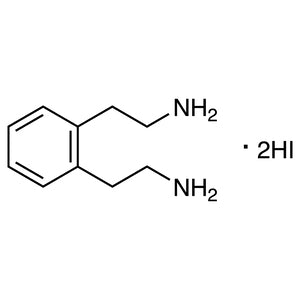
Dihydroiodide TCI B6569
Regular price From Rp 1.936.200,00Regular price -
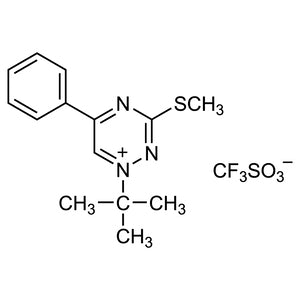
Trifluoromethanesulfonate TCI B7003
Regular price From Rp 1.936.200,00Regular price
![5,10-Bis(4,4,5,5-tetramethyl-1,3,2-dioxaborolan-2-yl)naphtho[1,2-c:5,6-c']bis([1,2,5]oxadiazole) - TCI B5774 - AMI Scientific](http://amiscientific.com/cdn/shop/files/TCI2510B5774.jpg?v=1769180228&width=533)