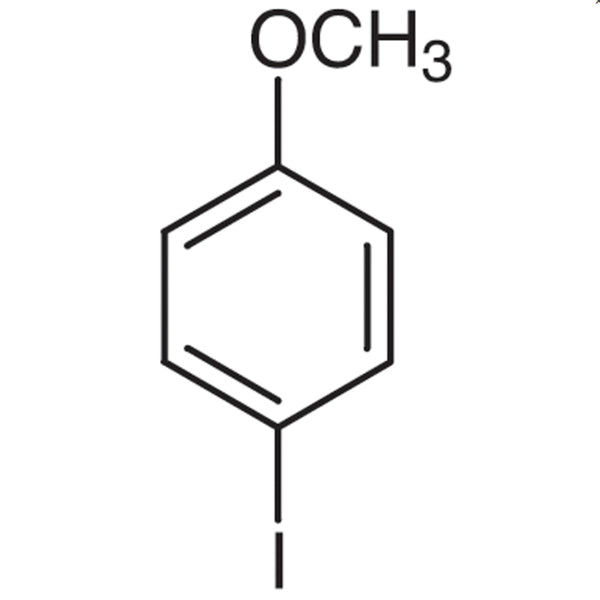

4-Iodoanisole is a chemical compound widely used in synthetic chemistry applications, particularly in the synthesis of heterocyclic compounds and aromatic derivatives. As a building block in organic chemistry, it plays a crucial role in various laboratory processes, including substitution reactions and coupling reactions. Its molecular structure, derived from anisole with an iodine group, provides it with high reactivity, making it a valuable reagent for researchers. This compound is commonly found in both academic and industrial laboratories, supporting a wide range of chemical investigations. Its versatility and reactivity make it an essential tool for chemists working on complex molecular structures.
The reactivity of 4-Iodoanisole is primarily due to its aromatic ring and the presence of the iodine atom, which is highly reactive in electrophilic substitution reactions. This makes it an ideal candidate for reactions such as Suzuki, Heck, and Sonogashira, which are fundamental in the synthesis of complex organic molecules. The compound’s ability to participate in multiple reaction types enhances its utility in the development of new compounds with biological activity. Its stability under controlled conditions also ensures that it remains a reliable reagent for consistent results in laboratory settings.
In Indonesian laboratories, 4-Iodoanisole is extensively used in both pure and applied chemistry research. It is commonly found in higher education institutions and research organizations, where it supports projects related to the synthesis of pharmacological compounds and organic materials. Its application in drug development and material science highlights its importance in advancing chemical research in the region. The compound’s role in creating new compounds with potential therapeutic applications further underscores its significance in the scientific community.
- Synthesis of heterocyclic compounds for the development of new pharmaceuticals due to its reactivity in coupling reactions.
- Preparation of aromatic derivatives through electrophilic substitution reactions, leveraging its iodine functionality.
- Research in organic material synthesis where its aromatic structure contributes to the formation of stable molecular frameworks.
- Drug development projects that require the creation of bioactive molecules through various synthetic pathways.
- Academic teaching and research in chemistry laboratories where it serves as a fundamental building block for student experiments.
| Brand | TCI |
|---|---|
| CAS number | 696-62-8 |
| Molecular formula | — |
| Purity | — |
| Category | Chemistry > Building Blocks > Non-Heterocyclic Building Blocks |
| Pack sizes | Available in various quantities as per standard chemical supply practices |
| Physical form | Solid, typically in crystalline form |
| Storage | Store in a cool, dry place away from light and incompatible substances |
4-Iodoanisole should be stored in a cool, dry environment, away from direct sunlight and sources of heat. It is recommended to keep the compound in a sealed container to prevent moisture absorption and contamination. Due to its reactivity, it should be stored separately from strong oxidizing agents and incompatible materials. Proper ventilation is essential when handling the compound to minimize exposure to vapors. Laboratory personnel should wear appropriate personal protective equipment, including gloves and safety goggles, to ensure safe handling. Regular inspection of storage conditions is necessary to maintain the integrity and purity of the compound over time.
—
Produk Terkait
-
2-Iodoanisole(stabilizedwithCopperchip) TCI I0382
Regular price From Rp 1.696.800,00Regular priceRp 1.186.500,00Sale price From Rp 1.696.800,00 -
3-Iodoanisole TCI I0379
Regular price From Rp 823.200,00Regular priceRp 575.400,00Sale price From Rp 823.200,00 -
3-Bromo-4-iodoanisole TCI B5697
Regular price From Rp 2.227.050,00Regular priceRp 1.557.150,00Sale price From Rp 2.227.050,00 -
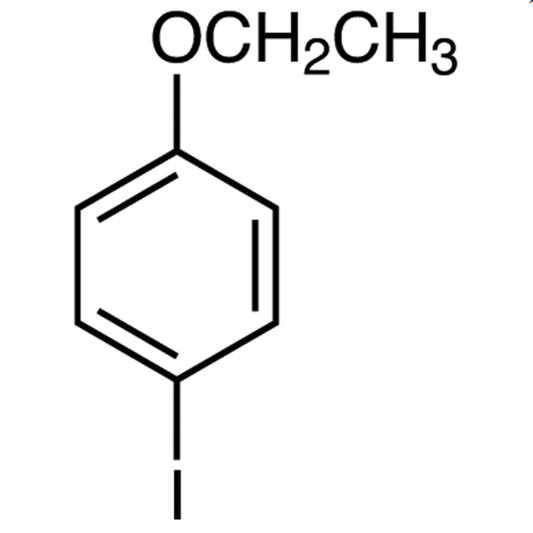
4-Iodophenetole TCI I0525
Regular price From Rp 689.850,00Regular priceRp 481.950,00Sale price From Rp 689.850,00 -
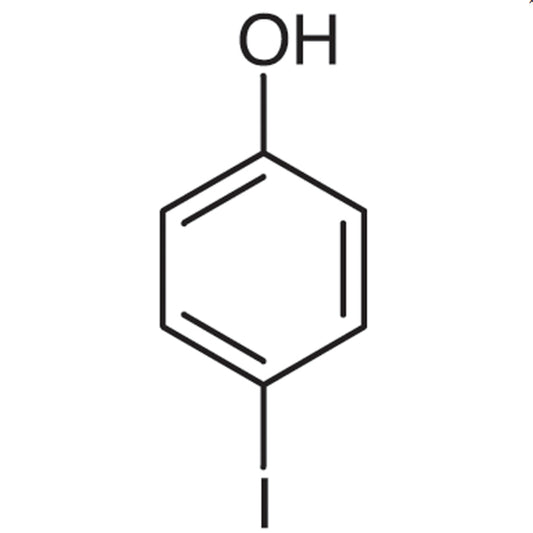
4-Iodophenol TCI I0311
Regular price From Rp 1.298.850,00Regular priceRp 908.250,00Sale price From Rp 1.298.850,00 -
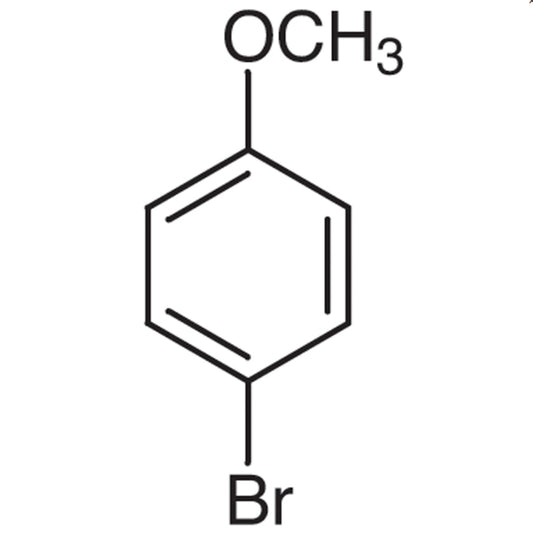
4-Bromoanisole TCI B0547
Regular price From Rp 530.250,00Regular priceRp 370.650,00Sale price From Rp 530.250,00 -
4-Iodobenzonitrile TCI I0661
Regular price From Rp 1.776.600,00Regular priceRp 1.257.900,00Sale price From Rp 1.776.600,00 -
4-Iodobenzaldehyde TCI I0612
Regular price From Rp 1.431.150,00Regular priceRp 1.000.650,00Sale price From Rp 1.431.150,00