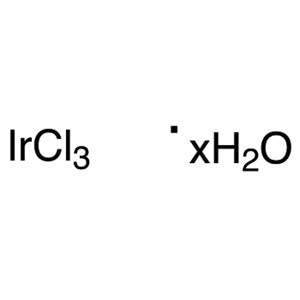
Iridium(III) Chloride Hydrate is a hydrated iridium salt that serves as one of the most important precursors in platinum group transition metal chemistry. This compound is the principal entry point for preparing a wide range of iridium complexes, from cyclopentadienyl iridium dimers and phosphine complexes through to cyclometalated complexes that are widely employed as photocatalysts. In the laboratory, researchers rarely use it directly as an active catalyst; instead they first convert it into well-defined complexes whose reactivity and selectivity are matched to the requirements of the reaction being developed.
The property that makes this material so highly valued is the versatility of iridium coordination chemistry itself. The metal is known for forming robust complexes that withstand relatively harsh reaction conditions, and for delivering outstanding performance in carbon–hydrogen bond activation, aromatic borylation, transfer hydrogenation, and visible light photocatalysis. The hydrated chloride form provides an iridium source that dissolves readily and reacts with a broad variety of ligands, which makes it a genuinely versatile starting material for complex synthesis rather than a single purpose reagent.
In Indonesian laboratories, this compound is typically found in synthetic organic chemistry and catalysis research groups at universities and research institutes, where it supports the preparation of in-house catalyst libraries. Because iridium is classified as a highly precious metal, handling of this material is normally managed with careful attention to quantity, with small working portions weighed out and residues collected for recovery rather than discarded.
TCI brochures (PDF)
- C-H Bond Activation Reaction 2025-06-20 · p. 5
- Metallic Salts 2025-11-06 · p. 4
- Transition Metal Catalysts 2026-04-10 · p. 11
Related TCI products
- TCI T2557 15635-87-7 Tris(2,4-pentanedionato)iridium(III)
- TCI A2981 12154-84-6 (Acetylacetonato)(1,5-cyclooctadiene)iridium(I)
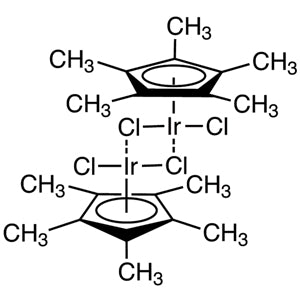
- TCI P1763 12354-84-6 (Pentamethylcyclopentadienyl)iridium(III) Dichloride Dimer
- TCI D5817 870987-63-6 (4,4'-Di-tert-butyl-2,2'-bipyridine)bis[3,5-difluoro-2-[5-trifluoromethyl-2-pyridinyl-kappaN)phenyl-kappaC]iridium(III) Hexafluorophosphate
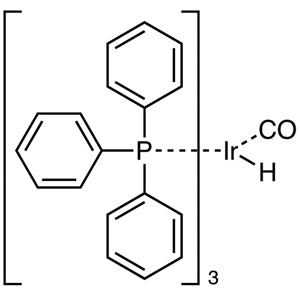
- TCI C3040 17250-25-8 Carbonylhydridotris(triphenylphosphine)iridium(I)
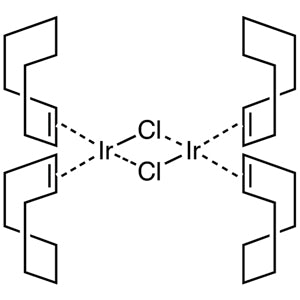
- TCI C2985 12246-51-4 Chlorobis(cyclooctene)iridium(I) Dimer
- Synthesis of cyclopentadienyl iridium dimers, where the hydrated chloride serves as the standard iridium source that reacts cleanly with the diene precursor to give the bridging chloride dimer.
- Preparation of cyclometalated iridium photocatalysts, since the readily soluble chloride salt allows controlled introduction of aryl nitrogen ligands for visible light driven photoredox transformations.
- Carbon–hydrogen bond activation studies, because iridium complexes derived from this precursor show well documented ability to functionalize otherwise unreactive positions on organic substrates.
- Aromatic borylation catalyst preparation, where iridium centres generated from this salt combine with bipyridine type ligands to install boron functionality directly onto arene rings.
- Transfer hydrogenation catalyst development, as iridium complexes built from this precursor remain robust under the elevated temperatures and basic conditions typical of such reductions.
| Brand | TCI |
|---|---|
| CAS number | 14996-61-3 |
| Molecular formula | — |
| Purity | — |
| Category | Chemistry > Catalysis and Inorganic Chemistry > C-H Activation [Catalysis] |
| Pack sizes | available in standard TCI catalogue research pack sizes; please confirm the currently listed sizes when ordering |
| Physical form | — |
| Storage | keep tightly closed in a cool, dry place away from moisture |
- Chemical form: hydrated iridium(III) chloride salt, readily soluble and reactive toward a wide range of ligands
Store the container tightly closed in a cool, dry area, protected from moisture, since the hydrated chloride readily takes up atmospheric water and this affects accurate weighing. Original supplier containers or tightly sealed amber glass vials are suitable, and a desiccator provides additional protection for frequently opened stock. Weigh and transfer the material inside a fume hood using clean, dry spatulas, and wear a laboratory coat, safety glasses, and chemical resistant gloves throughout. Given the precious metal content, collect all residues, filtrates, and washings in a dedicated iridium recovery container rather than disposing of them with routine chemical waste, and consult the supplier safety data sheet before first use.
—
Product Categories
- Catalysis and Inorganic ChemistryC-H Activation [Catalysis]Iridium Compounds [C-H Activation]
- Catalysis and Inorganic ChemistryTransition Elements [Catalysis and Inorganic Chemistry]Iridium [Catalysis and Inorganic Chemistry]
- Catalysis and Inorganic ChemistryMetallic Salts [Catalysis and Inorganic Chemistry]Chloride Salts [Metallic Salts]
Produk Terkait
-
Tris(2,4-pentanedionato)iridium(III) TCI T2557
Regular price Rp 10.652.250,00Regular priceRp 7.464.450,00Sale price Rp 10.652.250,00 -
(Acetylacetonato)(1,5-cyclooctadiene)iridium(I) TCI A2981
Regular price From Rp 1.988.700,00Regular priceRp 1.405.950,00Sale price From Rp 1.988.700,00 -
(Pentamethylcyclopentadienyl)iridium(III)DichlorideDimer TCI P1763
Regular price Rp 8.108.100,00Regular priceRp 5.685.750,00Sale price Rp 8.108.100,00 -
(4,4'-Di-tert-butyl-2,2'-bipyridine)bis[3,5-difluoro-2-[5-trifluoromethyl-2-pyridinyl-kappaN)phenyl-kappaC]iridium(III)Hexafluorophosphate TCI D5817
Regular price From Rp 3.763.200,00Regular priceRp 2.647.050,00Sale price From Rp 3.763.200,00 -
Carbonylhydridotris(triphenylphosphine)iridium(I) TCI C3040
Regular price From Rp 2.464.350,00Regular priceRp 1.738.800,00Sale price From Rp 2.464.350,00 -
Chlorobis(cyclooctene)iridium(I)Dimer TCI C2985
Regular price Rp 3.207.750,00Regular priceRp 2.258.550,00Sale price Rp 3.207.750,00 -
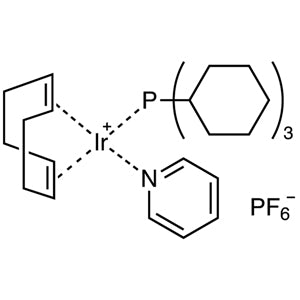
(1,5-Cyclooctadiene)(pyridine)(tricyclohexylphosphine)iridium(I)Hexafluorophosphate TCI C2824
Regular price Rp 2.252.250,00Regular priceRp 1.590.750,00Sale price Rp 2.252.250,00 -
Carbonylchlorobis(triphenylphosphine)iridium(I) TCI C2252
Regular price Rp 2.332.050,00Regular priceRp 1.646.400,00Sale price Rp 2.332.050,00


![TCI D5817 870987-63-6 (4,4'-Di-tert-butyl-2,2'-bipyridine)bis[3,5-difluoro-2-[5-trifluoromethyl-2-pyridinyl-kappaN)phenyl-kappaC]iridium(III) Hexafluorophosphate](http://amiscientific.com/cdn/shop/files/TCI2510D5817_d05615af-d157-48f0-933c-1a9117cbf00e.jpg?v=1792640168&width=533)
![(4,4'-Di-tert-butyl-2,2'-bipyridine)bis[3,5-difluoro-2-[5-trifluoromethyl-2-pyridinyl-kappaN)phenyl-kappaC]iridium(III) Hexafluorophosphate (CAS 870987-63-6) - TCI D5817 - AMI Scientific](http://amiscientific.com/cdn/shop/files/TCI2510D5817.jpg?v=1767109244&width=533)