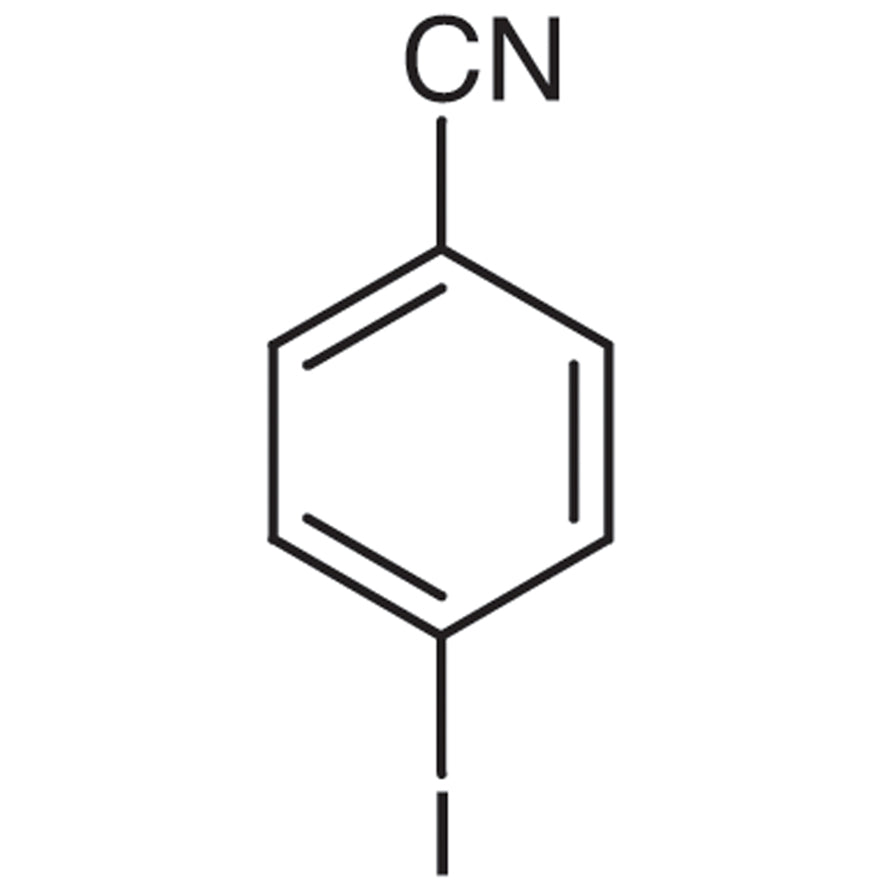
TCI I0661 4-Iodobenzonitrile is the para isomer of iodobenzonitrile, with the iodine atom and the nitrile group positioned directly opposite each other on the benzene ring. This symmetrical arrangement makes it one of the most widely used aromatic building blocks in organic synthesis. In the laboratory, the compound serves as a starting material for forming new carbon–carbon and carbon–heteroatom bonds, and at the same time as a building unit for the linear molecules required in the design of functional materials and drug candidate compounds.
The property that makes it stand out is the combination of the high reactivity of the C–I bond with a linear, symmetrical para geometry. This linear shape is highly valued in materials synthesis because it produces elongated molecules that self-assemble into ordered arrangements with ease, for example in liquid crystals, conjugated polymers, and metal-organic frameworks. The nitrile group plays a dual role: it acts as a strong electron-withdrawing group that tunes the electronic character of the molecule, and it also serves as a coordination point for metal ions. Its solid form is stable under normal storage conditions, so it is easy to handle at the bench.
In Indonesia, this material is widely used by organic chemistry research groups working on the construction of aromatic scaffolds and functional molecules. It typically appears in university and institutional laboratories where cross-coupling chemistry, materials preparation, and medicinal chemistry exploration are carried out on a research scale. Because the solid is stable under ordinary storage conditions, it fits routine bench workflows without requiring special infrastructure.
- Cross-coupling reactions — the highly reactive carbon–iodine bond makes this compound a reliable partner for forming new carbon–carbon bonds under standard laboratory coupling conditions.
- Carbon–heteroatom bond formation — the activated C–I position allows the aryl ring to be joined to nitrogen, oxygen, or other heteroatom partners during multi-step organic synthesis work.
- Functional materials synthesis — the linear para geometry yields elongated molecules that self-assemble in an orderly fashion, which is valued in liquid crystal and conjugated polymer preparation.
- Metal-organic framework construction — the nitrile group provides a coordination point toward metal ions while the symmetrical linear axis supports regular framework geometry.
- Medicinal chemistry exploration — as an aromatic building block it supplies the core scaffold used when assembling drug candidate compounds in research-scale discovery programmes.
| Brand | TCI |
|---|---|
| CAS number | 3058-39-7 |
| Molecular formula | — |
| Purity | — |
| Category | Chemistry > Building Blocks > Non-Heterocyclic Building Blocks |
| Pack sizes | available in the standard TCI catalogue pack sizes for this item |
| Physical form | solid |
| Storage | stable under normal storage conditions |
Store the container tightly closed in a cool, dry place away from direct sunlight, moisture, and incompatible chemicals. The solid is stable under normal storage conditions, so the original supplier container is the most suitable vessel; if transferred, use a clean, dry, well-sealed glass or chemically compatible bottle with a clear label. Handle in a fume hood using gloves, safety goggles, and a laboratory coat, and avoid generating or inhaling dust when weighing. Keep the container closed when not in use, clean spatulas between transfers to prevent contamination, and follow the institutional chemical waste procedures for residues and contaminated consumables. Consult the manufacturer safety data sheet before first use.
—
Product Categories
Produk Terkait
-
5-Bromo-2-iodobenzonitrile TCI B2215
Regular price Rp 795.900,00Regular priceRp 572.250,00Sale price Rp 795.900,00 -
4-Amino-3-iodobenzonitrile TCI A2747
Regular price From Rp 795.900,00Regular priceRp 572.250,00Sale price From Rp 795.900,00 -
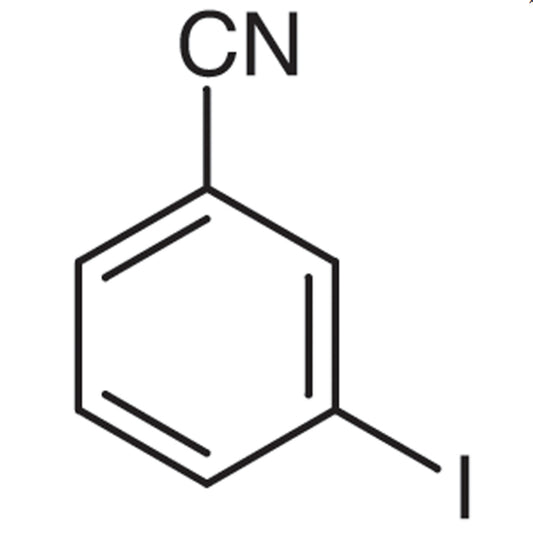
3-Iodobenzonitrile TCI I0660
Regular price From Rp 2.518.950,00Regular priceRp 1.776.600,00Sale price From Rp 2.518.950,00 -
2-Iodobenzonitrile TCI I0659
Regular price From Rp 1.801.800,00Regular priceRp 1.275.750,00Sale price From Rp 1.801.800,00 -
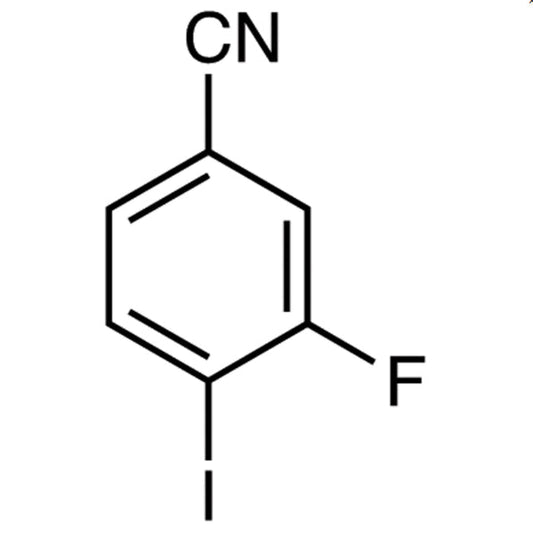
3-Fluoro-4-iodobenzonitrile TCI F1093
Regular price Rp 1.351.350,00Regular priceRp 960.750,00Sale price Rp 1.351.350,00 -
2-Chloro-5-iodobenzonitrile TCI C2212
Regular price From Rp 875.700,00Regular priceRp 627.900,00Sale price From Rp 875.700,00 -
4-IodobenzoylChloride TCI I0508
Regular price From Rp 1.829.100,00Regular priceRp 1.294.650,00Sale price From Rp 1.829.100,00 -
4-IodobenzoicAcid TCI I0054
Regular price From Rp 557.550,00Regular priceRp 405.300,00Sale price From Rp 557.550,00