TCI I0705 2',3'-O-Isopropylideneuridine is uridine in which the 2' and 3' diol groups are protected as an acetonide, representing the pyrimidine nucleoside group within the collection of nucleoside chemistry intermediates. The compound is widely used in synthetic laboratories as a starting point for preparing uridine and cytidine analogues, pyrimidine nucleotide precursors, and materials for oligonucleotide chemistry. Because the uracil base is relatively simple and requires no protection of an exocyclic amino group, this compound often serves as the first model when a new reaction route is tested before it is applied to more complicated nucleosides.
The characteristics that make it a preferred choice include stability, ease of handling, and the reaction selectivity it delivers. The isopropylidene group locks the ribose diol into a defined conformation so that only the 5' hydroxyl remains available to reagents, giving a single product that is far easier to purify. This protecting group resists bases and nucleophiles, yet is removed readily by dilute aqueous acid at mild temperature. Its good solubility in polar organic solvents such as acetone, acetonitrile, and dimethylformamide simplifies the setup of anhydrous reactions.
In Indonesian laboratories, this material fits the working pattern of university synthetic chemistry groups, medicinal chemistry laboratories, and research units developing nucleoside analogues. It is typically used at bench scale for route development and method trials before a procedure is transferred to larger preparations. Laboratories that run nucleotide and oligonucleotide chemistry keep the compound as a dependable intermediate, and its straightforward handling makes it suitable for supervised student projects as well as for routine research work.
- Selective 5' functionalisation of ribonucleosides, where the acetonide masks the 2',3' diol so that phosphorylation, acylation, or tosylation occurs at a single hydroxyl and gives one clean product.
- Synthesis of uridine and cytidine analogues, since the protected diol keeps the sugar intact while the base or the 5' position is modified through successive steps of the chosen route.
- Preparation of pyrimidine nucleotide precursors, because the free 5' hydroxyl is the natural attachment point for phosphate and phosphoramidite chemistry used to build nucleotide structures.
- Oligonucleotide chemistry building block work, where a stable and selectively protected ribonucleoside is required as feedstock for the sequence of coupling and deprotection operations.
- Method development and route scouting, as the simple uracil base needs no exocyclic amino protection, making this the practical model substrate before a new route is applied to more complex nucleosides.
| Brand | TCI |
|---|---|
| CAS number | 362-43-6 |
| Molecular formula | — |
| Purity | — |
| Category | Life Science > Biochemicals and Reagents > Nucleosides, Nucleotides, Oligonucleotides |
| Pack sizes | available in the standard research pack sizes offered by the manufacturer; confirm the intended size when ordering |
| Physical form | — |
| Storage | keep in the closed original container under the conditions stated on the manufacturer label and safety data sheet |
- Chemical identity: uridine with the 2' and 3' hydroxyl groups protected as an isopropylidene acetonide
Store the container tightly closed in a cool, dry place away from direct sunlight, heat sources, and moisture, following the conditions given on the manufacturer label and safety data sheet. Because the acetonide protecting group is cleaved by aqueous acid, keep the material away from acidic vapours and humid air, and allow a chilled container to warm to room temperature before opening to prevent condensation. The original glass or amber container is suitable; transfer portions with clean, dry spatulas and keep working solutions in sealed vessels. Handle in a fume hood or a well-ventilated area, wear a laboratory coat, safety glasses, and chemical-resistant gloves, and avoid generating or inhaling dust. Record each withdrawal so that stock condition and consumption remain traceable.
—
Produk Terkait
-
TCI B5774 5,10-Bis(4,4,5,5-tetramethyl-1,3,2-dioxaborolan-2-yl)naphtho[1,2-c:5,6-c']bis([1,2,5]oxadiazole)
Regular price Rp 10.255.350,00Regular price -
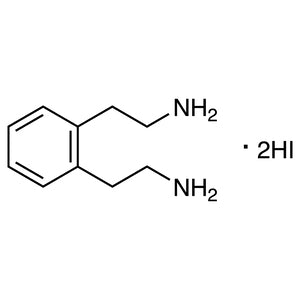
Dihydroiodide TCI B6569
Regular price From Rp 1.936.200,00Regular price -
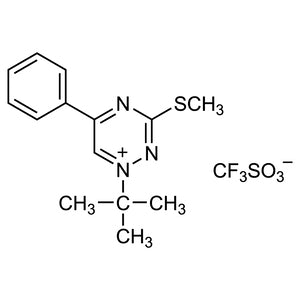
Trifluoromethanesulfonate TCI B7003
Regular price From Rp 1.936.200,00Regular price
![5,10-Bis(4,4,5,5-tetramethyl-1,3,2-dioxaborolan-2-yl)naphtho[1,2-c:5,6-c']bis([1,2,5]oxadiazole) - TCI B5774 - AMI Scientific](http://amiscientific.com/cdn/shop/files/TCI2510B5774.jpg?v=1769180228&width=533)