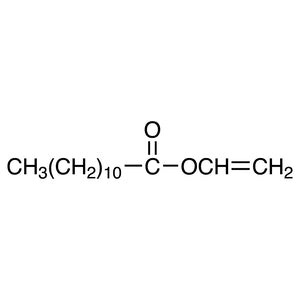
Vinyl Laurate (stabilized with MEHQ) is the vinyl ester of lauric acid, supplied with an added MEHQ inhibitor that prevents premature polymerization during storage. The compound belongs to the vinyl ester monomer family and serves a dual role in the laboratory. On one hand it acts as a building block for the synthesis of copolymers, and on the other it is widely used as an acyl group donor in enzyme-catalyzed transesterification reactions, because the by-product it releases is irreversible and therefore pushes the reaction fully toward the product side.
The property that makes this material distinctive is its vinyl ester group. When a lipase enzyme transfers the lauroyl group to the target nucleophile, the vinyl alcohol that is released immediately converts into volatile acetaldehyde. As a result the reaction equilibrium shifts strongly toward the product and conversion becomes far higher than with conventional acyl donors. For use as a monomer, the long laurate chain contributes internal flexibility to the copolymer, lowering the glass transition temperature and improving adhesive properties as well as water resistance.
In Indonesian laboratories, this monomer is relevant to research on emulsion polymers, adhesives, and coatings that require a flexible, hydrophobic internal component. It is equally suited to biocatalysis groups working on lipase-mediated acylation, where a highly efficient acyl donor is needed to drive conversion. Academic and industrial research laboratories typically use it in small synthetic batches and in method development work supporting polymer and enzymatic chemistry studies.
Related TCI products
- Enzymatic transesterification: serves as an irreversible acyl donor for lipase-catalyzed reactions, where released vinyl alcohol tautomerizes to volatile acetaldehyde and drives conversion far beyond equilibrium.
- Copolymer synthesis: functions as a vinyl ester co-monomer that introduces long laurate side chains, giving researchers a direct route to internally plasticized copolymer backbones without external additives.
- Adhesive formulation research: the long laurate chain lowers the glass transition temperature of the resulting polymer, improving tack and adhesive performance in laboratory-scale bonding studies.
- Coating and water resistance studies: the hydrophobic laurate segment improves water resistance of polymer films, making it useful for laboratory development of protective and barrier coating systems.
- Emulsion polymerization research: acts as a flexible hydrophobic monomer in emulsion polymer studies, allowing researchers to tune film-forming behavior and mechanical flexibility of latex products.
| Brand | TCI |
|---|---|
| CAS number | 2146-71-6 |
| Molecular formula | — |
| Purity | — |
| Category | Chemistry > Building Blocks > Non-Heterocyclic Building Blocks |
| Pack sizes | available in standard TCI research pack sizes; please confirm the packaging options when ordering. |
| Physical form | — |
| Storage | stabilized with MEHQ to inhibit premature polymerization during storage. |
- Catalog number: L0090
Store the container tightly closed in a cool, well-ventilated place, away from heat, direct sunlight, and sources of ignition. The MEHQ inhibitor must remain effective, so avoid conditions that could accelerate polymerization and do not remove the stabilizer unless the experimental protocol specifically requires it. Keep the material in its original supplier container or in a compatible sealed glass bottle, and reseal promptly after each use. Handle in a fume hood using gloves, safety glasses, and a laboratory coat, keep it away from strong oxidizing agents and free-radical sources, and dispose of residues and contaminated materials in accordance with the applicable chemical waste procedures of your institution.
—
Product Categories
- Biochemicals and ReagentsAlbumin Binding AgentsAlbumin Binding Modification Reagents
- Biochemicals and ReagentsBioconjugationAlbumin Binding Modification Reagents
- Biochemicals and ReagentsLipidsFatty Acyls
- Pharmaceutical Development and Drug Discovery ResearchAlbumin Binding AgentsAlbumin Binding Modification Reagents
- Pharmaceutical Development and Drug Discovery ResearchBioconjugationAlbumin Binding Modification Reagents
Produk Terkait
-
VinylPalmitate(stabilizedwithMEHQ) TCI P0848
Regular price From Rp 1.724.100,00Regular priceRp 1.205.400,00Sale price From Rp 1.724.100,00 -
Vinyl10-Undecenoate(stabilizedwithMEHQ) TCI U0057
Regular price Rp 2.041.200,00Regular priceRp 1.442.700,00Sale price Rp 2.041.200,00 -
Vinyln-Octanoate(stabilizedwithMEHQ) TCI C0896
Regular price From Rp 1.298.850,00Regular priceRp 924.000,00Sale price From Rp 1.298.850,00 -
4-NitrophenylLaurate TCI L0100
Regular price From Rp 822.150,00Regular priceRp 590.100,00Sale price From Rp 822.150,00 -
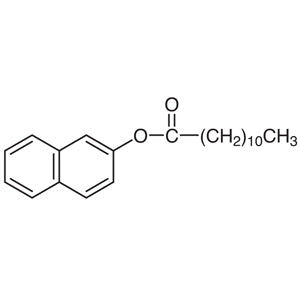
2-NaphthylLaurate TCI L0122
Regular price From Rp 1.749.300,00Regular priceRp 1.239.000,00Sale price From Rp 1.749.300,00 -
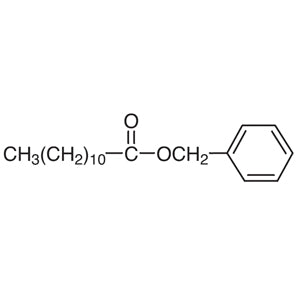
BenzylLaurate TCI L0107
Regular price Rp 2.227.050,00Regular priceRp 1.572.900,00Sale price Rp 2.227.050,00 -
IsobutylLaurate TCI L0084
Regular price From Rp 822.150,00Regular priceRp 590.100,00Sale price From Rp 822.150,00 -
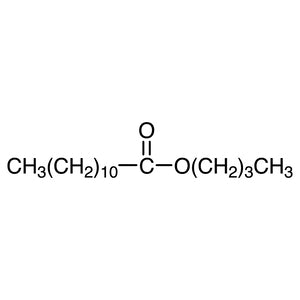
ButylLaurate TCI L0083
Regular price From Rp 530.250,00Regular priceRp 386.400,00Sale price From Rp 530.250,00