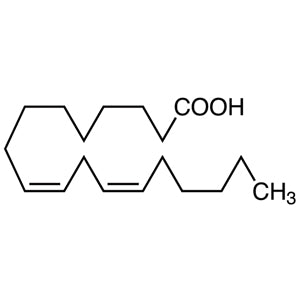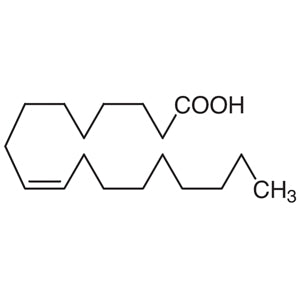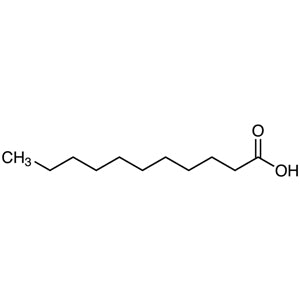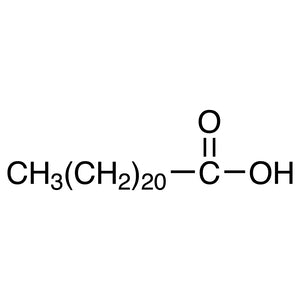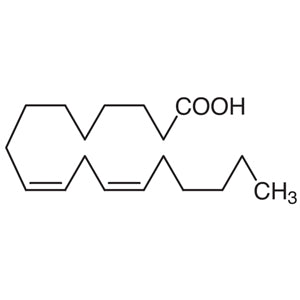
Linoleic Acid is an eighteen-carbon polyunsaturated fatty acid carrying two double bonds, and it belongs to the omega-6 group that is considered essential for both humans and animals because the body cannot synthesize it on its own. As a non-heterocyclic building block, this compound serves as the starting material for a wide range of lipid derivatives, spanning esters, amides, epoxides, and hydroperoxides. In the laboratory it functions as a lipid analysis standard, a substrate for lipoxygenase enzymes, and a supplement component in cell culture media that require a source of essential fatty acids.
The property that makes this material both highly valuable and demanding of care is the presence of two non-conjugated double bonds separated by a methylene group. This structure renders the compound readily susceptible to autoxidation by atmospheric oxygen, light, and heat, forming hydroperoxides that are themselves important objects of study in lipid oxidation and antioxidant research. At room temperature it exists as an oily liquid that is insoluble in water but dissolves well in organic solvents such as ethanol and chloroform. This controlled reactivity is precisely what makes it a reference model for testing the inhibitory power of antioxidant compounds.
In Indonesian laboratories, this TCI-branded grade is commonly used by food technology, nutrition, pharmaceutical, and biochemistry groups that work with lipid systems. It supports routine lipid profiling work, enzyme assays built around lipoxygenase activity, and cell culture programmes that need a defined essential fatty acid source. University research units and industrial quality laboratories alike rely on a consistent, well-characterized fatty acid when comparing oxidation behaviour or validating analytical methods across batches.
TCI brochures (PDF)
- Biofilm Research Reagents 2024-06-21 · p. 2
- Antioxidants for Research and Experimental Use 2026-07-29 · p. 2
- Colloidal Quantum Dot (QD) Research Reagents 2026-05-21 · p. 4
- Lipids 2025-12-17 · p. 5
- Reagents for Biological Research 2025-03-11 · p. 41
- Lipid analysis standard — serves as a reference fatty acid when profiling lipid samples, giving analysts a defined omega-6 species against which sample components can be identified and compared.
- Lipoxygenase enzyme substrate — its non-conjugated diene system is the natural target of lipoxygenase, making it the substrate of choice for kinetic and inhibition studies of that enzyme.
- Cell culture media supplementation — provides an essential fatty acid source for cultures whose cells cannot synthesize omega-6 fatty acids, supporting membrane formation and normal metabolic function.
- Lipid oxidation and antioxidant research — its ready autoxidation to hydroperoxides under oxygen, light, and heat makes it a standard model for measuring the inhibitory power of antioxidant compounds.
- Synthesis of lipid derivatives — as a non-heterocyclic building block it is converted into esters, amides, epoxides, and hydroperoxides for further preparative and mechanistic chemistry work.
| Brand | TCI |
|---|---|
| CAS number | 60-33-3 |
| Molecular formula | — |
| Purity | — |
| Category | Chemistry > Building Blocks > Non-Heterocyclic Building Blocks |
| Pack sizes | available in the standard TCI catalogue pack sizes for this item |
| Physical form | oily liquid at room temperature; insoluble in water, soluble in organic solvents such as ethanol and chloroform |
| Storage | keep cool, protected from light and air to limit autoxidation |
Because the two non-conjugated double bonds make this compound prone to autoxidation by atmospheric oxygen, light, and heat, store it cool and in the dark. Use tightly closed, light-protecting containers, and keep the headspace to a minimum; blanketing with inert gas after each withdrawal is good practice for material that will be opened repeatedly. Handle in a well-ventilated area or fume hood, wear gloves, safety glasses, and a laboratory coat, and take portions with clean, dry glassware to avoid contamination. Since oxidation products accumulate over time, material intended for antioxidant or oxidation studies should be checked for freshness before use, and the manufacturer's safety data sheet should be consulted before first handling.
—
Product Categories
- Cell Culture
- Biochemicals and ReagentsLipidsFatty Acyls
- Cell BiologyMetabolomicsMetabolic Libraries
- Cell BiologyMetabolomicsMetabolic Pathways
- Cell BiologyNutrition ResearchFunctional Food Research
- MicrobiologyBiofilm ResearchBiofilm Inhibitors and Suppressors, etc.
- Molecular BiologyAntioxidants [Life Science]
Produk Terkait
-
LinoleicAcid TCI L0053
Regular price From Rp 1.538.250,00Regular priceRp 1.090.950,00Sale price From Rp 1.538.250,00 -
ArachidonicAcid TCI A0781
Regular price From Rp 2.384.550,00Regular priceRp 1.683.150,00Sale price From Rp 2.384.550,00 -
OleicAcid TCI O0180
Regular price From Rp 1.618.050,00Regular priceRp 1.130.850,00Sale price From Rp 1.618.050,00 -
gamma-LinolenicAcid TCI L0152
Regular price From Rp 1.988.700,00Regular priceRp 1.405.950,00Sale price From Rp 1.988.700,00 -
UndecanoicAcid TCI U0004
Regular price From Rp 1.008.000,00Regular priceRp 720.300,00Sale price From Rp 1.008.000,00 -
BehenicAcid TCI B1747
Regular price Rp 4.028.850,00Regular priceRp 2.832.900,00Sale price Rp 4.028.850,00 -
BehenicAcid TCI B1248
Regular price From Rp 848.400,00Regular priceRp 609.000,00Sale price From Rp 848.400,00 -
StearicAcid TCI S0163
Regular price From Rp 477.750,00Regular priceRp 333.900,00Sale price From Rp 477.750,00