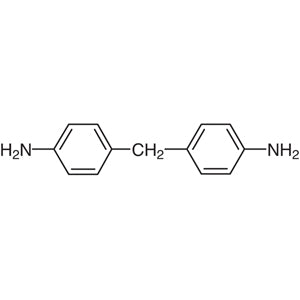
TCI M0220 4,4'-Diaminodiphenylmethane is an aromatic diamine supplied as a solid, built from two aniline rings joined by a methylene bridge. The compound is one of the best-known building blocks in polymer chemistry, used above all as a curing agent for epoxy resins and as a monomer leading to polyimides, aromatic polyamides, and isocyanate-derived precursors. In materials research laboratories, its presence makes possible the preparation of high-performance polymer networks whose thermal rigidity and mechanical strength go well beyond those of ordinary aliphatic polymers.
The main reason this compound is selected is its two primary aromatic amine groups, placed symmetrically at the para positions, so that reactions with epoxides, anhydrides, or dicarboxylic acids yield ordered chains and networks. The aromatic rings contribute structural rigidity and heat resistance, while the methylene bridge introduces a small degree of flexibility that keeps the resulting material from becoming excessively brittle. Being a solid, the compound is easy to weigh out precisely and can be melted or dissolved as a given formulation requires, so the stoichiometric ratio of the cure can be controlled carefully.
In Indonesian laboratories, this building block is typically found in polymer and materials research groups at universities and research institutes, as well as in development laboratories working on coatings, adhesives, and composites. It is used where a reproducible aromatic diamine is needed for epoxy curing studies, for monomer synthesis toward thermally stable polymers, and for organic synthesis work that calls for a symmetrical difunctional aromatic amine as a starting point.
TCI brochures (PDF)
- Covalent Organic Framework (COF) Linkers 2026-05-18 · p. 4
- Raw Materials for Polyimide Synthesis 2026-05-11 · p. 5
- Monomers 2025-05-28 · p. 32
- Epoxy resin curing studies: the two primary aromatic amine groups react with epoxide rings to build crosslinked networks, giving researchers direct control over cure stoichiometry and network density.
- Polyimide synthesis: as a diamine monomer it condenses with dianhydrides to form ordered polymer backbones whose aromatic rings deliver the thermal stability that polyimide research requires.
- Aromatic polyamide preparation: reaction with dicarboxylic acids or their derivatives produces regular amide-linked chains, with the para-substituted symmetry supporting predictable chain growth and structure.
- Isocyanate-derived precursor chemistry: the compound serves as the amine starting material in routes toward isocyanate derivatives, making it useful in laboratory-scale polyurethane and related precursor work.
- Composite and adhesive formulation development: as a solid hardener it can be weighed precisely, melted, or dissolved to suit a formulation, allowing systematic variation of mechanical and thermal performance.
| Brand | TCI (Tokyo Chemical Industry) |
|---|---|
| CAS number | 101-77-9 |
| Molecular formula | — |
| Purity | — |
| Category | Chemistry > Building Blocks > Non-Heterocyclic Building Blocks |
| Pack sizes | available in standard TCI research and laboratory pack sizes; please confirm the current option when ordering |
| Physical form | solid |
| Storage | keep in a closed original container in a cool, dry place away from light and incompatible materials |
Store the material in its original tightly closed container, in a cool, dry, and well-ventilated area away from direct sunlight, heat sources, oxidizing agents, and acids. Because the compound is an aromatic amine, handle it only in a fume hood or other well-ventilated workspace, and wear chemical-resistant gloves, safety goggles, and a laboratory coat to avoid skin and eye contact or inhalation of dust while weighing. Use clean, dry glass or chemically compatible plastic vessels for transfers, close the container immediately after use to limit exposure to air and moisture, and label all working solutions clearly. Clean up any spilled solid promptly, wash hands after handling, and collect residues as chemical waste in line with the laboratory's disposal procedures and the supplier's safety data sheet.
—
Product Categories
- Material Building BlocksCovalent Organic Frameworks (COFs) LinkersAmine Linkers [Covalent Organic Frameworks (COFs) Linkers]
- Polymer/Macromolecule ReagentsCovalent Organic Frameworks (COFs) LinkersAmine Linkers [Covalent Organic Frameworks (COFs) Linkers]
- Polymer/Macromolecule ReagentsMonomersDiamine Monomers
- Polymer/Macromolecule ReagentsPolyimide Raw MaterialsDiamines [Polyimide Raw Materials]
Produk Terkait
-
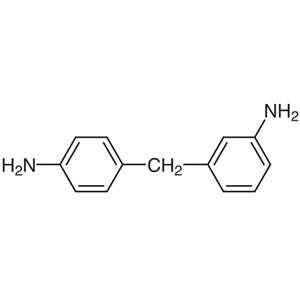
3,4'-Diaminodiphenylmethane TCI D1684
Regular price From Rp 1.272.600,00Regular priceRp 905.100,00Sale price From Rp 1.272.600,00 -
2,3,5,6-Tetramethyl-1,4-phenylenediamine TCI T1457
Regular price From Rp 1.934.100,00Regular priceRp 1.368.150,00Sale price From Rp 1.934.100,00 -
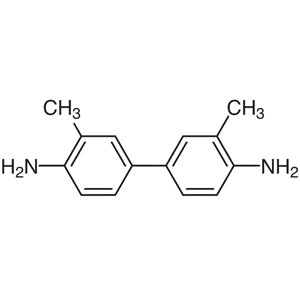
o-Tolidine TCI T0253
Regular price From Rp 1.643.250,00Regular priceRp 1.164.450,00Sale price From Rp 1.643.250,00 -
1,4-Phenylenediamine TCI P0170
Regular price From Rp 557.550,00Regular priceRp 389.550,00Sale price From Rp 557.550,00 -
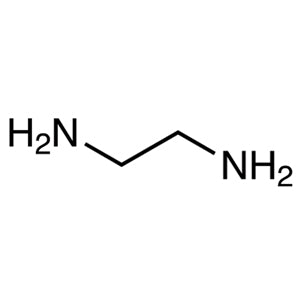
EthylenediamineAnhydrous TCI E0077
Regular price From Rp 505.050,00Regular priceRp 352.800,00Sale price From Rp 505.050,00 -
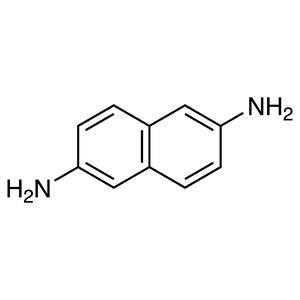
Naphthalene-2,6-diamine TCI D6067
Regular price Rp 4.001.550,00Regular priceRp 2.814.000,00Sale price Rp 4.001.550,00 -
2,5-Diaminotoluene TCI D4628
Regular price From Rp 1.670.550,00Regular priceRp 1.167.600,00Sale price From Rp 1.670.550,00 -
3,3'-Dinitrobenzidine TCI D0822
Regular price Rp 9.434.250,00Regular priceRp 6.612.900,00Sale price Rp 9.434.250,00