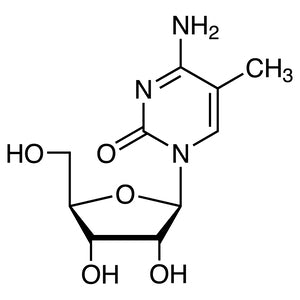
TCI M1931 5-Methylcytidine is a modified nucleoside built from a 5-methylcytosine base attached to a ribose sugar. The compound is an analogue of cytidine carrying an additional methyl group at position five of the pyrimidine ring, a modification found naturally in the RNA of a wide range of organisms. In molecular biology and nucleic acid chemistry laboratories, this material serves as a reference substance and as a synthetic starting material, allowing researchers to study the role of RNA methylation, including its influence on structural stability, translation, and recognition by particular nucleic acid binding proteins inside the cell.
The properties that make this compound important are the clearly defined position of its methyl group and its status as a naturally occurring epigenetic mark. Methylation at position five does not alter the ability of the base to form Watson–Crick pairing with guanine, but it does change the steric and electronic character of the major groove, thereby affecting interactions with enzymes and reader proteins. As a free nucleoside, the molecule carries hydroxyl groups on the ribose that can be selectively protected and phosphorylated, which makes it a practical starting point for preparing phosphoramidites and other derivatives required in oligonucleotide work.
In Indonesian laboratories, this material is typically used in university research groups, biotechnology institutes, and analytical service units working on nucleic acid chemistry and epigenetics. It is generally handled in small quantities on the analytical scale, weighed out for the preparation of reference solutions or for use as a building block in multi-step synthesis. Researchers ordinarily incorporate it into method development and validation work where a well-characterised modified nucleoside standard is required.
TCI brochures (PDF)
- Base-Modified Nucleoside Triphosphates for the Development of mRNA Medicines 2025-05-26 · p. 1
- Methylated Nucleoside in the 5’-Terminal Structure of Eukaryotic mRNA 2025-04-14 · p. 1
- Base Modified Nucleosides and Nucleotides for Epigenetic Research 2025-04-14 · p. 1
- Epigenetics Research Reagents 2024-11-22 · p. 2
- Nucleosides, Nucleotides, Nucleic Acids and Related Reagents 2026-03-23 · p. 3
- Reagents for Biological Research 2025-03-11 · p. 62
- Analytical reference standard for RNA modification studies, where a defined 5-methylated nucleoside is needed to identify and confirm the corresponding signal obtained from digested RNA samples.
- Starting material for phosphoramidite synthesis, because the free ribose hydroxyl groups can be selectively protected and phosphorylated to build modified oligonucleotides for downstream experimental work.
- Epigenetics research on RNA methylation, since the compound represents a naturally occurring mark and lets researchers probe how methylation influences transcript stability and cellular processing.
- Enzyme and binding protein studies, as the methyl group alters major groove steric and electronic properties without disturbing Watson–Crick pairing, making recognition effects possible to isolate experimentally.
- Method development for nucleoside analysis, providing a consistent modified nucleoside against which chromatographic and spectrometric procedures can be established, compared, and validated by laboratory staff.
| Brand | TCI |
|---|---|
| CAS number | 2140-61-6 |
| Molecular formula | — |
| Purity | — |
| Category | Chemistry > Chemical Biology > Nucleic Acid Chemistry |
| Pack sizes | available in the catalogue pack sizes offered by TCI for this item |
| Physical form | — |
| Storage | store according to the conditions stated on the manufacturer's label and safety data sheet |
- Product code: M1931
Store this nucleoside in its original tightly closed container, kept in a cool, dry place away from direct sunlight, moisture, and sources of heat, and follow the storage temperature stated by the manufacturer on the product label. Use clean, dry spatulas and glassware when weighing to avoid contamination of the remaining material, and reseal the container promptly after each use. Handle the substance in a well-ventilated area or fume hood, wearing a laboratory coat, gloves, and safety glasses. Consult the safety data sheet before use, and dispose of residues and contaminated consumables according to institutional chemical waste procedures.
—
Product Categories
- Chemical BiologyNucleic Acid ChemistryMethylated Nucleosides
- Chemical BiologyNucleic Acid ChemistryBase Modified Nucleosides and Nucleotides
- Pharmaceutical Development and Drug Discovery Research ReagentsNucleic Acid ChemistryMethylated Nucleosides
- Pharmaceutical Development and Drug Discovery Research ReagentsNucleic Acid ChemistryBase Modified Nucleosides and Nucleotides
- Biochemicals and ReagentsNucleosides, Nucleotides, OligonucleotidesNucleoside Analogs
- Biochemicals and ReagentsNucleosides, Nucleotides, OligonucleotidesNucleosides
- Molecular BiologyEpigeneticsBioactive Small Molecules for Epigenetic Research
- Molecular BiologyEpigeneticsMethylated Nucleosides
- Molecular BiologyEpigeneticsBase Modified Nucleosides and Nucleotides
- Pharmaceutical Development and Drug Discovery ResearchNucleic Acid ChemistryMethylated Nucleosides
- Pharmaceutical Development and Drug Discovery ResearchNucleic Acid ChemistryBase Modified Nucleosides and Nucleotides
Produk Terkait
-
2'-Deoxy-5-methylcytidine TCI D3610
Regular price From Rp 1.326.150,00Regular priceRp 942.900,00Sale price From Rp 1.326.150,00 -
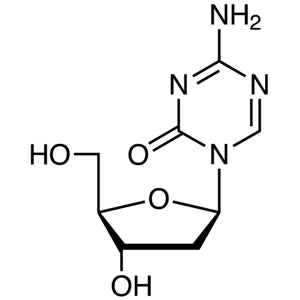
5-Aza-2'-deoxycytidine TCI A2232
Regular price From Rp 3.419.850,00Regular priceRp 2.406.600,00Sale price From Rp 3.419.850,00 -
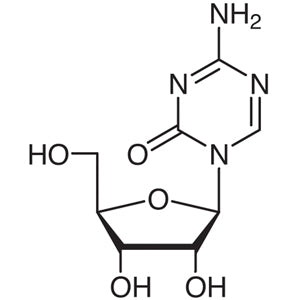
5-Azacytidine TCI A2033
Regular price From Rp 1.167.600,00Regular priceRp 831.600,00Sale price From Rp 1.167.600,00 -
N2-Methylguanosine TCI M3745
Regular price From Rp 3.683.400,00Regular priceRp 2.591.400,00Sale price From Rp 3.683.400,00 -
7-Methylguanosine TCI M3465
Regular price From Rp 3.922.800,00Regular priceRp 2.758.350,00Sale price From Rp 3.922.800,00 -
6-(gamma,gamma-Dimethylallylamino)purineRiboside TCI I1221
Regular price Rp 4.636.800,00Regular priceRp 3.258.150,00Sale price Rp 4.636.800,00 -
5-(Hydroxymethyl)uridine TCI H1866
Regular price From Rp 3.445.050,00Regular priceRp 2.424.450,00Sale price From Rp 3.445.050,00 -
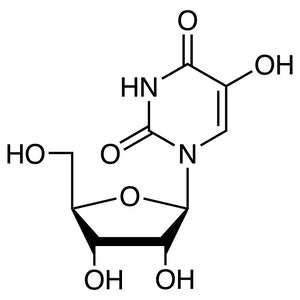
5-Hydroxyuridine TCI H1865
Regular price Rp 12.109.650,00Regular priceRp 8.484.000,00Sale price Rp 12.109.650,00