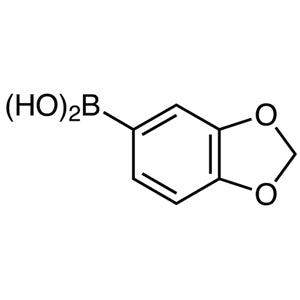
3,4-(Methylenedioxy)phenylboronic Acid is a chemical compound widely used in organic laboratory settings for its versatile reactivity and functional group versatility. This compound belongs to the organoboron reagent family and is particularly valuable in synthetic chemistry due to its ability to participate in various reaction mechanisms. Its unique structure, featuring a methylenedioxy group attached to a phenylboronic acid core, makes it an essential component in the synthesis of complex organic molecules. This reagent is commonly employed in coupling reactions, where it facilitates the formation of new carbon-carbon bonds, making it a key player in modern synthetic strategies.
The compound's high reactivity and compatibility with a wide range of substrates make it a preferred choice for organic chemists. Its ability to undergo hydrolysis and substitution reactions allows for the creation of diverse molecular architectures. Additionally, its stability under controlled laboratory conditions ensures consistent performance, which is crucial for reproducible results. These properties make it a reliable and efficient reagent for both academic and industrial research applications.
In Indonesian laboratories, this compound is frequently used in organic synthesis research, particularly in universities and research institutions. Its relevance in the development of new compounds and functional materials makes it a staple in the chemical research toolkit. The compound’s availability and performance make it a go-to reagent for chemists working on complex molecular transformations and functional group manipulations.
- Organic synthesis is a primary application where this reagent is used to facilitate coupling reactions and the formation of complex molecular structures.
- Functional group manipulation benefits from its reactivity, allowing for the modification of aromatic compounds through substitution and hydrolysis.
- Catalytic processes often utilize this compound due to its ability to participate in various reaction mechanisms, enhancing reaction efficiency.
- Material synthesis relies on its reactivity to create new compounds with specific properties, making it essential in polymer and pharmaceutical research.
- Analytical chemistry applications benefit from its stability and reactivity, enabling accurate and reliable experimental outcomes in various testing scenarios.
| Brand | TCI |
|---|---|
| CAS number | 94839-07-3 |
| Molecular formula | — |
| Purity | — |
| Category | Chemistry > Organometallic Reagents > Organoboron [Organometallic Reagents] |
| Pack sizes | — |
| Physical form | — |
| Storage | Store in a cool, dry place away from moisture and direct sunlight |
This compound should be stored in a cool, dry environment to maintain its stability and reactivity. It is recommended to keep it in a sealed container to prevent exposure to moisture and air, which could affect its performance. When handling, it is important to use appropriate personal protective equipment, such as gloves and safety goggles, to ensure safety. The compound should be stored in a well-ventilated area to minimize any potential risks associated with its chemical nature. Proper labeling of containers is essential to ensure safe handling and prevent accidental misuse. Regular inspection of storage conditions is advised to maintain optimal performance and safety standards in the laboratory.
—
Produk Terkait
-
TCI B5774 5,10-Bis(4,4,5,5-tetramethyl-1,3,2-dioxaborolan-2-yl)naphtho[1,2-c:5,6-c']bis([1,2,5]oxadiazole)
Regular price Rp 10.255.350,00Regular price -
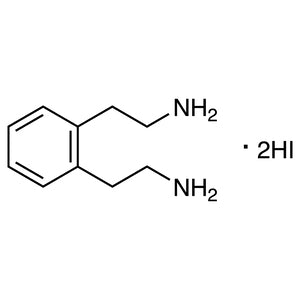
Dihydroiodide TCI B6569
Regular price From Rp 1.936.200,00Regular price -
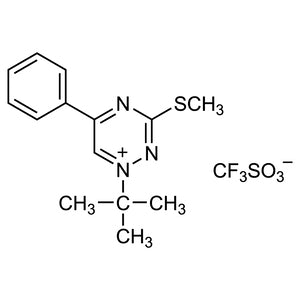
Trifluoromethanesulfonate TCI B7003
Regular price From Rp 1.936.200,00Regular price
![5,10-Bis(4,4,5,5-tetramethyl-1,3,2-dioxaborolan-2-yl)naphtho[1,2-c:5,6-c']bis([1,2,5]oxadiazole) - TCI B5774 - AMI Scientific](http://amiscientific.com/cdn/shop/files/TCI2510B5774.jpg?v=1769180228&width=533)