![30686-73-8 4-(2-Methyl-4-thiazolyl)phenol [for Biochemical Research] - AMI Scientific](http://amiscientific.com/cdn/shop/files/TCI2510M2325.jpg?v=1767126460&width=1946)
![30686-73-8 4-(2-Methyl-4-thiazolyl)phenol [for Biochemical Research] - AMI Scientific](http://amiscientific.com/cdn/shop/files/TCI2510M2325.jpg?v=1767126460&width=1445)
TCI M2325 4-(2-Methyl-4-thiazolyl)phenol [for Biochemical Research] is a compound built on a combined thiazole–phenol framework, in which a thiazole core bearing a methyl group at the 2-position is linked directly to a 4-hydroxyphenyl group. The product is supplied under the specific designation "for Biochemical Research", indicating that it is intended for biochemical research purposes rather than for general use. In the laboratory, this compound serves as an intermediate and as a basic scaffold in the development of luminescent compounds, detection reagents, and probe molecules that exploit the optical behaviour of the thiazole–phenol core.
The characteristic that makes this material attractive is the conjugated system formed between the aromatic phenol ring and the heteroatom-rich thiazole ring. That conjugation gives rise to distinctive light absorption and emission behaviour that responds to the surrounding chemical environment, an essential foundation for the design of optical probes. The phenolic hydroxyl group provides a highly useful point of attachment: it can be etherified, esterified, phosphorylated, or fitted with a sugar moiety, so that the optical properties of the compound can be "switched off" and then restored once a specific enzyme cleaves the capping group.
In Indonesian laboratories, this compound is typically used in university research groups, biochemistry and molecular biology laboratories, and institutional research units working on detection chemistry. It is normally handled in small quantities as a starting scaffold for synthesising probe molecules, or as a reference material in experiments that examine the optical response of thiazole–phenol systems. Its role suits research-scale work rather than routine or bulk production activities.
- Luminescent compound development: the conjugated thiazole–phenol framework provides the optical core that researchers modify to build new light-emitting molecules for biochemical study.
- Optical probe design: the phenolic hydroxyl group offers a defined attachment point for capping groups, allowing probe molecules whose optical signal can be switched off and later restored.
- Enzyme-responsive reagent preparation: etherified, esterified, phosphorylated, or glycosylated derivatives can be prepared so that enzymatic cleavage of the capping group regenerates the optical response.
- Detection reagent synthesis: the compound functions as a synthetic intermediate from which detection reagents relying on thiazole–phenol optical behaviour are constructed in the laboratory.
- Biochemical research reference material: supplied specifically for biochemical research, it serves as a defined scaffold for comparison studies of thiazole–phenol optical and chemical behaviour.
| Brand | TCI |
|---|---|
| CAS number | 30686-73-8 |
| Molecular formula | — |
| Purity | — |
| Category | Life Science > Biochemicals and Reagents > Luminescent Compounds/Detection |
| Pack sizes | available in research-scale laboratory pack sizes; please confirm the sizes currently offered when ordering |
| Physical form | — |
| Storage | store according to the manufacturer's stated conditions on the product label and safety data sheet |
- Product code: M2325
Store the compound in a cool, dry place away from direct sunlight, moisture, and sources of heat or ignition, following the storage conditions stated by the manufacturer on the product label and safety data sheet. Keep it in its original tightly closed container, or in a clean amber glass container if transfer is required, since compounds with conjugated aromatic systems may be light-sensitive. Handle the material in a fume hood, wearing a laboratory coat, safety goggles, and suitable chemical-resistant gloves. Avoid inhaling dust and avoid direct contact with skin and eyes. Because this material is intended for biochemical research only, it should be handled exclusively by trained laboratory personnel, and the container should be clearly labelled and kept separate from incompatible chemicals.
—
Produk Terkait
-
TCI B5774 5,10-Bis(4,4,5,5-tetramethyl-1,3,2-dioxaborolan-2-yl)naphtho[1,2-c:5,6-c']bis([1,2,5]oxadiazole)
Regular price Rp 10.255.350,00Regular price -
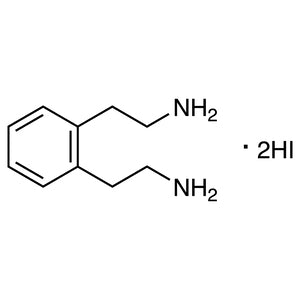
Dihydroiodide TCI B6569
Regular price From Rp 1.936.200,00Regular price -
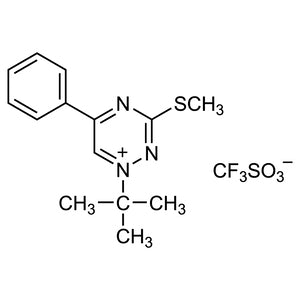
Trifluoromethanesulfonate TCI B7003
Regular price From Rp 1.936.200,00Regular price
![5,10-Bis(4,4,5,5-tetramethyl-1,3,2-dioxaborolan-2-yl)naphtho[1,2-c:5,6-c']bis([1,2,5]oxadiazole) - TCI B5774 - AMI Scientific](http://amiscientific.com/cdn/shop/files/TCI2510B5774.jpg?v=1769180228&width=533)