4-Maleimidobutyric Acid is a heterobifunctional crosslinking reagent that combines a thiol-reactive maleimide ring at one end with a free carboxylic acid group at the other, joined by a short butyric chain. In chemical biology laboratories, this compound serves as a covalent bridge between two different biomolecules: the maleimide group captures free thiols such as cysteine residues, while the carboxylic acid group is activated into an active ester so that it can react with primary amines, for example lysine side chains or the N-terminus of a protein. In this way, a single reagent is able to join two dissimilar chemical surfaces in a controlled manner.
The principal property that makes this reagent a preferred choice is its very clear dual selectivity. The Michael addition of the maleimide toward thiols proceeds rapidly at approximately neutral to slightly basic pH and barely disturbs amine groups, whereas activation of the carboxylate through a carbodiimide or through formation of an NHS ester takes place in a separate step, so that the order of conjugation is easy to control. The length of the butyric chain provides enough distance between the components to reduce steric hindrance, yet remains compact so that the final conjugate does not become excessively flexible.
In Indonesian laboratories, 4-Maleimidobutyric Acid is typically used in research groups and university facilities working on protein conjugation, bioconjugate preparation, and chemical biology method development. It is generally handled in small quantities on the bench during the preparation of antibody or carrier-protein conjugates, immunoassay reagents, and modified peptide constructs, where a defined two-step coupling sequence between a thiol-bearing partner and an amine-bearing partner is required.
- Protein-protein conjugation: the reagent links a cysteine-bearing protein to an amine-bearing partner through two independent reactive ends, giving controlled covalent coupling between two distinct biomolecules.
- Peptide-carrier coupling: synthetic peptides containing a free thiol can be attached to a carrier protein whose lysine residues are engaged through the activated carboxylic acid terminus.
- Bioconjugate preparation for immunoassays: the defined two-step chemistry allows antibodies and reporter molecules to be joined reproducibly without uncontrolled crosslinking between identical functional groups.
- Surface and support functionalisation: the carboxylic acid end can be activated onto amine-bearing supports, leaving the maleimide ring available to capture thiol-containing molecules afterwards.
- Chemical biology method development: researchers use this linker when establishing conjugation protocols that require orthogonal thiol and amine reactivity within one short, compact spacer molecule.
| Brand | TCI |
|---|---|
| CAS number | 57078-98-5 |
| Molecular formula | — |
| Purity | — |
| Category | Chemistry > Chemical Biology > Linkers and Crosslinkers |
| Pack sizes | available in standard TCI research-scale packaging; please confirm the current pack option when ordering |
| Physical form | — |
| Storage | keep in a cool, dry place in a tightly closed container as indicated on the manufacturer's label |
- Product code: M2337
Store the container tightly closed in a cool, dry place away from moisture, direct sunlight, and sources of heat, following the storage conditions stated on the manufacturer's label. Use the original container or an equivalent chemically compatible, clearly labelled vessel, and keep it sealed when not in use, since the maleimide function is sensitive to hydrolysis under moist or alkaline conditions. Handle the material in a well-ventilated area or a fume hood, wearing a laboratory coat, safety glasses, and suitable gloves. Avoid contact with skin and eyes and avoid inhaling dust. Prepare solutions immediately before use where possible, and dispose of residues and contaminated consumables in accordance with the laboratory's chemical waste procedures and the manufacturer's safety data sheet.
—
Produk Terkait
-
TCI B5774 5,10-Bis(4,4,5,5-tetramethyl-1,3,2-dioxaborolan-2-yl)naphtho[1,2-c:5,6-c']bis([1,2,5]oxadiazole)
Regular price Rp 10.255.350,00Regular price -
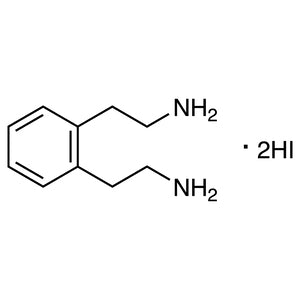
Dihydroiodide TCI B6569
Regular price From Rp 1.936.200,00Regular price -
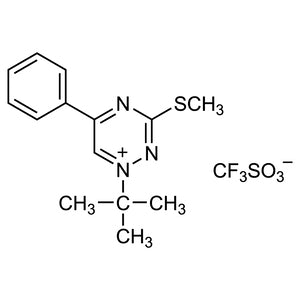
Trifluoromethanesulfonate TCI B7003
Regular price From Rp 1.936.200,00Regular price
![5,10-Bis(4,4,5,5-tetramethyl-1,3,2-dioxaborolan-2-yl)naphtho[1,2-c:5,6-c']bis([1,2,5]oxadiazole) - TCI B5774 - AMI Scientific](http://amiscientific.com/cdn/shop/files/TCI2510B5774.jpg?v=1769180228&width=533)