TCI M3098 N-Methoxy-N,4-dimethylbenzamide is an aromatic Weinreb amide derived from 4-methylbenzoic acid, classified as a synthetic reagent for carbon-carbon bond formation. Unlike aliphatic Weinreb amides, this reagent delivers an aromatic acyl group, making it an efficient entry point toward substituted aryl ketones. In the laboratory, the compound is used when researchers need a para-toluoyl group installed onto a molecular framework with a high degree of reaction cleanliness. This approach frequently serves as a more controlled alternative to Friedel-Crafts acylation, which demands strong Lewis acids and often produces troublesome mixtures of regioisomers.
The property that makes this reagent a preferred choice is the ability of the N-methoxy-N-methyl group to form a stable chelate with metal centres at the tetrahedral intermediate stage, so the reaction halts precisely after a single nucleophilic addition. The aromatic ring bearing a methyl substituent at the para position provides slightly increased electron density and supplies a clear signal marker in proton NMR analysis, making reaction progress straightforward to monitor. The reagent is also comparatively less air-sensitive than many alternative acylating agents, which simplifies routine handling at the bench.
In Indonesian laboratories, this reagent is typically encountered in academic and institutional organic synthesis settings where aryl ketone intermediates are required for further transformation. It suits research groups building substituted aromatic scaffolds, teaching laboratories demonstrating controlled acyl transfer, and development laboratories preparing intermediates on a small scale. Its predictable stoichiometry and clean reaction profile make it well suited to work where purification capacity is limited and reproducibility across repeated runs matters.
- Aryl ketone synthesis — the reagent transfers a para-toluoyl group to organometallic nucleophiles and stops cleanly after single addition, avoiding the over-addition to tertiary alcohols that plagues ester-based acylation routes.
- Controlled alternative to Friedel-Crafts acylation — researchers choose this route when strong Lewis acids are undesirable or when regioisomer mixtures from direct aromatic acylation would complicate downstream purification and characterisation.
- Grignard and organolithium reaction development — the stable chelated tetrahedral intermediate allows reliable stoichiometric control with highly reactive carbanion nucleophiles, giving reproducible outcomes across repeated experimental runs.
- Building block for substituted aromatic scaffolds — the para-methyl substituted ring serves as a defined aromatic fragment for assembling larger target molecules in multi-step synthetic sequences.
- NMR-monitored reaction studies — the methyl substituent on the aromatic ring gives a distinct proton signal, allowing researchers to follow conversion and identify intermediates during methodology work.
| Brand | TCI |
|---|---|
| CAS number | 122334-36-5 |
| Molecular formula | — |
| Purity | — |
| Category | Chemistry > Synthetic Reagents > C-C Bond Formation [Synthetic Reagents] |
| Pack sizes | available in standard TCI research pack sizes; please confirm the exact packaging option when ordering |
| Physical form | — |
| Storage | store in a cool, dry place in a tightly closed container |
- Chemical name: N-Methoxy-N,4-dimethylbenzamide
Store the reagent in a cool, dry location inside a tightly closed original container, protected from moisture and kept away from heat sources and direct sunlight. Although this compound is comparatively less air-sensitive than many alternative acylating agents, containers should still be closed promptly after each use to prevent moisture uptake. Handle in a well-ventilated area or fume hood, wearing appropriate personal protective equipment including safety glasses, gloves, and a laboratory coat. Weigh and transfer using clean, dry glassware or spatulas to avoid contaminating the bulk material. Keep separated from strong oxidising agents and strong acids, and follow the supplier safety data sheet for full handling, spill, and disposal guidance.
—
Produk Terkait
-
TCI B5774 5,10-Bis(4,4,5,5-tetramethyl-1,3,2-dioxaborolan-2-yl)naphtho[1,2-c:5,6-c']bis([1,2,5]oxadiazole)
Regular price Rp 10.255.350,00Regular price -
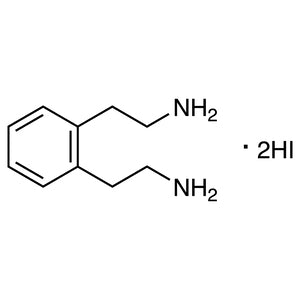
Dihydroiodide TCI B6569
Regular price From Rp 1.936.200,00Regular price -
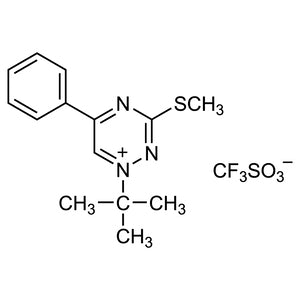
Trifluoromethanesulfonate TCI B7003
Regular price From Rp 1.936.200,00Regular price
![5,10-Bis(4,4,5,5-tetramethyl-1,3,2-dioxaborolan-2-yl)naphtho[1,2-c:5,6-c']bis([1,2,5]oxadiazole) - TCI B5774 - AMI Scientific](http://amiscientific.com/cdn/shop/files/TCI2510B5774.jpg?v=1769180228&width=533)