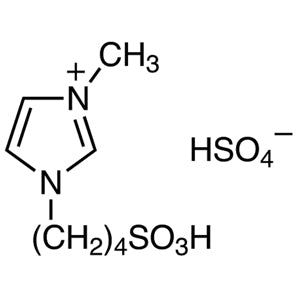
TCI M3120 1-Methyl-3-(4-sulfobutyl)imidazolium Hydrogen Sulfate, CAS 827320-59-2, is a Brønsted acidic ionic liquid built on an imidazolium framework that combines a sulfonic acid group tethered to the cation with a hydrogen sulfate counter-anion. Bringing two sources of acidity together in a single compound makes it both a strongly acidic and an economical catalyst. In the laboratory it serves as a replacement for liquid sulfuric acid in acid-catalysed reactions such as esterification, transesterification, and a wide range of condensation reactions, offering safer handling and a more straightforward product separation step than conventional acid catalysts.
The characteristics that make this material a preferred choice are its non-volatile nature, its high acidity, and its ability to form a two-phase system with many non-polar organic products. Once a reaction has finished, the product can often be recovered simply by decantation or by a straightforward extraction, while the catalyst layer remains behind and is ready to be used again. Compared with the NTf2-anion derivative, this hydrogen sulfate version is more hydrophilic, which makes it particularly well suited to reaction systems that involve water or alcohols, such as the formation of esters from fatty acids with methanol.
In Indonesian laboratories this ionic liquid is typically used in academic and applied research settings where acid catalysis is studied or optimised, including work on esterification and transesterification chemistry. Its non-volatile character suits bench-scale work where vapour exposure from mineral acids is a concern, and the ease of separating catalyst from product makes it convenient for repeated experimental runs and for catalyst recovery studies under routine laboratory conditions.
TCI brochures (PDF)
- Ionic Liquids 2026-06-08 · p. 9
Related TCI products
- TCI M3599 681281-87-8 1-Methyl-1H-imidazol-1-ium Hydrogen Sulfate
- TCI M3119 909390-59-6 1-Methyl-3-(4-sulfobutyl)imidazolium Bis(trifluoromethanesulfonyl)imide
- TCI B5569 262297-13-2 1-Butyl-3-methylimidazolium Hydrogen Sulfate
- TCI B5421 1312310-16-9 3,3'-(Butane-1,4-diyl)bis(1-vinyl-3-imidazolium) Bis(trifluoromethanesulfonyl)imide
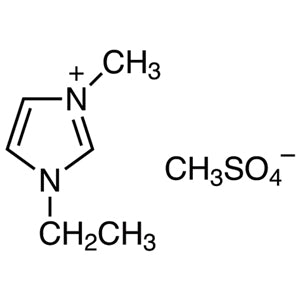
- TCI E1308 516474-01-4 1-Ethyl-3-methylimidazolium Methyl Sulfate
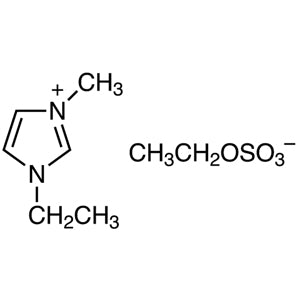
- TCI E0650 342573-75-5 1-Ethyl-3-methylimidazolium Ethyl Sulfate
- Esterification reactions — supplies strong Brønsted acidity from both the sulfonic acid group and the hydrogen sulfate anion, driving ester formation without the handling burden of liquid sulfuric acid.
- Transesterification studies — its hydrophilic character tolerates alcohol-containing systems well, making it suitable for converting fatty acids and related substrates with methanol in catalysis research.
- Acid-catalysed condensation reactions — delivers the high acidity that condensation chemistry requires while remaining non-volatile, so the catalyst stays in the reaction vessel rather than escaping as vapour.
- Biphasic catalysis and product separation work — forms a two-phase system with many non-polar organic products, allowing recovery of the product by simple decantation or extraction.
- Catalyst recycling investigations — the catalyst layer remains behind after product removal and is ready for reuse, supporting studies on repeated catalytic cycles and catalyst lifetime.
| Brand | TCI |
|---|---|
| CAS number | 827320-59-2 |
| Molecular formula | — |
| Purity | — |
| Category | Chemistry > Specialty Synthesis > Ionic Liquids [Specialty Synthesis] |
| Pack sizes | available in standard TCI catalogue pack sizes; please confirm the size required when ordering |
| Physical form | ionic liquid (non-volatile) |
| Storage | keep tightly closed in a cool, dry place away from moisture |
- Chemical name: 1-Methyl-3-(4-sulfobutyl)imidazolium Hydrogen Sulfate
Store the ionic liquid in its original tightly closed container in a cool, dry area, protected from moisture, since the hydrogen sulfate salt is hydrophilic and will readily take up water from humid laboratory air. Keep it away from bases and from materials incompatible with strong acids. Handle the material in a fume hood or a well-ventilated area, and wear chemical-resistant gloves, safety goggles, and a laboratory coat, as the compound is strongly acidic and can cause burns on contact with skin or eyes. Use clean, dry glassware or acid-compatible containers when dispensing, close the container immediately after use, and consult the manufacturer's safety data sheet before beginning work.
—
Produk Terkait
-
1-Methyl-1H-imidazol-1-iumHydrogenSulfate TCI M3599
Regular price From Rp 1.272.600,00Regular priceRp 905.100,00Sale price From Rp 1.272.600,00 -
1-Methyl-3-(4-sulfobutyl)imidazoliumBis(trifluoromethanesulfonyl)imide TCI M3119
Regular price From Rp 1.618.050,00Regular priceRp 1.146.600,00Sale price From Rp 1.618.050,00 -
1-Butyl-3-methylimidazoliumHydrogenSulfate TCI B5569
Regular price From Rp 875.700,00Regular priceRp 627.900,00Sale price From Rp 875.700,00 -
3,3'-(Butane-1,4-diyl)bis(1-vinyl-3-imidazolium)Bis(trifluoromethanesulfonyl)imide TCI B5421
Regular price Rp 2.439.150,00Regular priceRp 1.720.950,00Sale price Rp 2.439.150,00 -
1-Ethyl-3-methylimidazoliumMethylSulfate TCI E1308
Regular price From Rp 1.087.800,00Regular priceRp 775.950,00Sale price From Rp 1.087.800,00 -
1-Ethyl-3-methylimidazoliumEthylSulfate TCI E0650
Regular price From Rp 795.900,00Regular priceRp 572.250,00Sale price From Rp 795.900,00 -
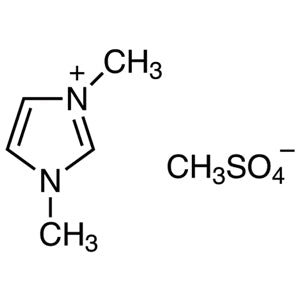
1,3-DimethylimidazoliumMethylSulfate TCI D5348
Regular price From Rp 1.220.100,00Regular priceRp 868.350,00Sale price From Rp 1.220.100,00 -
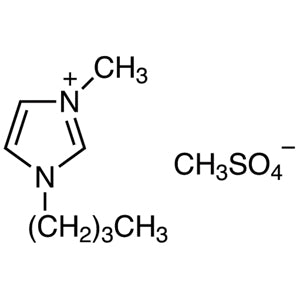
1-Butyl-3-methylimidazoliumMethylSulfate TCI B5527
Regular price From Rp 1.538.250,00Regular priceRp 1.090.950,00Sale price From Rp 1.538.250,00