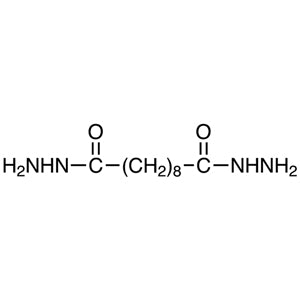
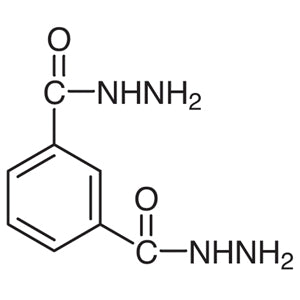
TCI M3206 Malonic Acid Dihydrazide, bearing CAS number 3815-86-9, is a dihydrazide compound derived from malonic acid, a three-carbon dicarboxylic acid whose two carboxyl groups have both been converted into hydrazide functionalities. It belongs to the family of highly versatile non-heterocyclic building blocks used in synthetic chemistry. In the laboratory, the presence of a hydrazide group at each end of the molecule makes it a bifunctional reagent, meaning a single molecule is able to bind two other molecules simultaneously. This property makes it useful for constructing extended chains, molecular bridges, and new heterocyclic ring systems.
The characteristic that makes this compound a preferred choice is the high and dependable reactivity of the hydrazide group toward carbonyl functions. Hydrazides react rapidly with aldehydes and ketones to form stable hydrazones, and this reaction proceeds under mild conditions without requiring complicated catalysts. The hydrazide group is also a common precursor to a variety of nitrogen-containing heterocyclic rings such as pyrazolones, oxadiazoles, and triazoles through cyclisation with suitable reagents. In addition, its paired nitrogen and oxygen atoms are capable of coordinating metal ions, so the compound is frequently employed as a ligand framework in research work.
In Indonesian laboratories, this building block is typically found in university and institutional research settings where organic synthesis, heterocyclic chemistry, and coordination chemistry are studied. It serves researchers preparing hydrazone derivatives, building nitrogen heterocycle libraries, or assembling ligand scaffolds for metal complex investigations. As a TCI-branded reagent supplied by AMI Scientific, it suits synthesis groups that need a reliable bifunctional starting material for multi-step preparative work.
- Hydrazone synthesis: the two terminal hydrazide groups condense rapidly with aldehydes and ketones under mild conditions to give stable hydrazone products without complex catalysts.
- Heterocyclic ring construction: the hydrazide functionality serves as a common precursor for building nitrogen-containing rings such as pyrazolones, oxadiazoles, and triazoles through cyclisation with appropriate reagents.
- Ligand framework preparation: the paired nitrogen and oxygen atoms coordinate metal ions, making this compound a frequently chosen scaffold for preparing ligands in coordination chemistry research.
- Bifunctional linking and bridging: because one molecule can bind two partner molecules simultaneously, it is well suited to assembling extended chains and molecular bridges in preparative work.
- General building block chemistry: as a versatile non-heterocyclic building block derived from a three-carbon dicarboxylic acid, it supports multi-step organic synthesis routes requiring a symmetrical difunctional core.
| Brand | TCI |
|---|---|
| CAS number | 3815-86-9 |
| Molecular formula | — |
| Purity | — |
| Category | Chemistry > Building Blocks > Non-Heterocyclic Building Blocks |
| Pack sizes | available in standard laboratory research pack sizes; please confirm the currently offered packing when ordering |
| Physical form | — |
| Storage | store in a closed container under the conditions indicated on the manufacturer's label |
- Product code: M3206
Store this reagent in a tightly closed original container, kept in a cool, dry place away from direct sunlight, moisture, and sources of heat or ignition. Hydrazide compounds are reactive toward carbonyl-containing substances, so keep the container well sealed and separated from aldehydes, ketones, and strong oxidising agents. Handle the material in a well-ventilated area or inside a fume hood, and wear standard laboratory personal protective equipment including safety glasses, gloves, and a laboratory coat. Avoid generating dust, avoid inhalation and direct skin or eye contact, and wash hands thoroughly after handling. Always consult the manufacturer's Safety Data Sheet before use and follow institutional procedures for chemical waste disposal.
—
Product Categories
- Building BlocksNon-Heterocyclic Building BlocksCarbonyl Compounds [Non-Heterocyclic Building Blocks]
- Chemical BiologyConjugation Chemistry/Click ChemistryAldehyde Reactive Fluorophores and Labels [Conjugation Chemistry/Click Chemistry]
- Chemical BiologyLinkers and CrosslinkersHomobifunctional Cross-Linkers
- Chemical BiologyLinkers and Crosslinkers
- Chemical BiologyBioconjugationHomobifunctional Cross-Linkers
- Pharmaceutical Development and Drug Discovery Research ReagentsLinkers and CrosslinkersHomobifunctional Cross-Linkers
- Pharmaceutical Development and Drug Discovery Research ReagentsLinkers and Crosslinkers
- Biochemicals and ReagentsBioconjugationHomobifunctional Cross-Linkers
- Pharmaceutical Development and Drug Discovery ResearchBioconjugationHomobifunctional Cross-Linkers
- Pharmaceutical Development and Drug Discovery ResearchLinkers and CrosslinkersHomobifunctional Cross-Linkers
- Pharmaceutical Development and Drug Discovery ResearchLinkers and Crosslinkers
- Pharmaceutical Development and Drug Discovery ResearchConjugation Chemistry/Click ChemistryAldehyde Reactive Fluorophores and Labels [Conjugation Chemistry/Click Chemistry]
Produk Terkait
-
AdipicDihydrazide TCI A0170
Regular price From Rp 557.550,00Regular priceRp 405.300,00Sale price From Rp 557.550,00 -
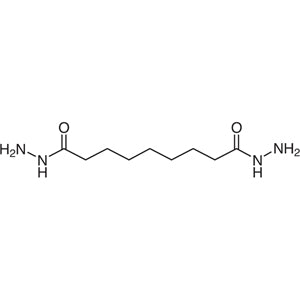
AzelaicDihydrazide TCI A0746
Regular price Rp 2.862.300,00Regular priceRp 2.017.050,00Sale price Rp 2.862.300,00 -
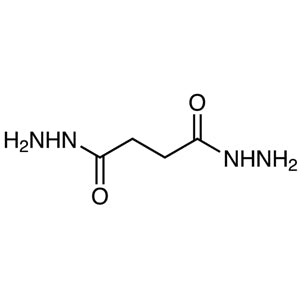
SuccinicDihydrazide TCI S0482
Regular price From Rp 795.900,00Regular priceRp 572.250,00Sale price From Rp 795.900,00 -
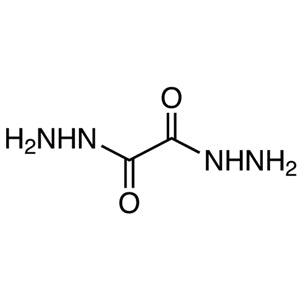
OxalylDihydrazide TCI O0083
Regular price Rp 1.590.750,00Regular priceRp 1.127.700,00Sale price Rp 1.590.750,00 -
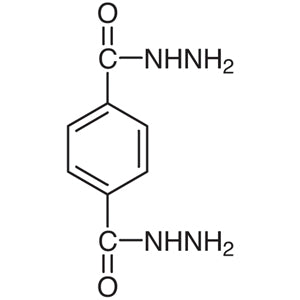
TerephthalicDihydrazide TCI T0758
Regular price From Rp 2.411.850,00Regular priceRp 1.702.050,00Sale price From Rp 2.411.850,00 -
SebacicDihydrazide TCI S0224
Regular price From Rp 795.900,00Regular priceRp 572.250,00Sale price From Rp 795.900,00 -
IsophthalicDihydrazide TCI I0257
Regular price From Rp 900.900,00Regular priceRp 645.750,00Sale price From Rp 900.900,00 -
DodecanedioicDihydrazide TCI D2342
Regular price From Rp 822.150,00Regular priceRp 590.100,00Sale price From Rp 822.150,00