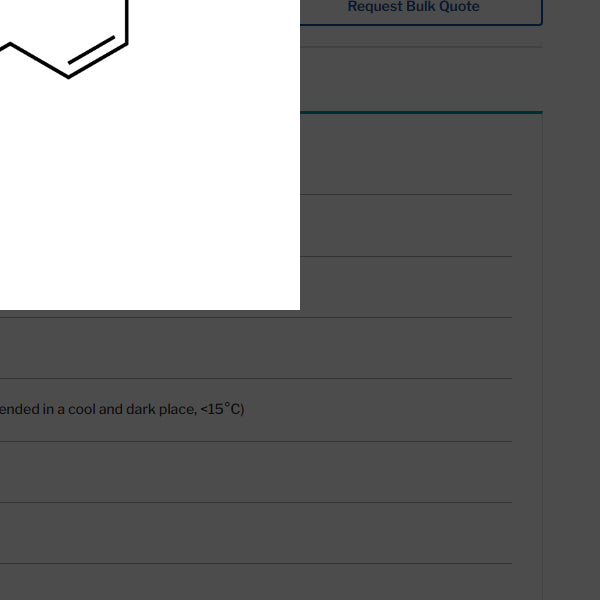
cis-3-Nonen-1-ol is a nine-carbon primary alcohol with a cis (Z) double bond between the third and fourth carbon atoms. In 2-nonen-1-ol the double bond sits next to the carbon bearing the hydroxyl group. Here it is one carbon further away, which makes the compound a homoallylic alcohol. In flavour and fragrance chemistry it is known as one of the unsaturated C9 alcohols associated with a fresh, melon-like, green-vegetable aroma. In the laboratory it serves both as a synthetic building block and as a reference compound for volatile analysis.
The homoallylic position gives this alcohol different reactivity from allylic alcohols. The hydroxyl group can be oxidised to a β,γ-unsaturated aldehyde, esterified, or converted into a leaving group without directly affecting the double bond. The cis double bond, in turn, can undergo addition reactions, epoxidation, or metathesis. A well-defined cis configuration matters because both the aroma profile and the outcome of stereospecific reactions depend strongly on this geometry. Having two reactive sites that can be addressed separately makes the compound a flexible choice for synthetic and analytical work, and it is supplied by TCI.
In Indonesian laboratories, this compound is relevant to research on the aroma of tropical fruits, where unsaturated C9 alcohols contribute to fresh, green, and melon-like notes. Food technology groups can use it as a reference standard when profiling volatile compounds in fruit, vegetables, and processed foods. University organic chemistry laboratories may also use it as a starting material for building stereodefined unsaturated molecules, and for teaching how the position of a double bond affects alcohol reactivity.
- Aroma and volatile compound analysis: the compound works as a reference standard for identifying unsaturated C9 alcohols that give fruits and vegetables their fresh, green, melon-like character.
- Tropical fruit flavour research: its known link to melon-like and green notes makes it useful for studying the volatile profiles of local fruits in food science and agricultural research programmes.
- Organic synthesis building block: the separate hydroxyl group and cis double bond let chemists run sequential transformations, building more complex molecules while keeping the defined alkene geometry.
- Selective oxidation and derivatisation studies: the hydroxyl group can be oxidised to a β,γ-unsaturated aldehyde, esterified, or converted into a leaving group without directly affecting the double bond.
- Alkene functionalisation research: the cis double bond is available for addition, epoxidation, or metathesis reactions, where its defined geometry is important for stereospecific results.
| Brand | TCI (product code N0588) |
|---|---|
| CAS number | 10340-23-5 |
| Molecular formula | — |
| Purity | — |
| Category | Chemistry > Building Blocks > Non-Heterocyclic Building Blocks |
| Pack sizes | as listed on the product page for the available TCI packaging |
| Physical form | liquid at room temperature; see the TCI Certificate of Analysis for the lot-specific appearance |
| Storage | follow the storage conditions on the TCI label and Safety Data Sheet |
Keep cis-3-Nonen-1-ol in its original tightly closed container in a cool, dry, well-ventilated place, away from direct sunlight, heat sources, and ignition sources. Store it separately from strong oxidising agents, which could react with the hydroxyl group or the double bond. Glass containers with secure, chemically resistant caps are suitable. Reseal the container promptly after use to limit evaporation of this volatile compound and exposure to air and moisture. Handle it in a fume hood or well-ventilated area, and wear safety glasses, chemical-resistant gloves, and a laboratory coat. Always read the Safety Data Sheet supplied with the product before use, and dispose of waste according to local regulations.
—
Produk Terkait
-
TCI B5774 5,10-Bis(4,4,5,5-tetramethyl-1,3,2-dioxaborolan-2-yl)naphtho[1,2-c:5,6-c']bis([1,2,5]oxadiazole)
Regular price Rp 10.255.350,00Regular price -
Dihydroiodide TCI B6569
Regular price From Rp 1.936.200,00Regular price -
Trifluoromethanesulfonate TCI B7003
Regular price From Rp 1.936.200,00Regular price
![5,10-Bis(4,4,5,5-tetramethyl-1,3,2-dioxaborolan-2-yl)naphtho[1,2-c:5,6-c']bis([1,2,5]oxadiazole) - TCI B5774 - AMI Scientific](http://amiscientific.com/cdn/shop/files/TCI2510B5774.jpg?v=1769180228&width=533)