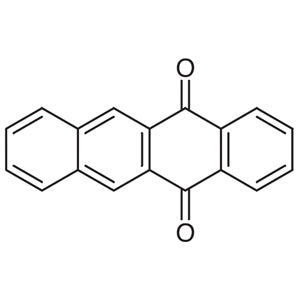
5,12-Naphthacenequinone from TCI is a polycyclic aromatic quinone built on a naphthacene (tetracene) framework, which consists of four benzene rings fused in a linear arrangement, with two carbonyl groups at positions 5 and 12. In the laboratory it serves as a non-heterocyclic building block and as a key precursor to tetracene and its derivatives, which are well known in organic semiconductor research. It is also used as a model compound in studies of the redox chemistry and photochemistry of extended conjugated quinones.
Researchers choose this compound because it pairs a long, flat aromatic framework with a redox-active quinone system. The carbonyl groups can be reduced, or reacted with organometallic reagents, to give substituted tetracene derivatives that are hard to make by other routes. The extended conjugated system gives the compound a characteristic colour and absorption profile, so reactions can be followed more easily by spectroscopy. TCI's consistent quality supports the synthesis of materials that are highly sensitive to impurities, where small contaminants can noticeably change electronic or optical behaviour in the final product.
In Indonesia, this compound is relevant to materials chemistry, materials physics, and organic chemistry laboratories working on organic electronics, organic solar cells, sensors, and electroactive materials. University research groups and research institutes studying new conjugated materials can use it as a dependable starting point for tetracene-based targets. It also suits teaching and research laboratories that study quinone redox behaviour and photochemical processes, where a well-defined model compound helps produce reproducible experimental results.
TCI brochures (PDF)
- Building Blocks for Organic Semiconductor 2026-03-24 · p. 34
Related TCI products
- TCI P1685 3029-32-1 6,13-Pentacenedione
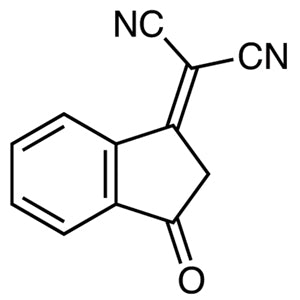
- TCI D2054 1080-74-6 3-(Dicyanomethylidene)indan-1-one
- TCI C2669 1334510-66-5 Cyclopenta[fg]tetracene-1,2-dione
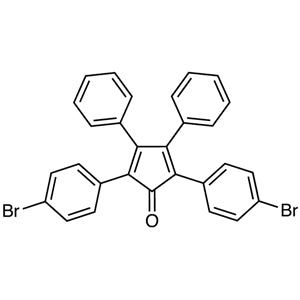
- TCI B5987 54523-24-9 2,5-Bis(4-bromophenyl)-3,4-diphenylcyclopenta-2,4-dienone
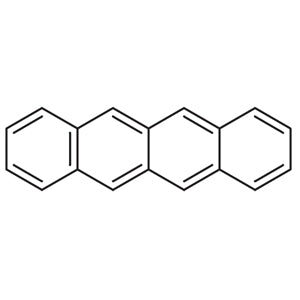
- TCI N0951 92-24-0 Naphthacene (purified by sublimation)
- TCI N0001 92-24-0 Naphthacene
- Tetracene synthesis: the naphthacene framework with carbonyl groups at positions 5 and 12 makes this compound a key precursor that can be converted into tetracene and related derivatives.
- Substituted tetracene derivatives: its carbonyl groups react with organometallic reagents, giving access to substituted tetracene structures that are difficult to obtain by other synthetic routes.
- Organic semiconductor research: tetracene derivatives made from this quinone are widely studied for organic electronics, so it is a practical entry point for materials development programmes.
- Redox chemistry studies: the redox-active quinone system on an extended aromatic framework makes it a useful model compound for exploring electron-transfer behaviour in conjugated quinones.
- Photochemistry and spectroscopic monitoring: its conjugated system gives a characteristic colour and absorption, so researchers can follow photochemical reactions and conversions conveniently by spectroscopy.
| Brand | TCI (product code N0603) |
|---|---|
| CAS number | 1090-13-7 |
| Molecular formula | — |
| Purity | — |
| Category | Chemistry > Building Blocks > Non-Heterocyclic Building Blocks |
| Pack sizes | as listed on the product page for the TCI catalogue item |
| Physical form | solid aromatic quinone; refer to the TCI certificate of analysis for details |
| Storage | keep tightly closed in a cool, dry place away from light, following TCI label guidance |
Store 5,12-Naphthacenequinone in its original, tightly sealed TCI container in a cool, dry, well-ventilated area, away from direct light, heat sources, and strong oxidising or reducing agents. Glass or other chemically compatible containers with secure caps are suitable if the material needs to be transferred. Handle the compound in a fume hood or well-ventilated workspace, and wear standard personal protective equipment, including a lab coat, safety glasses, and chemical-resistant gloves. Avoid creating or inhaling dust, and avoid contact with skin and eyes. Label all containers clearly, and read the supplier's Safety Data Sheet before use for specific hazard, first-aid, and disposal information in line with local regulations.
—
Produk Terkait
-
6,13-Pentacenedione TCI P1685
Regular price From Rp 4.957.050,00Regular priceRp 3.466.050,00Sale price From Rp 4.957.050,00 -
3-(Dicyanomethylidene)indan-1-one TCI D2054
Regular price From Rp 4.373.250,00Regular priceRp 3.073.350,00Sale price From Rp 4.373.250,00 -
Cyclopenta[fg]tetracene-1,2-dione TCI C2669
Regular price From Rp 4.213.650,00Regular priceRp 2.946.300,00Sale price From Rp 4.213.650,00 -
2,5-Bis(4-bromophenyl)-3,4-diphenylcyclopenta-2,4-dienone TCI B5987
Regular price From Rp 1.856.400,00Regular priceRp 1.313.550,00Sale price From Rp 1.856.400,00 -
Naphthacene(purifiedbysublimation) TCI N0951
Regular price From Rp 2.439.150,00Regular priceRp 1.705.200,00Sale price From Rp 2.439.150,00 -
Naphthacene TCI N0001
Regular price From Rp 980.700,00Regular priceRp 685.650,00Sale price From Rp 980.700,00 -
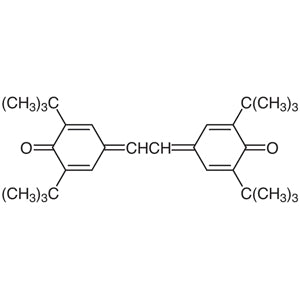
3,3',5,5'-Tetra-tert-butyl-4,4'-stilbenequinone TCI T1067
Regular price From Rp 6.413.400,00Regular priceRp 4.500.300,00Sale price From Rp 6.413.400,00 -
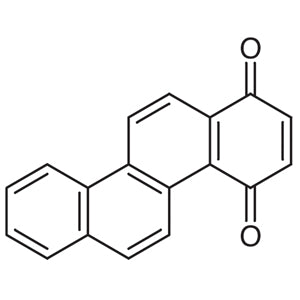
1,4-Chrysenequinone TCI C2214
Regular price Rp 2.411.850,00Regular priceRp 1.702.050,00Sale price Rp 2.411.850,00


![TCI C2669 1334510-66-5 Cyclopenta[fg]tetracene-1,2-dione](http://amiscientific.com/cdn/shop/files/TCI2510C2669_197b31c4-6ad4-4660-a42b-e50ca9aebb39.jpg?v=1792634753&width=533)
![Cyclopenta[fg]tetracene-1,2-dione (CAS 1334510-66-5) - TCI C2669 - AMI Scientific](http://amiscientific.com/cdn/shop/files/TCI2510C2669.jpg?v=1767098623&width=533)