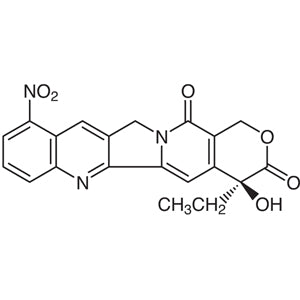
TCI N0822 9-Nitrocamptothecin is a semi-synthetic derivative of camptothecin, a quinoline alkaloid originally isolated from the Camptotheca acuminata tree. The compound is also known as rubitecan. In the laboratory, 9-nitrocamptothecin is used as a biochemical reagent to study inhibition of topoisomerase I, the enzyme that relaxes DNA supercoiling during replication and transcription. By stabilising the enzyme–DNA complex, the compound triggers DNA damage in dividing cells, which is why it is widely studied in cancer research.
Researchers often choose this compound because it belongs to the camptothecin family, which has been studied extensively, so comparative data are easy to find in the scientific literature. The nitro group at position 9 sets it apart from the parent camptothecin and from other derivatives. This difference helps researchers study how substituents affect biological activity, the stability of the lactone ring, and metabolism. The compound can also be reduced to 9-aminocamptothecin, which makes it useful for metabolite studies and for synthesising further derivatives. It comes in small pack sizes, which suit a high-potency compound like this.
In Indonesia, 9-nitrocamptothecin is relevant to pharmacology, cell biology and medicinal chemistry laboratories at universities, research institutes and pharmaceutical development centres. Typical users include research groups screening anticancer compounds, teams comparing topoisomerase I inhibitors in cell-based assays, and chemists studying structure–activity relationships within the camptothecin family. Because the compound is potent, laboratories generally use it in controlled, small-scale experiments, where it serves as a well-characterised reference against which new candidate compounds can be compared.
- Topoisomerase I inhibition studies: the compound stabilises the enzyme–DNA complex, so it is a useful tool for studying how topoisomerase I works during DNA replication and transcription.
- Anticancer compound research: because it induces DNA damage in dividing cells, it is used to investigate cytotoxic mechanisms and cell responses in cancer cell models.
- Structure–activity relationship studies: the nitro group at position 9 lets researchers compare how substituents change activity and lactone ring stability relative to camptothecin and other derivatives.
- Metabolite studies: the compound can be reduced to 9-aminocamptothecin, which makes it useful for studying metabolic conversion and comparing the behaviour of the parent compound with its metabolite.
- Synthesis of camptothecin derivatives: it serves as a starting point for preparing modified camptothecin analogues, since the reducible nitro group gives access to the corresponding amino derivative.
| Brand | TCI (product code N0822) |
|---|---|
| CAS number | 91421-42-0 |
| Molecular formula | — |
| Purity | — |
| Category | Life Science > Biochemicals and Reagents > Alkaloids |
| Pack sizes | small packs suited to high-potency compounds; see the product listing for available options |
| Physical form | see the manufacturer's label and certificate of analysis |
| Storage | follow the storage conditions stated on the TCI label and safety data sheet |
Keep 9-nitrocamptothecin in its original, tightly closed container, in a cool, dry place away from light, and follow the storage conditions on the TCI label and safety data sheet. This is a potent cytotoxic compound that damages DNA, so handle it only in a fume hood or biological safety cabinet. Wear a lab coat, nitrile gloves and eye protection. Weigh it carefully to avoid creating dust, label all solutions clearly, keep it apart from general reagents, and dispose of waste as hazardous cytotoxic material under your institution's rules. Only trained personnel should handle this compound.
—
Produk Terkait
-
TCI B5774 5,10-Bis(4,4,5,5-tetramethyl-1,3,2-dioxaborolan-2-yl)naphtho[1,2-c:5,6-c']bis([1,2,5]oxadiazole)
Regular price Rp 10.255.350,00Regular price -
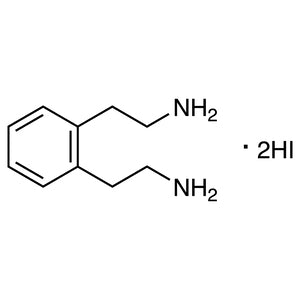
Dihydroiodide TCI B6569
Regular price From Rp 1.936.200,00Regular price -
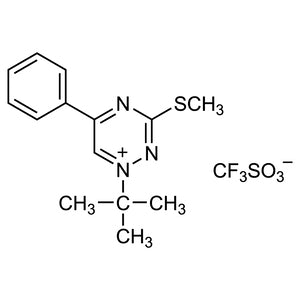
Trifluoromethanesulfonate TCI B7003
Regular price From Rp 1.936.200,00Regular price
![5,10-Bis(4,4,5,5-tetramethyl-1,3,2-dioxaborolan-2-yl)naphtho[1,2-c:5,6-c']bis([1,2,5]oxadiazole) - TCI B5774 - AMI Scientific](http://amiscientific.com/cdn/shop/files/TCI2510B5774.jpg?v=1769180228&width=533)