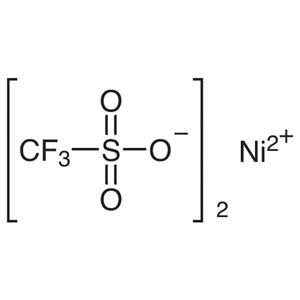
Nickel(II) Trifluoromethanesulfonate, also called nickel(II) triflate, is supplied by TCI under product code N0861 (CAS 60871-84-3). It is a nickel salt of the trifluoromethanesulfonate anion, which coordinates to the metal only very weakly. In the laboratory, it serves as a Lewis acid catalyst and as a precursor for nickel catalysts in organic synthesis. It is used especially in research on the activation and functionalization of C–H bonds, one of the most active areas of modern catalysis.
Chemists choose this compound because the triflate anion dissociates easily. This leaves the nickel center more electrophilic and more open to incoming ligands or substrates than in ordinary nickel halide salts, so nickel(II) triflate suits reactions that need a more reactive, accessible nickel center. In many directed C–H activation methods, such as those using bidentate directing groups like aminoquinoline derivatives, nickel salts with weakly coordinating anions such as triflate work well as the metal source. Nickel is also abundant and relatively economical, which makes it an attractive alternative to catalysts based on precious metals.
In Indonesia, this material is mainly relevant to synthetic organic chemistry and catalysis research groups at universities and research institutions. Researchers developing new C–H functionalization methods, screening nickel catalyst systems, or studying Lewis acid-promoted transformations can use nickel(II) triflate as a reliable, well-defined nickel source. It also fits student and postgraduate projects that explore cost-effective, earth-abundant metal catalysis as an alternative to palladium-, rhodium-, or iridium-based systems.
TCI brochures (PDF)
- C-H Bond Activation Reaction 2025-06-20 · p. 6
- Transition Metal Catalysts 2026-04-10 · p. 12
Related TCI products
- TCI N0851 7791-20-0 Nickel(II) Chloride Hexahydrate
- TCI N0850 7718-54-9 Nickel(II) Chloride Anhydrous
- TCI N0096 120156-44-7 Bis(2,4-pentanedionato)nickel(II) Hydrate
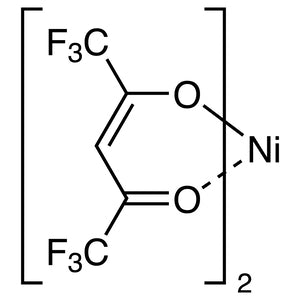
- TCI H0558 14949-69-0 Bis(hexafluoroacetylacetonato)nickel(II)
- TCI B3235 903592-98-3 [1,3-Bis(2,6-diisopropylphenyl)imidazol-2-ylidene]triphenylphosphine Nickel(II) Dichloride
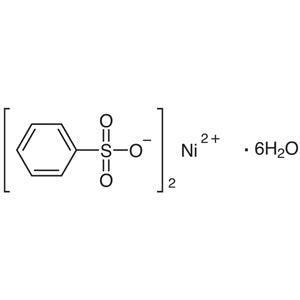
- TCI B0034 39819-65-3 Nickel(II) Benzenesulfonate Hexahydrate
- Directed C–H activation: The weakly coordinating triflate anion leaves the nickel center open, so it works as an effective metal source with bidentate directing groups such as aminoquinoline derivatives.
- Nickel catalyst precursor: Because the triflate dissociates easily, ligands can bind readily to nickel, which makes it convenient for preparing active nickel catalyst systems in situ.
- Lewis acid-catalyzed acylation: The electrophilic nickel(II) center, strengthened by the non-coordinating triflate anion, can activate carbonyl substrates in acylation reactions in synthetic organic chemistry.
- Diels–Alder reactions: Its Lewis acidity can activate dienophiles and promote cycloaddition, making it useful for laboratories studying catalyzed Diels–Alder chemistry and related pericyclic transformations.
- Catalyzed addition reactions and method development: Nickel is abundant and relatively economical, so this salt is a practical choice when exploring alternatives to precious-metal catalysts in addition reactions.
| Brand | TCI (product code N0861) |
|---|---|
| CAS number | 60871-84-3 |
| Molecular formula | — |
| Purity | — |
| Category | Chemistry > Catalysis and Inorganic Chemistry > C-H Activation [Catalysis] |
| Pack sizes | see the available options on the product listing |
| Physical form | see the manufacturer's Certificate of Analysis and product documentation |
| Storage | keep tightly closed in a cool, dry place and follow the manufacturer's SDS |
Store Nickel(II) Trifluoromethanesulfonate in its original, tightly sealed container in a cool, dry, well-ventilated area, away from moisture and incompatible materials. Metal triflates are generally sensitive to moisture, so handling under dry or inert conditions is recommended when possible, and containers should be resealed promptly after use. Nickel compounds require careful handling. Wear suitable gloves, safety glasses, and a lab coat, work in a fume hood, avoid breathing dust, and avoid contact with skin. Always read the manufacturer's Safety Data Sheet before use, and dispose of waste according to local regulations for heavy-metal-containing chemicals.
—
Product Categories
Produk Terkait
-
Nickel(II)ChlorideHexahydrate TCI N0851
Regular price From Rp 505.050,00Regular priceRp 352.800,00Sale price From Rp 505.050,00 -
Nickel(II)ChlorideAnhydrous TCI N0850
Regular price From Rp 610.050,00Regular priceRp 426.300,00Sale price From Rp 610.050,00 -
Bis(2,4-pentanedionato)nickel(II)Hydrate TCI N0096
Regular price From Rp 2.041.200,00Regular priceRp 1.426.950,00Sale price From Rp 2.041.200,00 -
Bis(hexafluoroacetylacetonato)nickel(II) TCI H0558
Regular price From Rp 1.881.600,00Regular priceRp 1.331.400,00Sale price From Rp 1.881.600,00 -
[1,3-Bis(2,6-diisopropylphenyl)imidazol-2-ylidene]triphenylphosphineNickel(II)Dichloride TCI B3235
Regular price From Rp 2.518.950,00Regular priceRp 1.776.600,00Sale price From Rp 2.518.950,00 -
Nickel(II)BenzenesulfonateHexahydrate TCI B0034
Regular price Rp 1.988.700,00Regular priceRp 1.390.200,00Sale price Rp 1.988.700,00 -
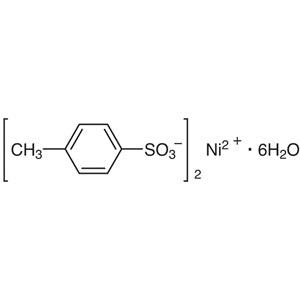
Nickel(II)p-ToluenesulfonateHexahydrate TCI T0276
Regular price From Rp 1.246.350,00Regular priceRp 871.500,00Sale price From Rp 1.246.350,00 -
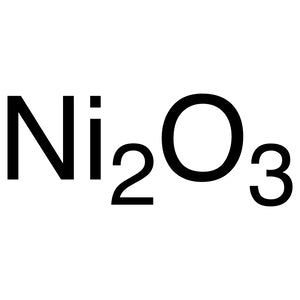
Nickel(III)OxideBlack TCI N1291
Regular price From Rp 2.121.000,00Regular priceRp 1.482.600,00Sale price From Rp 2.121.000,00


![TCI B3235 903592-98-3 [1,3-Bis(2,6-diisopropylphenyl)imidazol-2-ylidene]triphenylphosphine Nickel(II) Dichloride](http://amiscientific.com/cdn/shop/files/TCI2510B3235.jpg?v=1792661110&width=533)
![903592-98-3 [1,3-Bis(2,6-diisopropylphenyl)imidazol-2-ylidene]triphenylphosphine Nickel(II) Dichloride - AMI Scientific](http://amiscientific.com/cdn/shop/files/TCI2510B3235_58611862-7e09-4fa6-8ff5-7fa691c32969.jpg?v=1767431895&width=533)