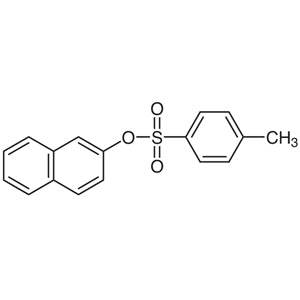
2-Naphthyl p-Toluenesulfonate from TCI is a sulfonate ester formed from 2-naphthol and p-toluenesulfonic acid. It is also known as 2-naphthyl tosylate. In organic synthesis laboratories it is used as a non-heterocyclic building block for adding a naphthalene framework to target molecules. The tosylate group on its aromatic oxygen makes it an easy-to-handle aryl electrophile. For that reason it is often used in place of aryl halides and aryl triflates in a range of carbon bond-forming reactions.
Chemists often choose this material because aryl tosylates are generally more stable, cheaper to prepare and easier to store than aryl triflates. They are still reactive enough for transition-metal-catalysed cross-coupling, for example with nickel or palladium catalysts, when a suitable ligand is used. The tosyl group can also protect a phenolic hydroxyl group and holds up under many reaction conditions. The naphthalene ring system is rigid and conjugated. This makes the compound useful in organic materials research and as a chromophore in spectroscopic studies.
In Indonesia, this compound suits university organic chemistry laboratories, pharmaceutical and fine-chemical research groups, and materials science teams that work with aromatic scaffolds. Researchers developing or optimising nickel- or palladium-catalysed coupling methods can use it as a model aryl tosylate substrate. Teaching and research laboratories that study protecting-group strategies for phenols may also find it useful. AMI Scientific supplies the TCI product under its original catalogue identity, product code N0870, so laboratories can trace it clearly in their procurement and documentation.
Related TCI products
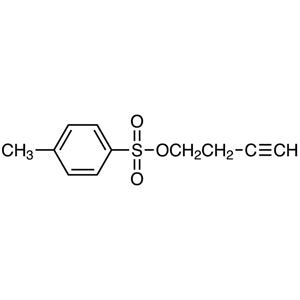
- TCI T2046 23418-85-1 3-Butynyl p-Toluenesulfonate
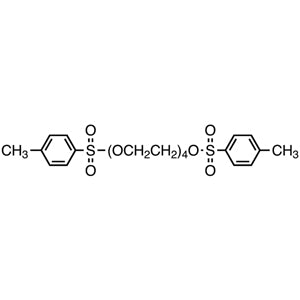
- TCI T1493 37860-51-8 Tetraethylene Glycol Bis(p-toluenesulfonate)
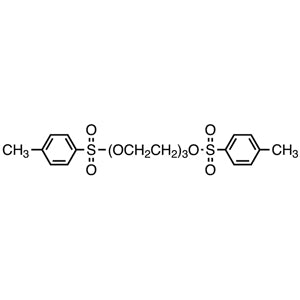
- TCI T1488 19249-03-7 Triethylene Glycol Bis(p-toluenesulfonate)
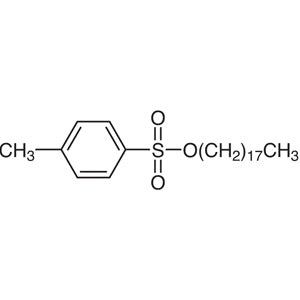
- TCI T1471 3386-32-1 Octadecyl p-Toluenesulfonate
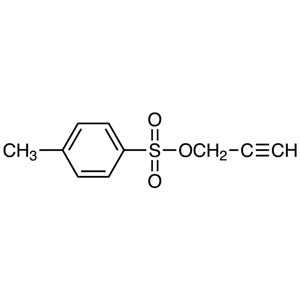
- TCI T1455 6165-76-0 Propargyl p-Toluenesulfonate
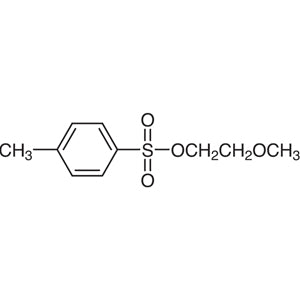
- TCI T1303 17178-10-8 2-Methoxyethyl p-Toluenesulfonate
- Transition-metal cross-coupling: works as a stable aryl electrophile for nickel- or palladium-catalysed carbon bond formation when a suitable ligand is used, and can replace aryl halides or triflates.
- Introducing a naphthalene framework: serves as a non-heterocyclic building block for attaching the rigid 2-naphthyl unit to target molecules during multistep organic synthesis.
- Triflate replacement in method development: lets researchers use an aryl sulfonate that is generally more stable, cheaper to make and easier to store than the matching aryl triflate.
- Phenol protection studies: shows how a tosyl group can protect a phenolic hydroxyl group and stay intact under many reaction conditions before it is deliberately removed.
- Organic materials and spectroscopy research: its rigid, conjugated naphthalene system makes it relevant to organic materials work and useful as a chromophore in spectroscopic investigations.
| Brand | TCI (product code N0870) |
|---|---|
| CAS number | 7385-85-5 |
| Molecular formula | — |
| Purity | — |
| Category | Chemistry > Building Blocks > Non-Heterocyclic Building Blocks |
| Pack sizes | available in TCI's standard catalogue pack sizes; confirm the options when you order |
| Physical form | see the manufacturer's label and Safety Data Sheet for form and recommended storage conditions |
| Storage | — |
- Synonym: 2-Naphthyl tosylate
Keep 2-Naphthyl p-Toluenesulfonate in its original, tightly closed manufacturer's container. Store it in a cool, dry, well-ventilated area away from direct sunlight, heat sources, moisture, and incompatible materials such as strong bases, strong nucleophiles, and oxidising agents. Always check the product label and TCI Safety Data Sheet for the specific recommended storage conditions before storing it long-term. Handle the compound in a fume hood or other well-ventilated workspace. Wear suitable personal protective equipment, including a laboratory coat, chemical-resistant gloves, and safety glasses. Avoid creating dust, breathing it in, or letting it touch your skin or eyes. Clean up spills promptly, wash your hands after handling, and dispose of waste according to institutional procedures and local chemical waste regulations.
—
Produk Terkait
-
3-Butynylp-Toluenesulfonate TCI T2046
Regular price Rp 2.068.500,00Regular priceRp 1.445.850,00Sale price Rp 2.068.500,00 -
TetraethyleneGlycolBis(p-toluenesulfonate) TCI T1493
Regular price Rp 4.001.550,00Regular priceRp 2.814.000,00Sale price Rp 4.001.550,00 -
TriethyleneGlycolBis(p-toluenesulfonate) TCI T1488
Regular price From Rp 1.220.100,00Regular priceRp 868.350,00Sale price From Rp 1.220.100,00 -
Octadecylp-Toluenesulfonate TCI T1471
Regular price Rp 3.100.650,00Regular priceRp 2.168.250,00Sale price Rp 3.100.650,00 -
Propargylp-Toluenesulfonate TCI T1455
Regular price Rp 2.995.650,00Regular priceRp 2.094.750,00Sale price Rp 2.995.650,00 -
2-Methoxyethylp-Toluenesulfonate TCI T1303
Regular price From Rp 1.908.900,00Regular priceRp 1.350.300,00Sale price From Rp 1.908.900,00 -
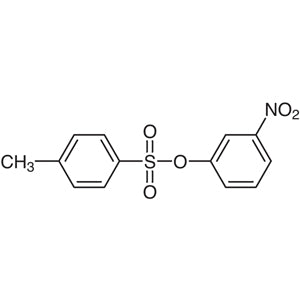
3-Nitrophenylp-Toluenesulfonate TCI T1210
Regular price Rp 4.611.600,00Regular priceRp 3.224.550,00Sale price Rp 4.611.600,00 -
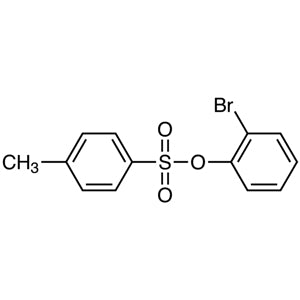
2-Bromophenylp-Toluenesulfonate TCI B4528
Regular price From Rp 1.353.450,00Regular priceRp 946.050,00Sale price From Rp 1.353.450,00