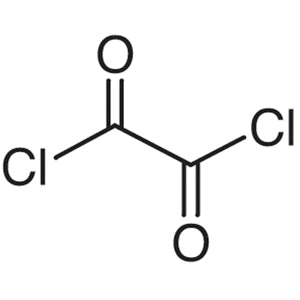
Oxalyl Chloride from TCI is the diacyl chloride of oxalic acid. It is a highly reactive liquid reagent and one of the core tools of the synthetic chemist. In the laboratory it has two main roles. First, it activates dimethyl sulfoxide in the Swern oxidation, which converts primary and secondary alcohols into aldehydes and ketones. Second, it converts carboxylic acids into acyl chlorides. In glycoscience, the reagent is important for the selective oxidation and modification of hydroxyl groups on carbohydrates.
Chemists choose oxalyl chloride because its reactions run under relatively mild conditions and its by-products are all gases: carbon monoxide, carbon dioxide and hydrogen chloride. These gases leave the reaction mixture easily, which makes the workup simpler. With a small amount of DMF as catalyst, acyl chloride formation can proceed at room temperature or below, so the method suits sensitive substrates. In the Swern oxidation, the reagent lets chemists oxidize alcohols without heavy metals and without over-oxidation to carboxylic acids. This gives cleaner product profiles for delicate carbohydrate and natural product intermediates.
In Indonesia, oxalyl chloride is widely needed by synthetic organic chemistry laboratories at universities, research institutes and pharmaceutical development facilities. Research groups working on carbohydrate chemistry, glycoconjugate synthesis and medicinal chemistry use it routinely to prepare aldehyde intermediates and activated acid derivatives. As a TCI product supplied through AMI Scientific, it gives Indonesian researchers access to a trusted reagent brand for multistep synthesis, method development and teaching laboratories that demonstrate classical oxidation and acylation chemistry.
Advantages (TCI brochure)
- Reagent in Swern oxidation with DMSO
TCI brochures (PDF)
- Halogenation Reagents 2026-04-03 · p. 6
- Oxidizing Agents 2025-06-11 · p. 3
- Glycosidation 2026-04-14 · p. 4
- Reagents for Glyco Chemistry & Biology 5th Edition · p. 144
- Biomaterials Research Reagents 2025-02-19 · p. 20
- Monomers 2025-05-28 · p. 37
- Swern oxidation: oxalyl chloride activates dimethyl sulfoxide, so primary and secondary alcohols can be oxidized to aldehydes and ketones under mild conditions without heavy metal oxidants.
- Acyl chloride preparation: with catalytic DMF it converts carboxylic acids into acyl chlorides at room temperature or below, and its gaseous by-products make workup and isolation simple.
- Carbohydrate modification in glycoscience: it enables selective oxidation and functionalization of sugar hydroxyl groups, which supports the synthesis of modified monosaccharides, oligosaccharide building blocks and glycoconjugates.
- Synthesis of sensitive intermediates: because the reactions run under mild conditions and do not over-oxidize to carboxylic acids, it suits delicate substrates in natural product and medicinal chemistry.
- Amide and ester formation workflows: the acyl chlorides it generates react readily with amines and alcohols, making it a practical first step for building amide and ester linkages.
From the TCI brochure
- Swern oxidation
| Brand | TCI (product code O0082) |
|---|---|
| CAS number | 79-37-8 |
| Molecular formula | — |
| Purity | — |
| Category | Chemistry > Chemical Biology > Glycoscience |
| Pack sizes | Several pack sizes are available; please confirm current options with AMI Scientific |
| Physical form | Liquid |
| Storage | Moisture-sensitive; keep tightly sealed in a cool, dry, well-ventilated place |
Oxalyl chloride reacts vigorously with water and moisture, releasing hydrogen chloride and other toxic gases. Keep it in its original tightly closed container, ideally under an inert atmosphere such as nitrogen or argon, in a cool, dry, well-ventilated area away from water, alcohols, bases and oxidizers. Handle it only inside a properly working fume hood and wear chemical-resistant gloves, safety goggles or a face shield, and a lab coat. Transfer it with dry syringes or cannulas and add it slowly, because reactions give off gas. Always consult the supplier's Safety Data Sheet before use and dispose of waste according to local regulations.
—
Product Categories
- Polymer/Macromolecule ReagentsMonomersDicarboxylic Acid Chloride Monomers
- Biomaterials/Biocompatible Materials Research ReagentsMonomers and Macromonomers [Biomaterials/Biocompatible Materials Research Reagents]Dicarboxylic Acid Chloride Monomers [Biomaterials/Biocompatible Materials Research Reagents]
Produk Terkait
-
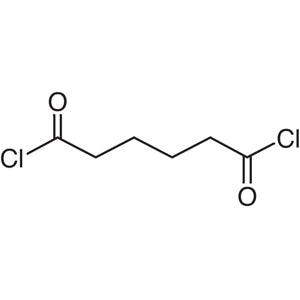
AdipoylChloride TCI A0169
Regular price From Rp 1.272.600,00Regular priceRp 905.100,00Sale price From Rp 1.272.600,00 -
AzelaoylChloride TCI A0562
Regular price Rp 2.464.350,00Regular priceRp 1.738.800,00Sale price Rp 2.464.350,00 -
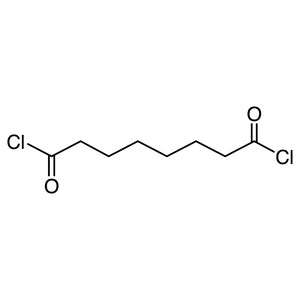
SuberoylChloride TCI S0420
Regular price Rp 3.658.200,00Regular priceRp 2.573.550,00Sale price Rp 3.658.200,00 -
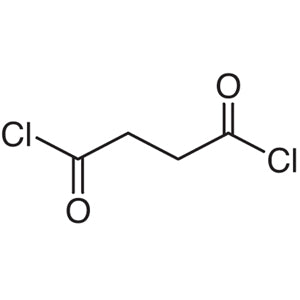
SuccinylChloride TCI S0110
Regular price From Rp 1.220.100,00Regular priceRp 868.350,00Sale price From Rp 1.220.100,00 -
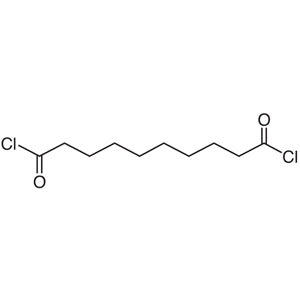
SebacoylChloride TCI S0030
Regular price From Rp 1.298.850,00Regular priceRp 924.000,00Sale price From Rp 1.298.850,00 -
MalonylChloride TCI M0882
Regular price From Rp 1.749.300,00Regular priceRp 1.239.000,00Sale price From Rp 1.749.300,00 -
GlutarylChloride TCI G0202
Regular price Rp 2.889.600,00Regular priceRp 2.035.950,00Sale price Rp 2.889.600,00 -
TerephthaloylChloride TCI T0017
Regular price From Rp 505.050,00Regular priceRp 352.800,00Sale price From Rp 505.050,00