


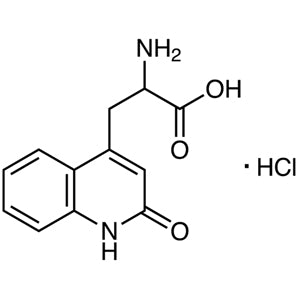
3-(2-Oxo-1,2-dihydro-4-quinolinyl)-DL-alanine Hydrochloride is a specialized chemical compound widely used in laboratory settings for its unique structural properties and reactivity. This compound plays a crucial role in chemical and biochemical experiments, particularly in the field of peptide chemistry. Its application extends to the synthesis of complex molecules and the development of bioactive compounds. Due to its stability and reactivity, it is a valuable tool for researchers aiming to explore molecular interactions and functional group modifications.
The compound is preferred for its solubility in organic solvents and its chemical stability under controlled conditions. As a hydrochloride salt, it dissolves well in solvents such as ethylamine and acetone, making it suitable for a variety of chemical reactions. Its molecular structure allows for versatility in synthetic pathways, enabling researchers to design and test new compounds efficiently. These properties make it a reliable choice for both academic and industrial research.
In Indonesian laboratories, this compound is commonly used in scientific research related to the synthesis of bioactive compounds, drug development, and molecular interaction studies. Its availability and performance in controlled environments make it a preferred material for researchers working in chemical biology and peptide chemistry. Its role in advancing scientific understanding in these fields is significant.
TCI brochures (PDF)
- Amino Acids and Peptide Synthesis Reagents 2025-08-14 · p. 10
Related TCI products
- TCI A0180 107-95-9 beta-Alanine
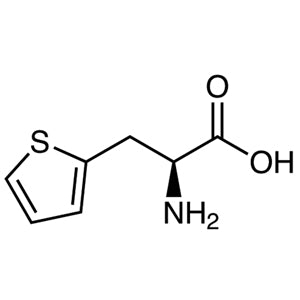
- TCI T3475 22951-96-8 3-(2-Thienyl)-L-alanine
- TCI B3617 58438-04-3 N-(tert-Butoxycarbonyl)-3-(2-naphthyl)-L-alanine
- TCI B3616 76985-10-9 N-(tert-Butoxycarbonyl)-3-(2-naphthyl)-D-alanine
- TCI F0882 35737-10-1 N-[(9H-Fluoren-9-ylmethoxy)carbonyl]-beta-alanine
- TCI F0857 135673-97-1 N-[(9H-Fluoren-9-ylmethoxy)carbonyl]-3-cyclohexyl-L-alanine
- Drug development research benefits from this compound’s ability to participate in complex synthetic pathways, enabling the creation of bioactive molecules with targeted biological functions.
- Peptide chemistry studies utilize its structural features to explore modifications and interactions in protein-based systems, aiding in the design of novel therapeutic agents.
- Molecular interaction studies leverage its chemical stability and reactivity to investigate binding affinities and functional group behavior in biochemical environments.
- Bioactive compound synthesis relies on its solubility and reactivity to facilitate the formation of complex structures in controlled laboratory settings.
- Organic synthesis experiments take advantage of its compatibility with organic solvents, allowing for efficient reaction conditions and product isolation.
| Brand | TCI |
|---|---|
| CAS number | 4876-14-6 |
| Molecular formula | — |
| Purity | — |
| Category | Chemistry > Chemical Biology > Peptide Chemistry |
| Pack sizes | — |
| Physical form | — |
| Storage | Store in a cool, dry place away from moisture and light |
This compound should be stored in a cool, dry environment to maintain its chemical stability and prevent degradation. It is recommended to use airtight containers to protect it from moisture and exposure to air, which can affect its solubility and reactivity. Due to its hydrochloride nature, it is sensitive to humidity and should be kept in a controlled atmosphere. Laboratory personnel should handle it with care, using appropriate personal protective equipment when necessary. Proper storage conditions ensure the compound remains effective for its intended applications in research settings.
—
Product Categories
- Chemical BiologyPeptide ChemistryUnnatural Amino Acid Derivatives
- Pharmaceutical Development and Drug Discovery Research ReagentsPeptide ChemistryUnnatural Amino Acid Derivatives
- Pharmaceutical Development and Drug Discovery Research ReagentsBuilding Blocks for Pharmaceutical Ingredients (for Research and Experimental Use)
- Biochemicals and ReagentsAmino Acidsnon-Proteinogenic Amino Acids
- Pharmaceutical Development and Drug Discovery ResearchPeptide ChemistryUnnatural Amino Acid Derivatives
- Pharmaceutical Development and Drug Discovery ResearchBuilding Blocks for Pharmaceutical Ingredients (for Research and Experimental Use)
Produk Terkait
-
beta-Alanine TCI A0180
Regular price From Rp 477.750,00Regular priceRp 333.900,00Sale price From Rp 477.750,00 -
3-(2-Thienyl)-L-alanine TCI T3475
Regular price From Rp 955.500,00Regular priceRp 683.550,00Sale price From Rp 955.500,00 -
N-(tert-Butoxycarbonyl)-3-(2-naphthyl)-L-alanine TCI B3617
Regular price Rp 2.942.100,00Regular priceRp 2.072.700,00Sale price Rp 2.942.100,00 -
N-(tert-Butoxycarbonyl)-3-(2-naphthyl)-D-alanine TCI B3616
Regular price From Rp 1.087.800,00Regular priceRp 775.950,00Sale price From Rp 1.087.800,00 -
N-[(9H-Fluoren-9-ylmethoxy)carbonyl]-beta-alanine TCI F0882
Regular price From Rp 742.350,00Regular priceRp 534.450,00Sale price From Rp 742.350,00 -
N-[(9H-Fluoren-9-ylmethoxy)carbonyl]-3-cyclohexyl-L-alanine TCI F0857
Regular price From Rp 1.113.000,00Regular priceRp 793.800,00Sale price From Rp 1.113.000,00 -
N-[(9H-Fluoren-9-ylmethoxy)carbonyl]-D-alanine TCI F0596
Regular price From Rp 742.350,00Regular priceRp 534.450,00Sale price From Rp 742.350,00 -
3-(3,4-Dihydroxyphenyl)-L-alanine TCI D0600
Regular price From Rp 769.650,00Regular priceRp 553.350,00Sale price From Rp 769.650,00




![TCI F0882 35737-10-1 N-[(9H-Fluoren-9-ylmethoxy)carbonyl]-beta-alanine](http://amiscientific.com/cdn/shop/files/TCI2510F0882_fc8f5cbe-e328-402b-beae-989dc3fcf2d5.jpg?v=1792642457&width=533)
![N-[(9H-Fluoren-9-ylmethoxy)carbonyl]-beta-alanine (CAS 35737-10-1) - TCI F0882 - AMI Scientific](http://amiscientific.com/cdn/shop/files/TCI2510F0882.jpg?v=1768205401&width=533)
![TCI F0857 135673-97-1 N-[(9H-Fluoren-9-ylmethoxy)carbonyl]-3-cyclohexyl-L-alanine](http://amiscientific.com/cdn/shop/files/TCI2510F0857_0288b581-b620-48ba-bfe8-59da6a498f6b.jpg?v=1792642436&width=533)
![N-[(9H-Fluoren-9-ylmethoxy)carbonyl]-3-cyclohexyl-L-alanine (CAS 135673-97-1) - TCI F0857 - AMI Scientific](http://amiscientific.com/cdn/shop/files/TCI2510F0857.jpg?v=1769142426&width=533)
![TCI F0596 79990-15-1 N-[(9H-Fluoren-9-ylmethoxy)carbonyl]-D-alanine](http://amiscientific.com/cdn/shop/files/TCI2510F0596_392d60a9-312e-4f40-a586-66a2e4cc7b8d.jpg?v=1792642285&width=533)
![N-[(9H-Fluoren-9-ylmethoxy)carbonyl]-D-alanine (CAS 79990-15-1) - TCI F0596 - AMI Scientific](http://amiscientific.com/cdn/shop/files/TCI2510F0596.jpg?v=1769142397&width=533)

