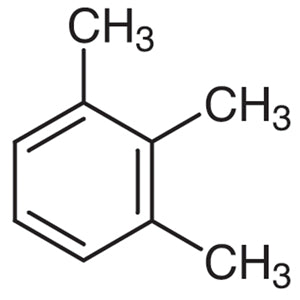
Pentamethylbenzene is an aromatic compound derived from benzene. Five methyl groups are bonded to its ring, which leaves only one aromatic hydrogen position. TCI supplies it to organic chemistry laboratories as a non-heterocyclic building block. In the laboratory it is best known as a cation scavenger in deprotection reactions. It also serves as a model substrate for studying electrophilic aromatic substitution, and as a starting material for preparing fully substituted benzene derivatives.
Chemists choose pentamethylbenzene because its ring is very electron-rich. The five electron-donating methyl groups make the ring react readily with electrophiles and carbocations. This is why it works well at trapping the reactive cationic species released when protecting groups are cleaved, which helps suppress side reactions on the main substrate. Because only one aromatic position is free, substitution tends to give a single product that is easy to analyse. The symmetrical structure also gives a simple NMR signal pattern that is easy to recognise.
In Indonesian laboratories, pentamethylbenzene is useful to organic synthesis research groups at universities and research institutes, especially those working on multistep synthesis where protecting groups have to be removed cleanly. Physical organic chemistry and reaction mechanism studies also use it as a reference substrate. Graduate students and researchers preparing highly substituted aromatic compounds use it as a dependable starting point, and teaching laboratories can use it to show how substituents affect aromatic ring reactivity.
- Cation scavenging in deprotection reactions: its electron-rich ring readily traps carbocations and other reactive cationic species released when protecting groups are cleaved, which protects the main substrate from unwanted side reactions.
- Model substrate for electrophilic aromatic substitution: its single free aromatic position makes substitution outcomes predictable, so researchers can study reaction mechanisms and reactivity trends without complex mixtures of isomers.
- Synthesis of fully substituted benzene derivatives: substitution at the one remaining aromatic hydrogen gives hexasubstituted benzene products, making it a practical starting material for building crowded aromatic frameworks.
- Reaction monitoring and product analysis: its symmetrical structure gives simple, easily recognised NMR signals, which helps chemists follow reaction progress and confirm product identity during routine work.
- Non-heterocyclic building block for organic synthesis: as a well-defined aromatic hydrocarbon from TCI, it is a reliable intermediate for research groups designing new aromatic compounds and functional materials.
| Brand | TCI (product code P0043) |
|---|---|
| CAS number | 700-12-9 |
| Molecular formula | — |
| Purity | — |
| Category | Chemistry > Building Blocks > Non-Heterocyclic Building Blocks |
| Pack sizes | available in TCI standard pack sizes; please contact AMI Scientific for current options |
| Physical form | see the TCI product documentation and Certificate of Analysis |
| Storage | keep tightly closed in a cool, dry, well-ventilated place; follow the supplier's Safety Data Sheet |
Store pentamethylbenzene in its original, tightly sealed container in a cool, dry, well-ventilated area, away from heat sources, ignition sources, and strong oxidising agents. Glass or other chemically compatible containers with secure closures are suitable if the material has to be transferred. Handle it in a fume hood or well-ventilated workspace and wear standard personal protective equipment, including safety glasses, laboratory gloves, and a lab coat. Avoid inhaling dust or vapour and avoid contact with skin and eyes. Label all containers clearly, and always read the TCI Safety Data Sheet before use for specific hazard, first-aid, and disposal information. Dispose of waste according to local regulations and institutional chemical safety procedures.
—
Produk Terkait
-
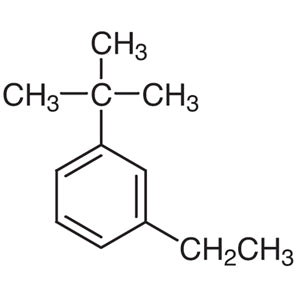
1-tert-Butyl-3-ethylbenzene TCI B1739
Regular price Rp 1.881.600,00Regular priceRp 1.315.650,00Sale price Rp 1.881.600,00 -
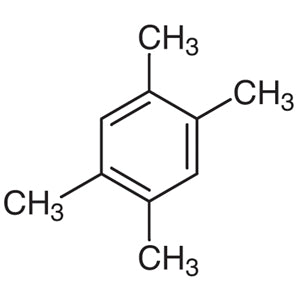
1,2,4,5-Tetramethylbenzene TCI T0714
Regular price From Rp 875.700,00Regular priceRp 612.150,00Sale price From Rp 875.700,00 -
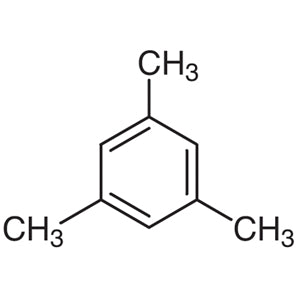
1,3,5-Trimethylbenzene TCI T0470
Regular price From Rp 452.550,00Regular priceRp 316.050,00Sale price From Rp 452.550,00 -
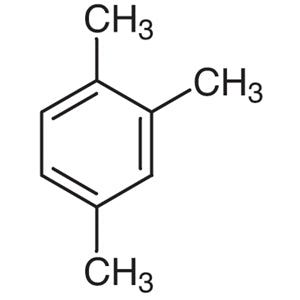
1,2,4-Trimethylbenzene TCI T0469
Regular price From Rp 477.750,00Regular priceRp 333.900,00Sale price From Rp 477.750,00 -
1,2,3-Trimethylbenzene TCI T0468
Regular price From Rp 717.150,00Regular priceRp 500.850,00Sale price From Rp 717.150,00 -
2-Ethynyl-1,3,5-trimethylbenzene TCI E1361
Regular price From Rp 2.466.450,00Regular priceRp 1.724.100,00Sale price From Rp 2.466.450,00 -
1-Ethynyl-2-methylbenzene TCI E0629
Regular price From Rp 1.405.950,00Regular priceRp 982.800,00Sale price From Rp 1.405.950,00 -
Ethylbenzene TCI E0064
Regular price From Rp 452.550,00Regular priceRp 316.050,00Sale price From Rp 452.550,00