Phenyl N-Acetyl-alpha-D-glucosaminide from TCI is a glycoside derivative. Its molecule consists of an N-acetylglucosamine unit linked to a phenyl group through an alpha-configured glycosidic bond. In glycoscience laboratories, this compound serves as a simple model of amino sugars. Researchers use it to study how enzymes, carbohydrate-binding proteins, and chemical reactions recognise glycosidic linkages. It has a well-defined structure and an aromatic aglycone, so it works well as a reference compound, as a model substrate, and as a starting material for synthesising more complex glycoconjugates.
Its main advantage is its specific alpha anomeric configuration. This matters when researchers need to tell apart enzyme activities that are selective for one anomer. The phenyl group absorbs ultraviolet light, so the compound and its derivatives are easier to monitor by chromatography with UV detection. The acetamido group at position two resembles a motif found widely in natural glycoproteins and glycosaminoglycans. For this reason, results obtained with this model compound are more biologically relevant than those obtained with ordinary neutral glycosides, which lack this structural feature.
In Indonesia, this material suits university research groups, biochemistry and chemical biology laboratories, and institutes that study carbohydrate-active enzymes or glycoconjugate chemistry. Researchers can use it in teaching laboratories to demonstrate anomeric selectivity, and in research projects that compare enzyme behaviour across substrates. Because TCI supplies it as a defined, single compound, laboratories can repeat experiments and compare results between research groups. It is also a practical building block for synthetic work on more complex sugar structures.
TCI brochures (PDF)
Related TCI products
- TCI V0011 63223-57-4 N-Valeryl-D-glucosamine
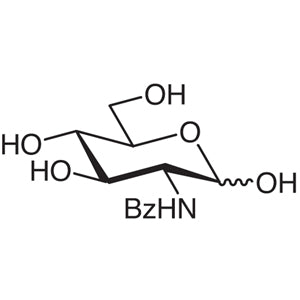
- TCI B0200 655-42-5 N-Benzoyl-D-glucosamine
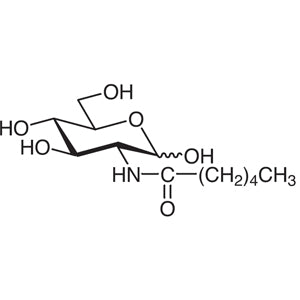
- TCI H0118 19817-88-0 N-Hexanoyl-D-glucosamine
- TCI A1459 7772-79-4 2-Acetamido-1,3,4,6-tetra-O-acetyl-2-deoxy-beta-D-glucopyranose
- TCI A0092 7512-17-6 N-Acetyl-D-glucosamine
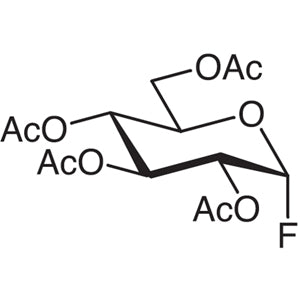
- TCI T1995 3934-29-0 2,3,4,6-Tetra-O-acetyl-alpha-D-glucopyranosyl Fluoride
- Enzyme selectivity studies: the defined alpha anomeric configuration lets researchers distinguish enzymes that act only on alpha-linked N-acetylglucosamine from enzymes that prefer the beta anomer.
- Model substrate for glycosidase research: the compound is a simple, well-characterised amino sugar glycoside, so it shows how enzymes recognise and act on glycosidic bonds without the complexity of natural substrates.
- Carbohydrate-binding protein studies: the acetamido motif resembles structures found in natural glycoproteins, which makes the compound a relevant probe for studying how sugar-binding proteins recognise their targets.
- Chromatographic reference and reaction monitoring: the aromatic phenyl aglycone absorbs UV light, so analysts can follow the compound and its reaction products easily by chromatography with UV detection.
- Synthesis of glycoconjugates: the defined structure and stable phenyl aglycone make the compound a practical starting material for building more complex glycoconjugates in synthetic carbohydrate chemistry.
| Brand | TCI (product code P0130) |
|---|---|
| CAS number | 10139-04-5 |
| Molecular formula | — |
| Purity | — |
| Category | Chemistry > Chemical Biology > Glycoscience |
| Pack sizes | see the available options on the product listing |
| Physical form | as supplied by TCI; see the product label and certificate of analysis |
| Storage | follow the storage conditions on the TCI label and Safety Data Sheet |
Store this compound in its original, tightly closed container in a cool, dry place, away from moisture, direct light, and incompatible substances. Follow the storage temperature on the TCI label and Safety Data Sheet. After opening, reseal the container quickly so the material does not pick up moisture. Use clean, dry spatulas and glassware so the material stays pure. Handle it according to good laboratory practice, wearing safety glasses, gloves, and a lab coat. Avoid creating dust and avoid contact with skin, eyes, and clothing. Weigh and transfer it in a well-ventilated area or fume hood. Read the Safety Data Sheet before use, and dispose of waste according to local regulations and institutional procedures.
—
Product Categories
Produk Terkait
-
N-Valeryl-D-glucosamine TCI V0011
Regular price Rp 1.618.050,00Regular priceRp 1.146.600,00Sale price Rp 1.618.050,00 -
N-Benzoyl-D-glucosamine TCI B0200
Regular price From Rp 1.351.350,00Regular priceRp 960.750,00Sale price From Rp 1.351.350,00 -
N-Hexanoyl-D-glucosamine TCI H0118
Regular price Rp 1.934.100,00Regular priceRp 1.368.150,00Sale price Rp 1.934.100,00 -
2-Acetamido-1,3,4,6-tetra-O-acetyl-2-deoxy-beta-D-glucopyranose TCI A1459
Regular price From Rp 1.087.800,00Regular priceRp 775.950,00Sale price From Rp 1.087.800,00 -
N-Acetyl-D-glucosamine TCI A0092
Regular price From Rp 980.700,00Regular priceRp 701.400,00Sale price From Rp 980.700,00 -
2,3,4,6-Tetra-O-acetyl-alpha-D-glucopyranosylFluoride TCI T1995
Regular price Rp 3.365.250,00Regular priceRp 2.368.800,00Sale price Rp 3.365.250,00 -
1,3,4,6-Tetra-O-acetyl-2-azido-2-deoxy-alpha-D-mannopyranose TCI T1733
Regular price Rp 5.512.500,00Regular priceRp 3.870.300,00Sale price Rp 5.512.500,00 -
Penta-O-acetyl-alpha-D-glucopyranose TCI G0225
Regular price From Rp 1.087.800,00Regular priceRp 775.950,00Sale price From Rp 1.087.800,00